Greensboro police ask for donations to help residents beat the heat
Greensboro police are collecting water, electrolyte drinks, snacks and Ziploc bags at headquarters to build heat-relief packs for residents in need.
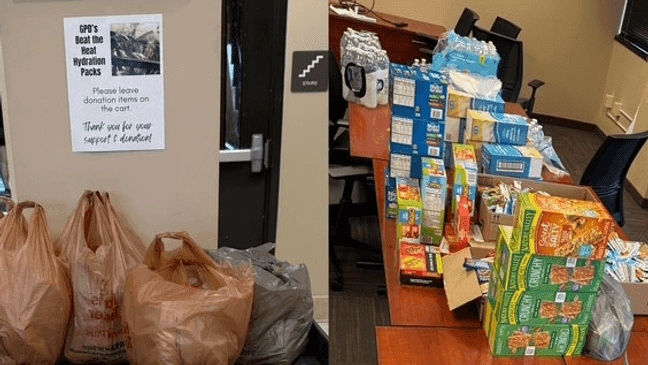
Greensboro police are asking residents to help fill Beat the Heat Hydration Packs with bottled water, Gatorade or other electrolyte drinks, electrolyte packets, granola bars and gallon-sized Ziploc bags for people who may struggle to stay safe in summer heat. Donations can be dropped off in the lobby of Greensboro Police Headquarters, 100 E. Police Plaza, during regular business hours.
The request targets a real local risk: people who are unhoused, older adults, outdoor workers and others who may not have easy access to cooling, transportation or a steady supply of water when temperatures climb. Greensboro made clear that the effort is tied to keeping people safe during forecasted high temperatures, and the basic idea is simple enough that the city can move supplies quickly to residents who need them most.
The hydration-pack drive came alongside other heat-relief steps already in place across the city. Beginning Saturday, June 6, Greensboro opened a weekend cooling center at the Interactive Resource Center, 407 E. Washington St. The city also said daytime cooling stations and the hydration station at police headquarters operate independently of Orange Flag status, which means residents can count on those resources even when summer weather warnings change.

Residents who need immediate help can stop by police headquarters, where the lobby mini fridge offers a free bottle of water from 8 a.m. to 5 p.m. Monday through Friday, except holidays. That small stop matters in a stretch of weather when heat and humidity can quickly push people toward dehydration or heat exhaustion, especially if they are walking, working outside or waiting for transportation.
The city has described its Community Safety Department as taking a holistic, collaborative approach that includes prevention initiatives, crisis intervention and intensive case management for people dealing with mental health, substance use and homelessness. The hydration-pack program fits that model by linking police, city staff and residents to a direct service rather than leaving people to navigate extreme heat alone.
This article was produced by Prism’s automated news system from verified source data, official records, and press releases, then run through automated quality and moderation checks before publishing. The system is built and supervised by the people who set the standards it runs under. Read our full AI policy.
Did this article answer your question?