Greensboro Science Center welcomes three rare Allegheny woodrat pups
Three Allegheny woodrat pups born at Greensboro Science Center joined a rare breeding effort meant to keep a declining Appalachian species from vanishing further.
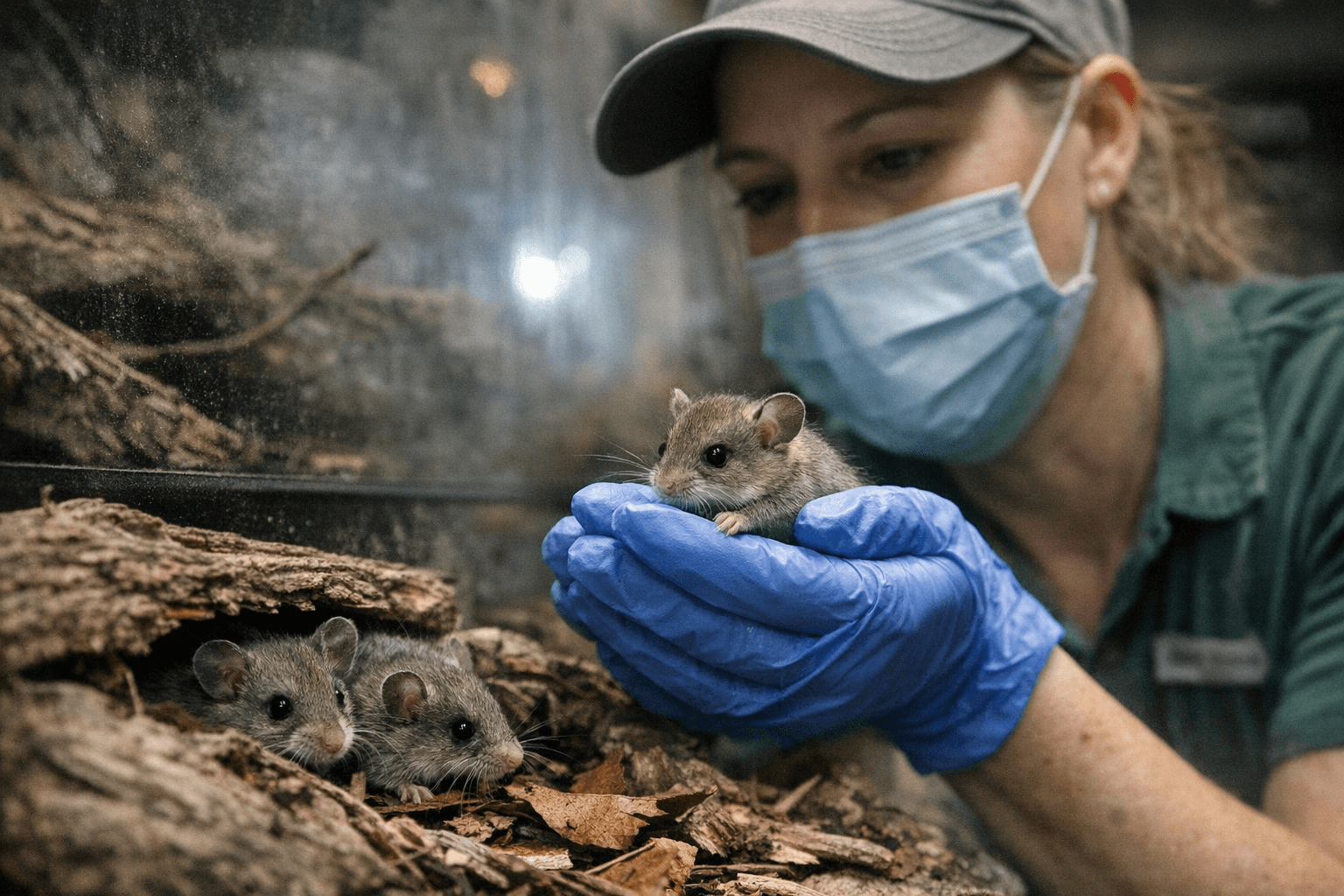
Three Allegheny woodrat pups born at the Greensboro Science Center are part of a conservation effort with stakes far beyond Guilford County: helping preserve a rocky-forest species that has fallen sharply across the Appalachian region.
The pups were born March 26 and are not on public exhibit. The center said the animals are part of a larger recovery strategy designed to raise selected adults in human care, keep contact with people to a minimum, and eventually return offspring to the wild after acclimation. That approach is aimed at building genetically diverse woodrats that can strengthen remaining wild populations and reduce the risk of federal listing.
Allegheny woodrats are not the kind of animal most people notice, but conservationists say they matter because they are tied to some of the region’s most fragile habitats, including rock outcrops, boulder fields, abandoned mine portals, talus slopes and caves. They do not hibernate, and their presence can signal whether a forest is healthy. The U.S. National Park Service says foresters can sometimes spot a good sign of woodrat activity when they find discarded acorn shells at rock ledges, where the animals tend to tolerate little human disturbance.
The Greensboro births came through the Allegheny Woodrat Working Group, which runs the Woodrat Captive Breeding Program with the Maryland Zoo, the Pennsylvania Game Commission and the University of Pennsylvania School of Veterinary Medicine’s Wildlife Futures Program. The program is intentionally hands-off. Keepers monitor breeding animals by nest-box camera to avoid human imprinting, then move young woodrats through a soft-release pen before eventual release into the wild.
The effort reflects how precarious the species has become. Conservation material cited by the zoo and game commission says Allegheny woodrat populations in Pennsylvania have declined by about 70% over the past 40 years. The species is listed as endangered in Indiana, Ohio, Maryland, New Jersey and New York, and is considered a species of conservation concern in Pennsylvania, Virginia, Tennessee, Kentucky, North Carolina and West Virginia. Pennsylvania’s Game Commission says the woodrat is threatened and protected under the state Game and Wildlife Code, is a priority species in the state Wildlife Action Plan, is considered vulnerable nationally and warrants federal prelisting consideration.
For Greensboro, the birth of three pups shows a local science institution playing a role in a much larger regional recovery network. The Greensboro Science Center says it is accredited by both the Association of Zoos and Aquariums and the American Alliance of Museums, a distinction it says only 15 facilities nationwide hold. The center’s work now reaches well beyond a feel-good animal update, connecting Guilford County to the future of an Appalachian species that many people will never see in the wild.
Know something we missed? Have a correction or additional information?
Submit a Tip