Greensboro swears in new police chief, plans community meetings
Greensboro’s new police chief inherited applause, protests and a public trust test. Kamran Afzal now has 100 days to turn promised community meetings into measurable results.
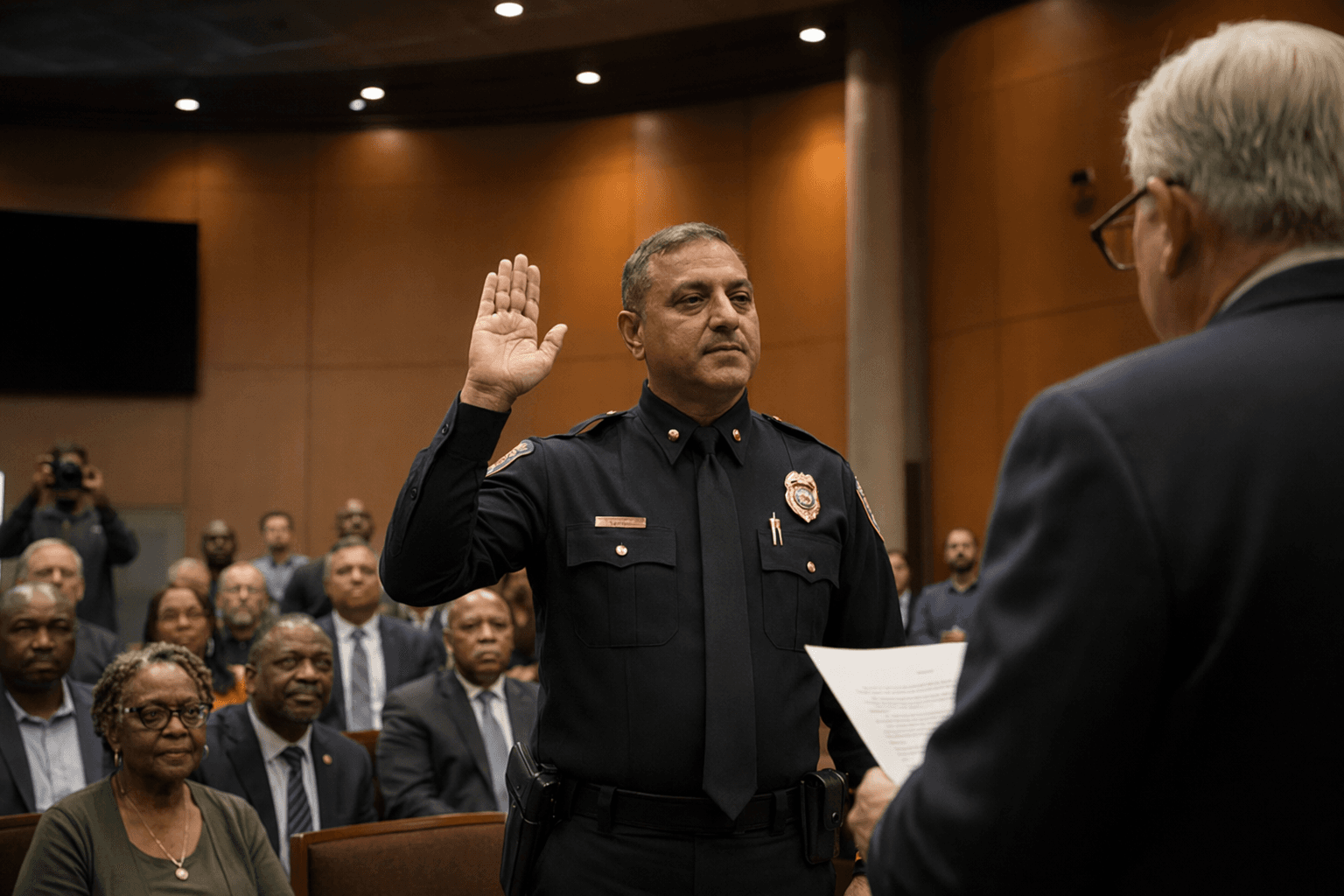
Greensboro’s new police chief stepped into City Hall under a cloud of criticism and a sharper demand from residents: prove the process was sound and the leadership will work. Kamran Afzal was sworn in at 2 p.m. Tuesday, May 12, 2026, and began his duties the next day, taking over a department that had been led by John Thompson until his retirement in February.
City officials said Afzal was chosen after a competitive, national search and an extensive interview process, but the appointment immediately drew scrutiny over transparency and the decision to pass over internal candidate Stephanie Mardis. More than a dozen people spoke at a Greensboro City Council meeting on April 7, and nearly 80 residents and community leaders gathered at police headquarters in early April to protest the selection process.
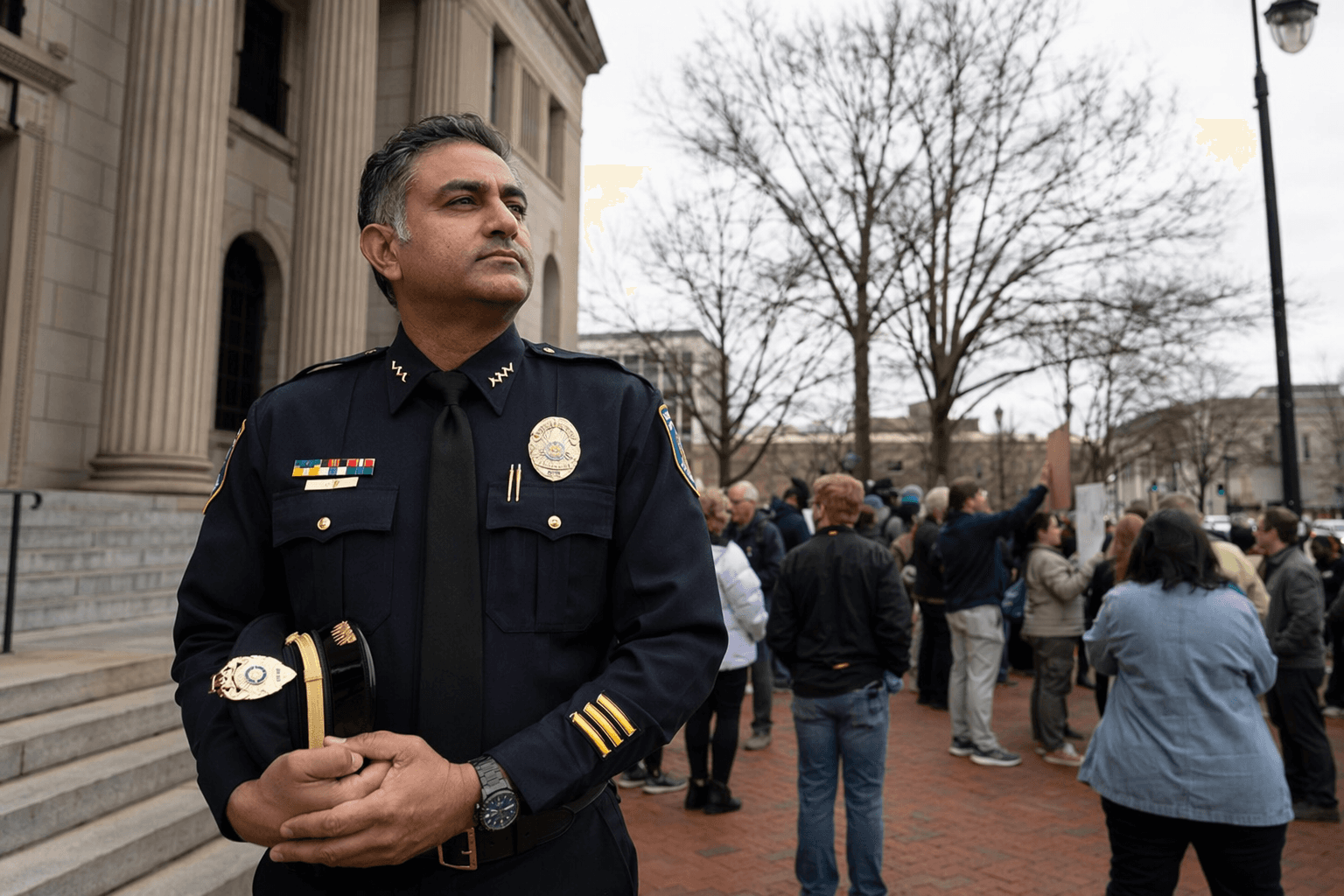
That criticism has put the first days of Afzal’s tenure under a microscope. City leaders are planning community meetings so residents can meet him directly, ask questions and hear his priorities. The meetings are meant to do more than introduce a new chief. They are intended to answer the question that has followed this hire from the start: whether Greensboro can move past the fight over the process and focus on public safety.
Afzal arrives with a long law-enforcement résumé. He started with the U.S. Capitol Police in 1991, joined the Arlington County Police Department in 1993 and spent 24 years there, including 12 years on the command staff. He later served as police chief in Durango, Colorado; Hopewell, Virginia; and Dayton, Ohio, where he came to Greensboro from. He was born in Pakistan and immigrated to the United States with his parents when he was 15.
He also brings academic credentials that city officials have pointed to in defending the choice: a bachelor’s degree in economics from George Mason University and a master of public administration with a concentration in criminal justice from Troy University. Afzal is married and has two children, and he has served on boards tied to education, community service and social justice.
For Greensboro, the next test is not the ceremony. It is whether Afzal can use those meetings to build confidence with residents who wanted a different process, reassure officers who want stable leadership, and establish a public rhythm that shows what changed in his first 100 days. The chief who took office this week will be judged less by the controversy that surrounded him than by how quickly he can turn it into trust.
This article was produced by Prism’s automated news system from verified source data, official records, and press releases, then run through automated quality and moderation checks before publishing. The system is built and supervised by the people who set the standards it runs under. Read our full AI policy.
Did this article answer your question?