Guilford County Commissioners Slash Parking Requirements for Multi-Family Housing
Guilford County scrapped its one-size-fits-all parking rule, cutting required spaces for one-bedroom apartments to 1.25, down from nearly two per unit.

For years, a developer building a one-bedroom apartment in Guilford County faced the same parking mandate as one building a three-bedroom unit: close to two spaces per unit, plus visitor parking. The Guilford County Board of Commissioners voted unanimously on April 2 to end that arrangement, replacing it with a tiered system that ties parking requirements directly to unit size.
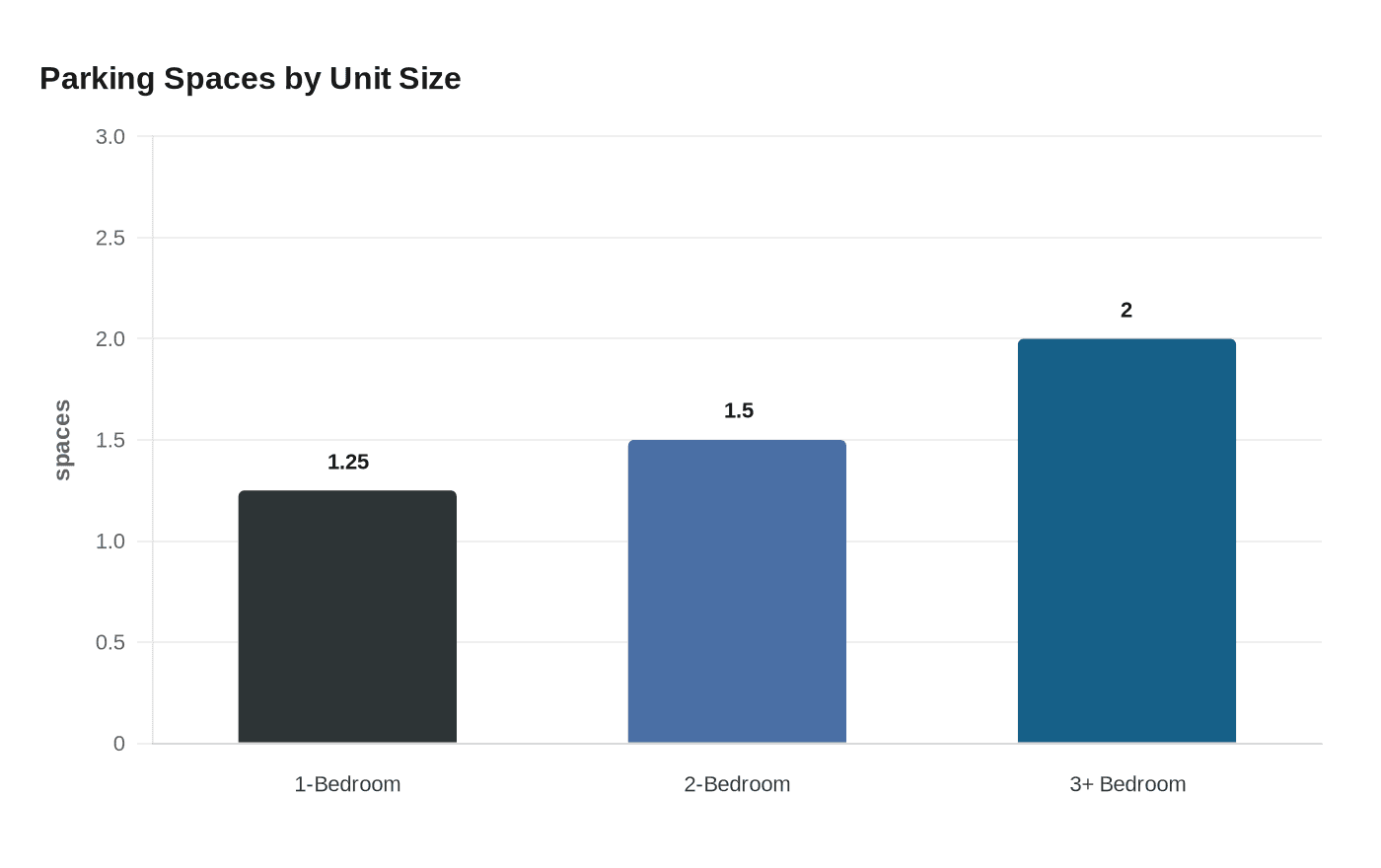
Under the revised Unified Development Ordinance, three-bedroom and larger units must still provide two parking spaces. But two-bedroom units now require only 1.5 spaces, and one-bedroom units drop to 1.25. The change applies to new multi-family developments and townhomes across unincorporated Guilford County wherever county zoning governs.
County planning staff framed the amendment as part of a broader package of ordinance updates designed to modernize development rules and spur housing production as job growth and rental demand climb across the Triad. The logic behind tiering parking to bedroom count is straightforward: smaller units typically house fewer cars, and forcing developers to build excess asphalt raises both construction costs and the price of the land needed to accommodate it. Large surface parking lots also consume acreage that could otherwise hold additional units.
Supporters, including housing developers and affordable-housing advocates, argued that the old standard created a financial drag on projects, particularly those targeting smaller, more affordable units. Critics and some residents countered that reducing parking minimums transfers the pressure elsewhere, specifically onto neighborhood streets in areas where curb space is already scarce and public transit options are limited. Those concerns are not without precedent: reduced parking floors in other metro areas have generated spillover conflicts when transit investments lagged behind residential density.
The board made one additional change at the same meeting, removing a cap on how many times a developer may refile a rezoning request for the same property within a single meeting cycle. That procedural adjustment gives applicants more flexibility to revise and resubmit applications without waiting out a full review period, though it could also increase the volume of rezoning cases planning staff must process.
County planning staff said they will monitor development activity and parking outcomes under the new rules, with the option to recommend follow-up adjustments if real-world projects expose unintended effects. What those projects reveal over the next few years will serve as a practical test of whether scaled parking requirements, without parallel investment in sidewalks, transit, and bike infrastructure, can deliver the housing density Guilford County is seeking without straining its existing neighborhoods.
This article was produced by Prism’s automated news system from verified source data, official records, and press releases, then run through automated quality and moderation checks before publishing. The system is built and supervised by the people who set the standards it runs under. Read our full AI policy.
Did this article answer your question?