Guilford County Schools Tip Line Catches Student Mental Health Struggles Early
Guilford County Schools' anonymous tip line received 238 tips in its first year; 75% were mental health-related and 71% came from middle schoolers.

When Guilford County Schools launched the Say Something Anonymous Reporting System, officials expected to field threats of violence. What they got instead was a window into a quiet crisis: in the program's first year, 238 tips came in, and roughly three out of four had nothing to do with weapons or physical danger. They were about kids in pain.
About 75% of the 238 tips involved students experiencing a potential mental health crisis or bullying, Mike Richey, the assistant superintendent for school safety and emergency management, told the Guilford County Board of Education at a board retreat this week. Around 45 of those tips involved students potentially harming themselves or thinking about suicide. Most striking to Richey was where the tips were originating: 71% came from middle schools.
"That's the number that surprised us, that the majority were from our middle schools," Richey said.
Dr. Jenna Mendelson of Cone Health said the pattern reflects a particularly difficult stretch of development. "There's a lot of change happening for them, both in terms of their own growth and development and also their social surroundings, which are becoming a lot more complex in nuance," Mendelson said. "It's a time where many teens and preteens are especially vulnerable to mental health challenges."
The Say Something tip line, which North Carolina law requires for public schools, is monitored around the clock by the Sandy Hook Promise Foundation. Operators vet incoming reports and forward credible ones to safety team members at the district and the individual schools involved. When a tip carries life-safety implications, it gets routed simultaneously to the school and to 911, triggering a wellness check. Richey said that process played out as recently as last Thursday.
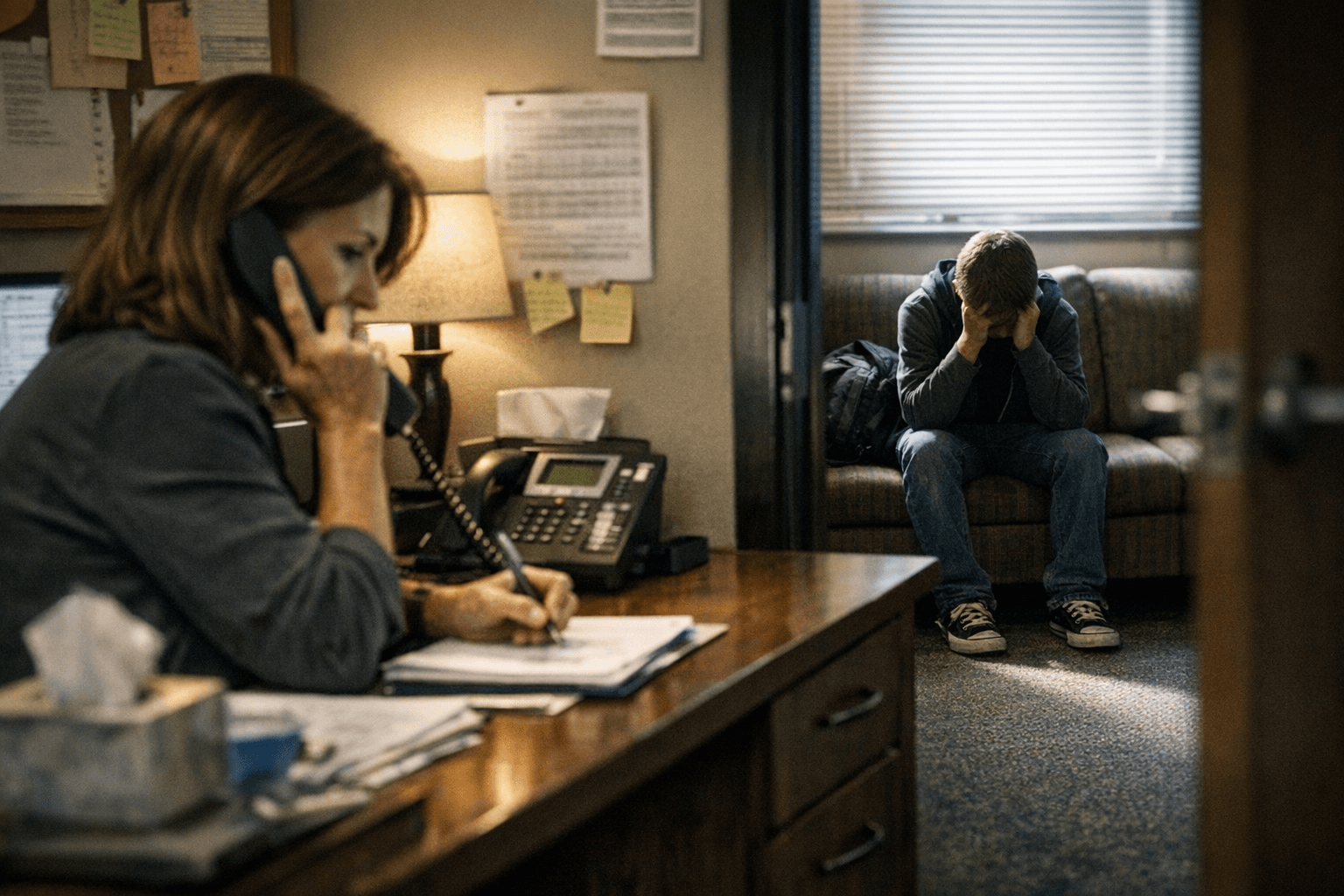
"If it's life safety, it goes two places. It goes to the school, and it goes to 911 so that there is actually a wellness check instigated by the tip line," Richey said.
For tips that fall below the life-safety threshold, school staff reach out to the student named in the report without disclosing the source. The student may never know a classmate submitted a tip on their behalf. Most often, Richey said, those tips come from middle schoolers worried about a friend, reporting bullying, mental health struggles, or suicidal ideation.
Richey acknowledged that consequences exist for anyone who abuses the system but said the district considers the program a success by any measure. "One success story out of this is worth everything," he said.
The Say Something Anonymous Reporting System is available 24 hours a day, seven days a week through the Sandy Hook Promise Foundation.
This article was produced by Prism’s automated news system from verified source data, official records, and press releases, then run through automated quality and moderation checks before publishing. The system is built and supervised by the people who set the standards it runs under. Read our full AI policy.
Did this article answer your question?

