Interactive Resource Center fair connects Greensboro homeless residents to services
Dozens of people filled IRC’s downtown Greensboro fair for mental health, housing and job help as county data showed most recent homelessness was first-time and rents outpaced wages.

At the Interactive Resource Center’s downtown Greensboro site, dozens of people moved from table to table seeking mental-health care, housing help and job leads as local homelessness continued to strain Guilford County’s support system. The second annual Resource Fair was designed to put multiple services in one place, giving people a faster path to stabilization than the usual maze of referrals.
The fair ran from 10 a.m. to 1 p.m. on May 20 at 407 E. Washington Street and brought together 40 vendors representing mental health, housing access, workforce development and other community resources. It was coordinated by the IRC Guest Advisory Committee, a group of unhoused people who use IRC services and help shape how the center responds to the community’s needs.
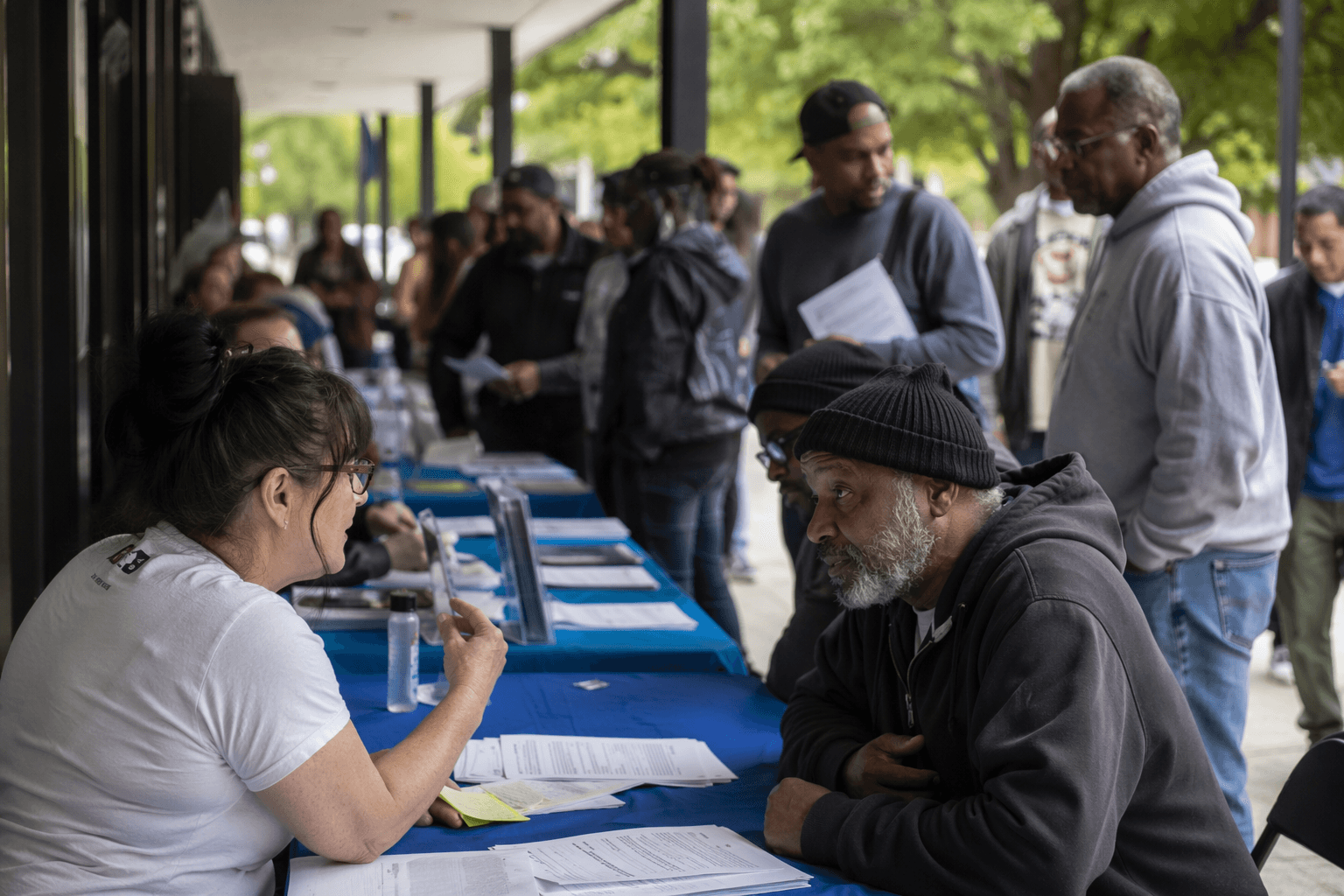
Katrina Bass, who leads the IRC’s PATH Street Outreach Team, said the goal was to improve the flow of services, connect guests to more resources and create collaborative care with other professionals. Some attendees left with direct connections to mental-health support, housing assistance and possible job opportunities, underscoring how much the fair was about action rather than information.
The event also highlighted the growing pressure on Greensboro’s homelessness response. The IRC said it was seeing an uptick in people ages 55 and older, as well as young adults ages 18 to 25, two groups that often face very different barriers to stable housing. Since 2009, the IRC has operated as a low-barrier day center, and it describes itself as Guilford County’s only day resource center for people currently facing, experiencing or coming out of homelessness.
Its 22,000-square-foot Greensboro center offers showers, laundry, a barbershop, a phone bank, a mailroom, a computer lab, a medical clinic, gardens and a bike maintenance area, along with case management and employment services. That mix of basic needs and longer-term support reflects the scale of the challenge: Guilford County’s 2025 anti-criminalization infographic says three out of four residents experiencing homelessness last year were homeless for the first time, half of renters paid more than 30% of their income on housing and utilities, and it takes more than $22 an hour to afford a home at fair-market rent.
Guilford County’s Continuum of Care, which covers Greensboro and High Point, says it coordinates local policies, strategies and activities aimed at ending homelessness. The county says its annual Point-in-Time Count, completed with help from local agencies and volunteers, is meant to measure the number of sheltered and unsheltered people and identify what services are needed next.
This article was produced by Prism’s automated news system from verified source data, official records, and press releases, then run through automated quality and moderation checks before publishing. The system is built and supervised by the people who set the standards it runs under. Read our full AI policy.
Did this article answer your question?