Two Men Identified as Victims of Fatal Wrong-Way Crash on U.S. 29
Jabarie Bracey and Eliga Majak were identified by dental records after the wrong-way crash that set their van ablaze on U.S. 29 in Guilford County, exposing a detection gap on that corridor.
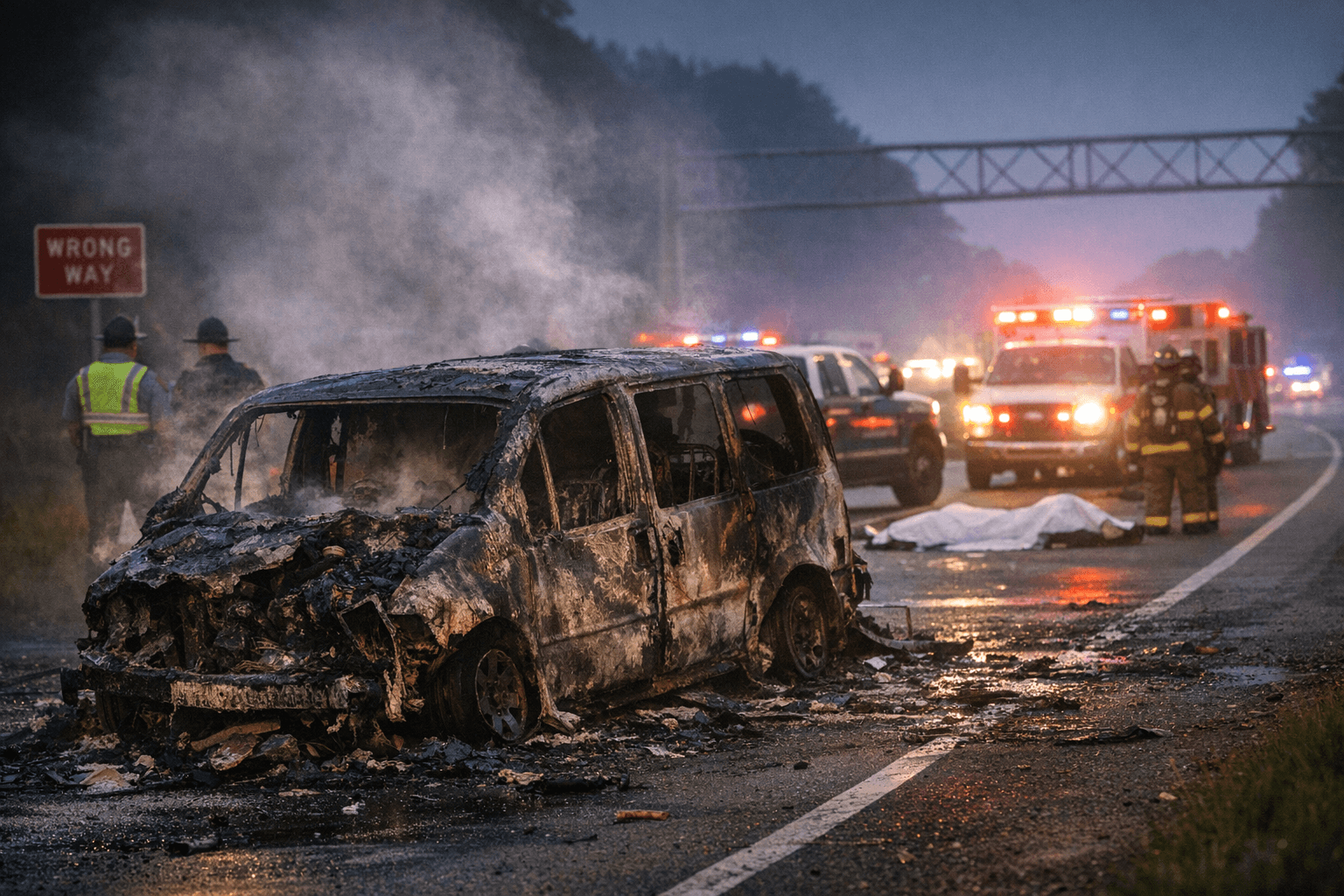
Jabarie Leon Bracey, 29, and Eliga Magok Joseph Majak, 30, the two men killed when their Honda Odyssey drove the wrong way into oncoming traffic on U.S. 29 and was consumed by fire, have been formally identified through dental records, North Carolina State Highway Patrol announced in mid-March.
The crash happened at 8:37 p.m. on March 7 near the Reedy Fork Parkway interchange in Guilford County. Troopers said the gray Odyssey was traveling the wrong direction when it struck a black Infiniti SUV in a head-on collision. The van caught fire immediately; both Bracey and Majak were pronounced dead at the scene. The fire was severe enough that standard identification methods failed, requiring dental records to confirm both victims' identities and notify next of kin. The Infiniti's driver, Thomas Lamond Davis of Laurel, Maryland, sustained serious injuries and was transported to Moses Cone Hospital.
State Highway Patrol investigators are conducting a formal crash reconstruction examining impairment, mechanical failure and other contributing factors. No charges or citations had been announced as of the identification report. Anyone who was driving U.S. 29 near Reedy Fork Parkway around 8:37 p.m. on March 7 and captured dash camera or cellphone footage is urged to contact the North Carolina State Highway Patrol.
The collision lays bare a danger that road safety data says is chronically underweighted. A NCDOT research analysis found that wrong-way crashes represent roughly 0.2 percent of freeway incidents statewide yet account for 5.6 percent of freeway fatalities, a ratio that reflects the high-energy head-on dynamics that define them. Between 2000 and 2017, wrong-way driving killed 164 people on North Carolina roads.
The U.S. 29 corridor near Reedy Fork Parkway has none of the sensor-based safeguards NCDOT has deployed on its managed expressways. The agency installed an automated wrong-way vehicle detection system on the Monroe Expressway in 2018, and technology on the Triangle Expressway now identifies roughly three wrong-way entries per month before drivers can reach full speed. NCDOT has acknowledged that expanding comparable protections to conventional freeways and divided highways is more difficult without the infrastructure backbone that toll roads already have in place.
Whether the March 7 crash prompts a formal safety review at the Reedy Fork Parkway interchange, including upgraded signage, pavement markings or detection equipment, will hinge largely on what the ongoing crash reconstruction reveals about how Bracey's Odyssey came to be traveling the wrong direction on U.S. 29 in the first place.
This article was produced by Prism’s automated news system from verified source data, official records, and press releases, then run through automated quality and moderation checks before publishing. The system is built and supervised by the people who set the standards it runs under. Read our full AI policy.
Did this article answer your question?