Wind Advisory, Elevated Fire Risk Affected Triad New Year’s Eve Planning
WXII meteorologists warned on Dec. 31, 2025, that a Wind Advisory in higher elevations and gusty, dry conditions across the Piedmont Triad raised the risk of brush and wildfires and complicated New Year’s Eve travel. The advisory and associated fire danger underscore local emergency-preparedness needs and budget and policy choices that affect response capacity for Guilford County residents.

WXII meteorologists issued a warning Dec. 31, 2025, that a Wind Advisory would take effect for higher elevations at 9 p.m. on New Year’s Eve, with gusts potentially reaching 50 to 55 mph in spots. Forecasters also flagged an increasing fire danger across parts of the Piedmont Triad, Foothills and Mountains as dry air combined with gusty winds. The Triad itself saw milder temperatures on New Year’s Day, with readings in the lower 50s, but remained breezy.
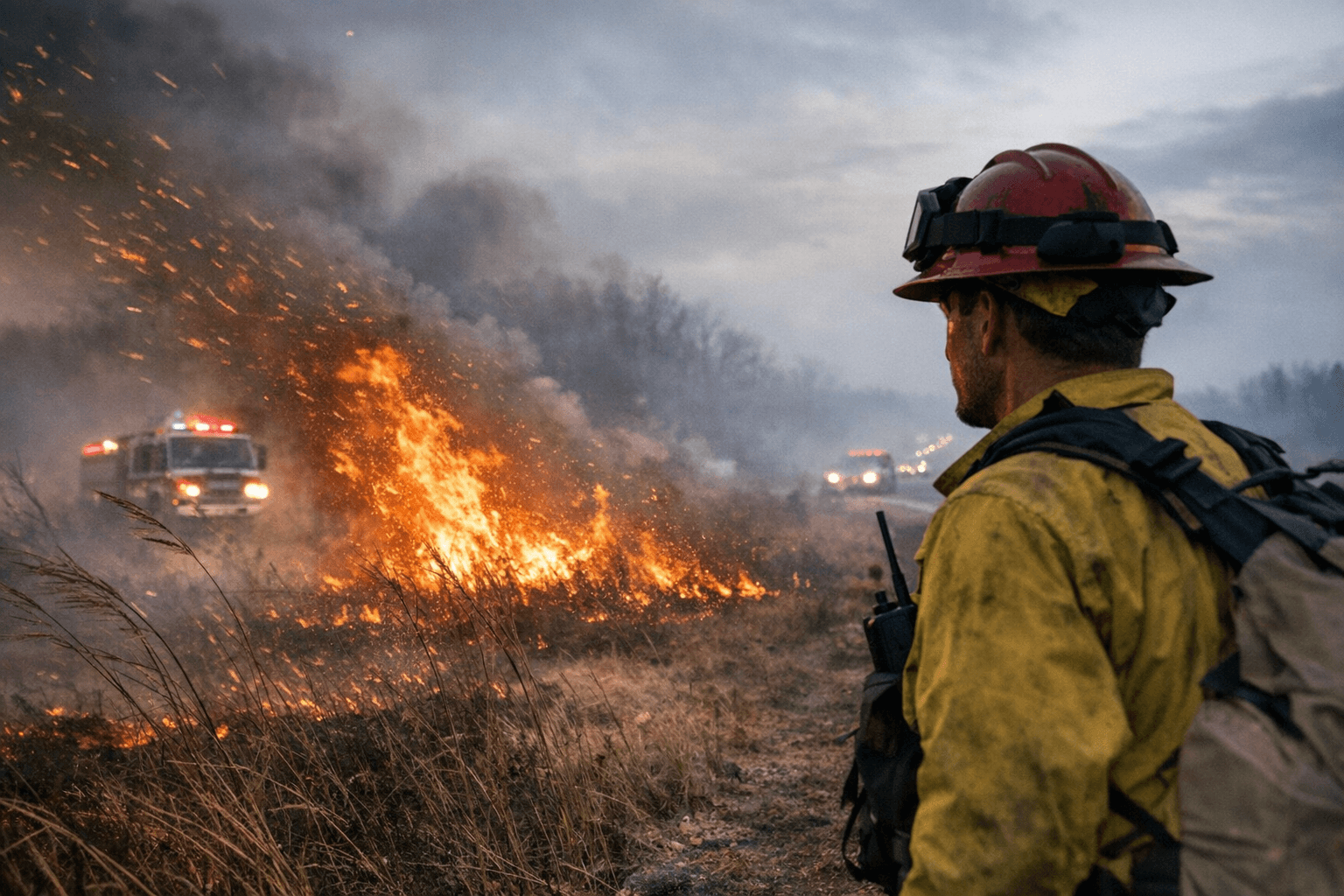
These meteorological conditions mattered locally because gusty winds and low humidity increase the likelihood that a small spark can become a larger, fast-moving brush or wildland fire. Even where extreme gusts were confined to higher terrain, the broader pattern of dry, windy weather posed a heightened risk for surrounding lower-elevation communities, including those in Guilford County. Travel and outdoor activities tied to New Year’s Eve celebrations were subject to greater hazard from downed limbs, blown debris and rapidly spreading fire should ignition occur.
The advisory highlights operational and policy challenges for county and municipal authorities. Emergency management, fire departments and road crews must balance routine service demand with the potential for rapid escalation in weather-related incidents. Volunteer and municipal fire services, which respond to most brush-fire calls in and around Guilford County, depend on adequate funding, staffing and equipment to operate safely in gusty conditions. Budget decisions and policy priorities at county commission meetings directly affect that readiness.
Public communication is also central to minimizing risk. Timely advisories and clear guidance on outdoor burning, fireworks and travel can reduce preventable incidents. Residents should rely on forecasts and official notices and recognize that decisions about burn bans, pre-emptive road closures and resource deployment are typically made by local emergency management and elected officials in real time as conditions evolve.
For civic engagement, the event underlines that preparedness and mitigation are matters for local governance and voter oversight. Funding for fire mitigation, staffing for emergency services, and policies on open burning are set through county budgets and local ordinances; those are subject to public input at commissioner meetings and in elections. Residents concerned about wildfire risk and response capacity can attend public meetings, monitor county alerts, and press for transparency about readiness plans.
While the most intense winds were forecast for higher elevations, the combination of gusty winds and dry air on Dec. 31 increased the possibility of fire starts and created travel hazards across the region. That convergence of weather and institutional readiness is a reminder that routine policy choices on emergency services, budgeting and public communication have immediate consequences when conditions deteriorate.
Know something we missed? Have a correction or additional information?
Submit a Tip