Artemis II crew returns to Johnson Space Center after historic moon flyby
Artemis II astronauts touched down in Houston after the first crewed lunar trip in more than 50 years, drawing hundreds to Ellington Field.
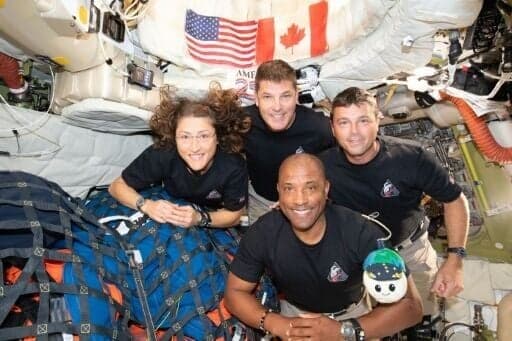
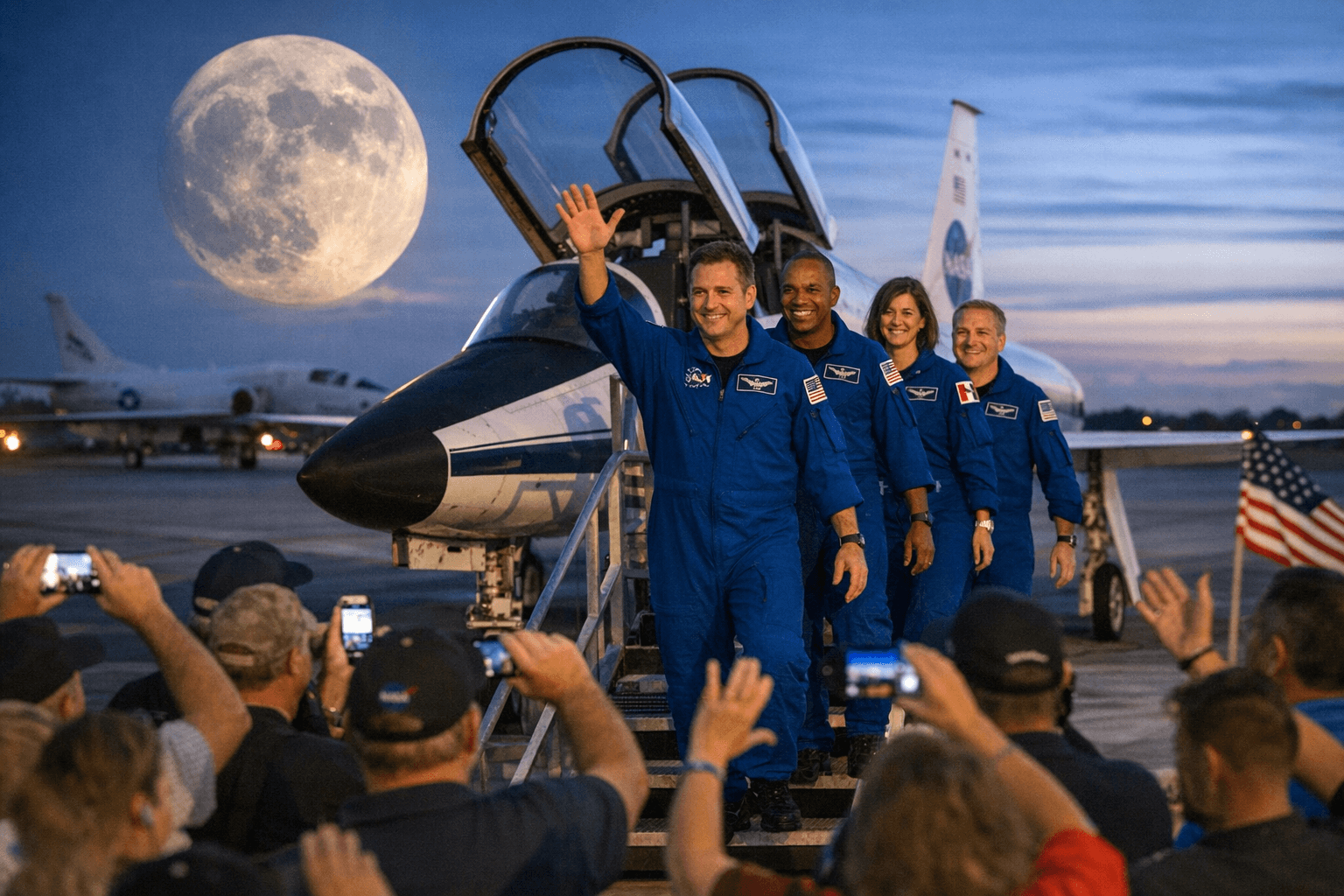
Houston welcomed the Artemis II crew home at Ellington Field, where NASA employees, families and invited guests applauded Reid Wiseman, Victor Glover, Christina Koch and Jeremy Hansen after their historic flyby of the moon. The return put Johnson Space Center back at the center of human deep-space flight, with Space City once again serving as the mission’s home base.
The four astronauts flew aboard Orion, named Integrity, after launching from Kennedy Space Center’s Launch Pad 39B on April 1. Their journey ended with a Pacific Ocean splashdown off San Diego on April 10, then a flight back to Houston the next day for the ceremony at Johnson Space Center in Clear Lake. NASA lists the mission as lasting about 9 days, 1 hour and 32 minutes.
Artemis II was the first crewed flight beyond low Earth orbit since Apollo 17 in December 1972, and it also marked the first crewed Artemis mission. During the trip, the crew tested spacecraft systems in deep space, exercised recovery and medical procedures, and gave mission controllers a full dress rehearsal for the longer lunar campaign ahead.
The mission also set a new human distance record. On April 6, the crew reached about 252,756 miles from Earth, passing the Apollo 13 mark of 248,655 miles. By the time Orion came home, NASA said the spacecraft had covered roughly 694,000 miles from launch to splashdown, a reminder of how far the program has moved from concept to operational reality.
For Harris County, the return carried more than symbolic weight. Johnson Space Center houses Mission Control and remains the hub for the astronauts, flight directors and engineers who will guide Artemis III and later lunar surface missions. At Space Center Houston, the visitor center next to JSC, a sold-out public watch event drew about 1,300 people as the county followed the flight from launch to splashdown. Vanessa E. Wyche, the center’s director, has said the mission will help inspire the next generation of scientists and engineers, a point that carried extra force as the crew stepped back onto Texas soil and into the community that helped send them there.
This article was produced by Prism’s automated news system from verified source data, official records, and press releases, then run through automated quality and moderation checks before publishing. The system is built and supervised by the people who set the standards it runs under. Read our full AI policy.
Did this article answer your question?