Harris County commissioners to review first climate justice progress report
Flood repairs, affordable housing and Harris County’s first climate justice progress report all came before commissioners as more than 400 items landed on the agenda.
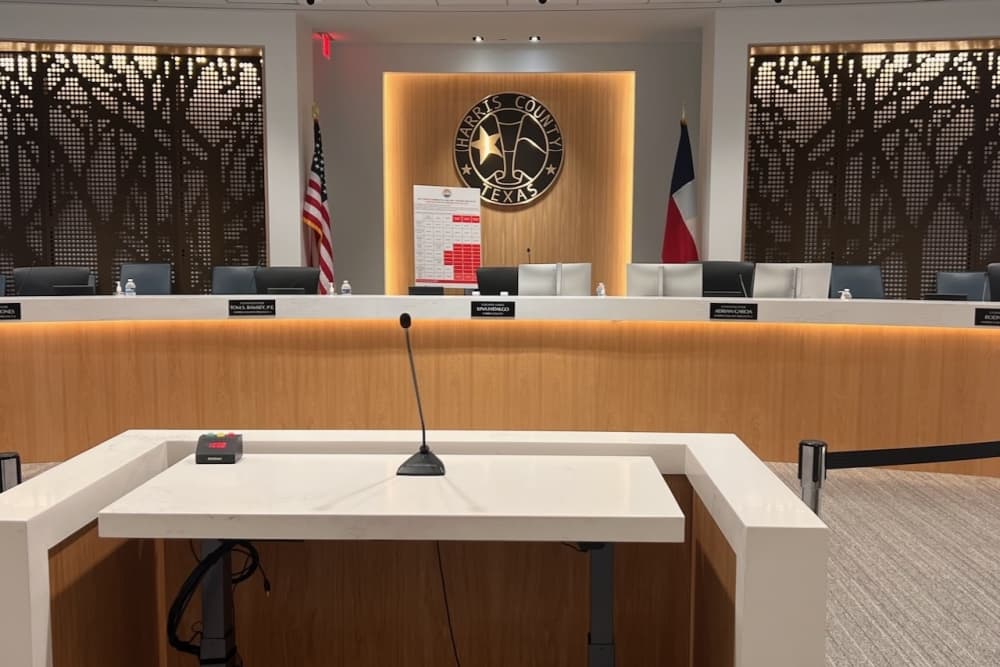
Harris County commissioners met with a packed agenda that tied climate planning directly to the repairs, drainage work and housing decisions that shape daily life in flood-prone neighborhoods. More than 400 items were scheduled for the April 16 court session at the Harris County Administration Building, 1001 Preston Street in Houston, with virtual access also available.
At the center of the meeting was the first annual status report on the Harris County Climate Justice Plan, adopted in April 2025. The county described the 59-page plan as its first county-level climate justice strategy, developed with the Coalition for Environment, Equity, and Resilience and intended to guide long-term work on natural resource conservation, infrastructure resiliency and flood control. The Sustainability Division, housed in the Office of County Administration, said it is responsible for measurable sustainability, resiliency and environmental justice solutions, making the report a formal checkpoint on whether the plan is moving from policy language to on-the-ground action.
The flood recovery items carried the most immediate stakes for residents in low-lying neighborhoods and areas hit repeatedly by storms. The Harris County Flood Control District was expected to present project-by-project updates on federally funded mitigation and recovery work, including construction start dates, completion estimates and cost changes tied to Community Development Block Grants for Disaster Recovery and Mitigation. Those details matter because they can determine when drainage work begins, how long roads stay disrupted and whether promised protections reach neighborhoods before the next heavy rain.
Harris County Housing & Community Development’s disaster recovery programs also remained part of the same conversation. The department said its work includes home repairs, buyouts and new housing for residents affected by floods, hurricanes and other major storms. Its involuntary buyout and relocation program operates in seven areas of the county, a sign that some repeated-loss neighborhoods are still being considered for retreat and green space rather than rebuilding.

Specific projects on the docket showed how wide that footprint has become. In January 2026 agenda materials, the county highlighted new Community Development Block Grant - Mitigation funding for the Chimney Rock Road and Anderson Park Drainage Improvements project, along with a Brookglen Stormwater Detention Basin construction contract. For residents near those sites, the question was not abstract climate policy but when the work would start, how much it would cost and whether the county could keep pace with rising flood risk.
Housing policy also came back to the court in a closed-session item involving a $23.5 million Housing Finance Corporation grant allocation tied to developing up to four tracts for affordable multifamily housing. Harris County says its multi-family development program uses deed restrictions to keep units affordable for at least 20 years, underscoring how the same meeting linked flood recovery, climate resilience and housing access in one package of decisions that could shape where people can live and rebuild across Harris County.
This article was produced by Prism’s automated news system from verified source data, official records, and press releases, then run through automated quality and moderation checks before publishing. The system is built and supervised by the people who set the standards it runs under. Read our full AI policy.
Did this article answer your question?