Harris County Joins Statewide Emergency Alert Drill to Test Warning Systems
Only about 40,000 of Harris County's 5 million residents are enrolled in local flood alerts. Thursday's statewide drill exposed who's missing from the warning network.

When the Guadalupe River surged on July 4, 2025, killing at least 130 people, many of them were from the Houston area. Nine months later, Harris County is still grappling with a quiet vulnerability at the heart of disaster response: fewer than 1 percent of its 5 million residents are enrolled in the county's flood alert systems.
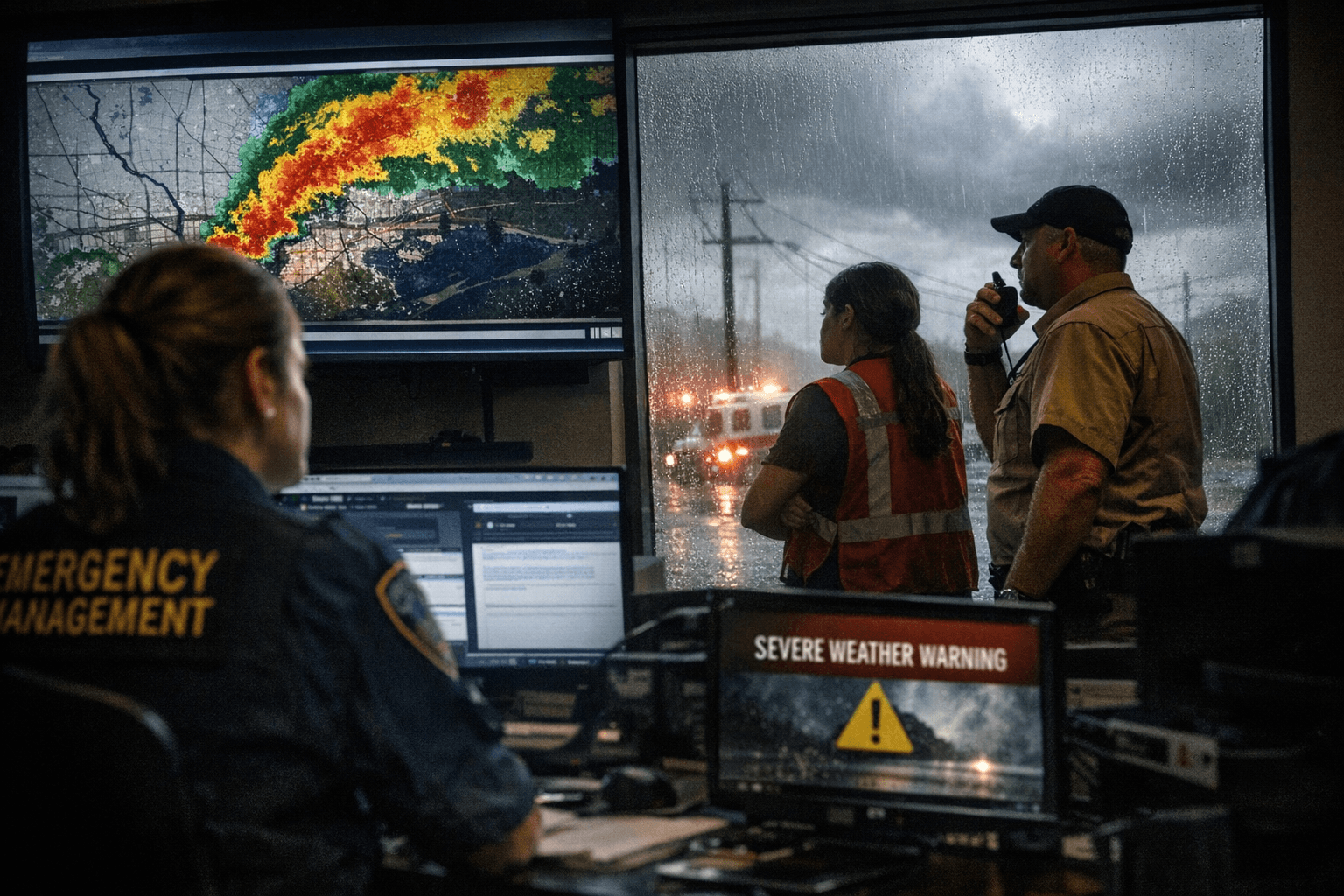
That gap framed Thursday's statewide emergency alert drill in sharp relief. The Texas Division of Emergency Management coordinated the test across Texas on April 2, running from 10 a.m. to 12:30 p.m. Central Time. Harris County's ReadyHarris program participated, sending test messages to registered residents and placing STEAR calls, which stands for Specialized Telecommunications Emergency Alerting and Registry, to people enrolled through that special-needs notification line.
"Regular training and testing of public warning systems builds readiness before disaster strikes and is an important component of community safety," said Texas Emergency Management Chief Nim Kidd in announcing the drill.
The drill tested the full stack of local alert delivery: Wireless Emergency Alerts pushed directly to mobile phones within range, outdoor warning sirens, ReadyHarris registered notifications by text and email, and STEAR telephone calls for residents who are elderly, disabled, or otherwise require tailored outreach. Messages were labeled clearly as tests; officials emphasized no action was required.
But for ReadyHarris, the drill's deeper purpose was diagnostic. The county said it would analyze delivery results and work with TDEM to resolve any gaps identified, whether caused by carrier routing failures, residents who never completed registration, language settings that blocked message delivery, or phone configurations with Wireless Emergency Alerts turned off. Those settings, buried inside phone notification menus, are enabled by default on most devices but can be switched off inadvertently.
The enrollment number itself is the most striking result the drill surfaced. Harris County Flood Control District agency spokesperson Emily Woodell confirmed last July that only about 40,000 residents had signed up for its Flood Warning System alerts, a figure that illustrates why officials treat registration drives as equal in importance to the sirens and broadcast infrastructure themselves.
For Harris County residents who did not receive any test notification Thursday, the path forward is straightforward. Enroll in ReadyHarris at readyharris.org or by texting "Ready" to (281) 609-9093. Residents who are deaf, blind, hard of hearing, or deaf-blind can register through Harris County's Accessible Alert Program at hct.ahasalerts.com. Anyone requiring special-needs outreach should also add their information to the STEAR registry through readyharris.org, which ensures a direct phone call during emergencies rather than relying on digital delivery. After enrolling, verify that Wireless Emergency Alerts are enabled under your phone's notification settings, a separate channel that does not require prior registration and reaches any compatible device within a cell tower's coverage area.
The stakes in Harris County are higher than in most Texas jurisdictions. The county's industrial corridor along the ship channel runs through neighborhoods that could require shelter-in-place orders within minutes of a chemical release. Flooding from the bayou network can isolate streets before sirens finish cycling. ReadyHarris officials have added air monitoring maps and neighborhood-specific shelter-in-place guidance to the alert ecosystem in recent years, but those tools reach only the residents who have opted in. Thursday's drill put a number on how many have not.
This article was produced by Prism’s automated news system from verified source data, official records, and press releases, then run through automated quality and moderation checks before publishing. The system is built and supervised by the people who set the standards it runs under. Read our full AI policy.
Did this article answer your question?