Houston Gas Prices Spike Sharply, Prompting Concern From Drivers and Economists
Houston gas prices jumped nearly 40 cents per gallon in a single week, with Iran conflict and Strait of Hormuz shipping fears driving the sharpest spring spike in years.
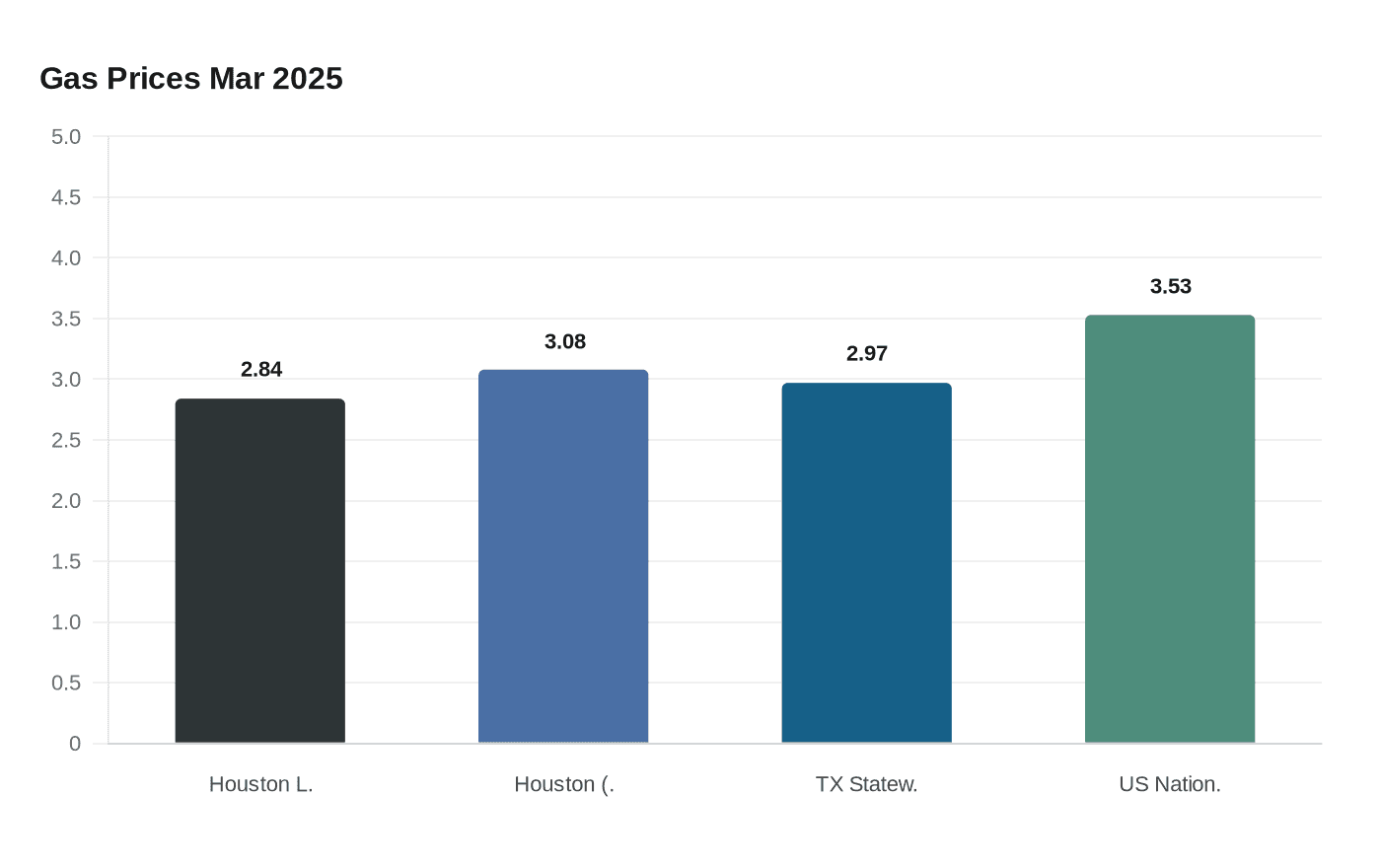
Gas prices across the Houston area surged nearly 40 cents per gallon in the week leading up to March 10, hitting drivers at a moment when spring break travel was already straining household budgets. The Texas statewide median reached $2.97 per gallon, up about 40 cents from the prior week and 10 cents from the day before alone, while Houston prices came in below the state average at around $2.84 per gallon according to ABC13's reporting. AAA data cited by KHOU 11 put the Houston figure slightly higher, at $3.08, still well below the national average of $3.53.
The root cause, according to energy analysts, runs through a narrow stretch of water between Iran and Oman. The Strait of Hormuz carries roughly 20 percent of the world's oil supply, and escalating conflict involving Iran has rattled the global shipping market in ways that reach directly to the pump. KHOU 11 energy expert Ed Hirs described the situation plainly: "Now the issue is the Strait and foremost. We've got millions of barrels of oil bottled up because the insurance companies don't think it's a very safe thing to ship the tankers through. And of course Iran has threatened to blow up tankers. They've attacked tankers in the past."
Jay Young, CEO of King Operating Corporation, also explained to KHOU 11 how a chokepoint thousands of miles away translates into higher prices at Houston-area stations. The geopolitical pressure compounds seasonal factors that push prices up every spring regardless: rising demand and the switch to more expensive summer fuel blends. As ABC13 noted, those seasonal shifts are typical, but the Iran conflict has "supercharged" this year's increase.

Notably, KHOU 11 reported that crude oil prices actually dipped slightly on Monday even as retail pump prices kept climbing, a divergence that reflects how insurance costs, shipping fears, and supply chain uncertainty can decouple retail gas from day-to-day crude movements.
For AAA spokesman Doug Shupe, the spike is significant but unlikely to cancel vacation plans. "We don't anticipate that that kind of an increase is going to be make or break for people's travel," Shupe said. He estimated the higher prices would add just under three dollars to the average mid-sized sedan per fill-up compared to last year's spring costs, and predicted that travelers would absorb the difference by packing food for road trips and skipping restaurant stops rather than staying home.
Houston drivers who spoke with ABC13 echoed a similar resignation. "You do kind of have to eat it if you are someone who commutes quite often," said Taylor Scholefield, who added: "At the end of the day, you're going to have to factor it into your budget, a couple extra dollars here, a couple dollars there, parking it all adds up." Fellow driver Orval Marlow pointed to the wide price variation visible across the city: "You wonder why people are paying $4 per gallon when across the street it's $2 per gallon." Some drivers have turned to GasBuddy to hunt down cheaper stations before filling up.
The burden falls hardest on those who cannot simply drive less. Rodrick Clarke, who hauls freight and was interviewed in San Antonio, said he paid $2.15 per gallon in Houston just one to two weeks earlier, then watched that figure climb to $3.49. "It's crazy. I have to pay for the gas because I transport it, so it, literally, hit me directly," he said. Veteran trucker Chad Moss offered the weary perspective of someone who has ridden out these cycles before: "I've been in the trucking industry for 12, 13 years. It comes and goes. You just got to wait it out."
Whether the wait will be short depends largely on developments in the Middle East. Until shipping lanes through the Strait of Hormuz stabilize and insurers regain confidence in tanker safety, the supply constraints that have already pushed Houston prices sharply higher show little sign of reversing quickly.
Know something we missed? Have a correction or additional information?
Submit a Tip