Residents fear new Houston development may disturb historic cemetery
Northeast Houston residents say a new project may sit over a historic cemetery, and they want records, surveys and proof before any dirt moves.
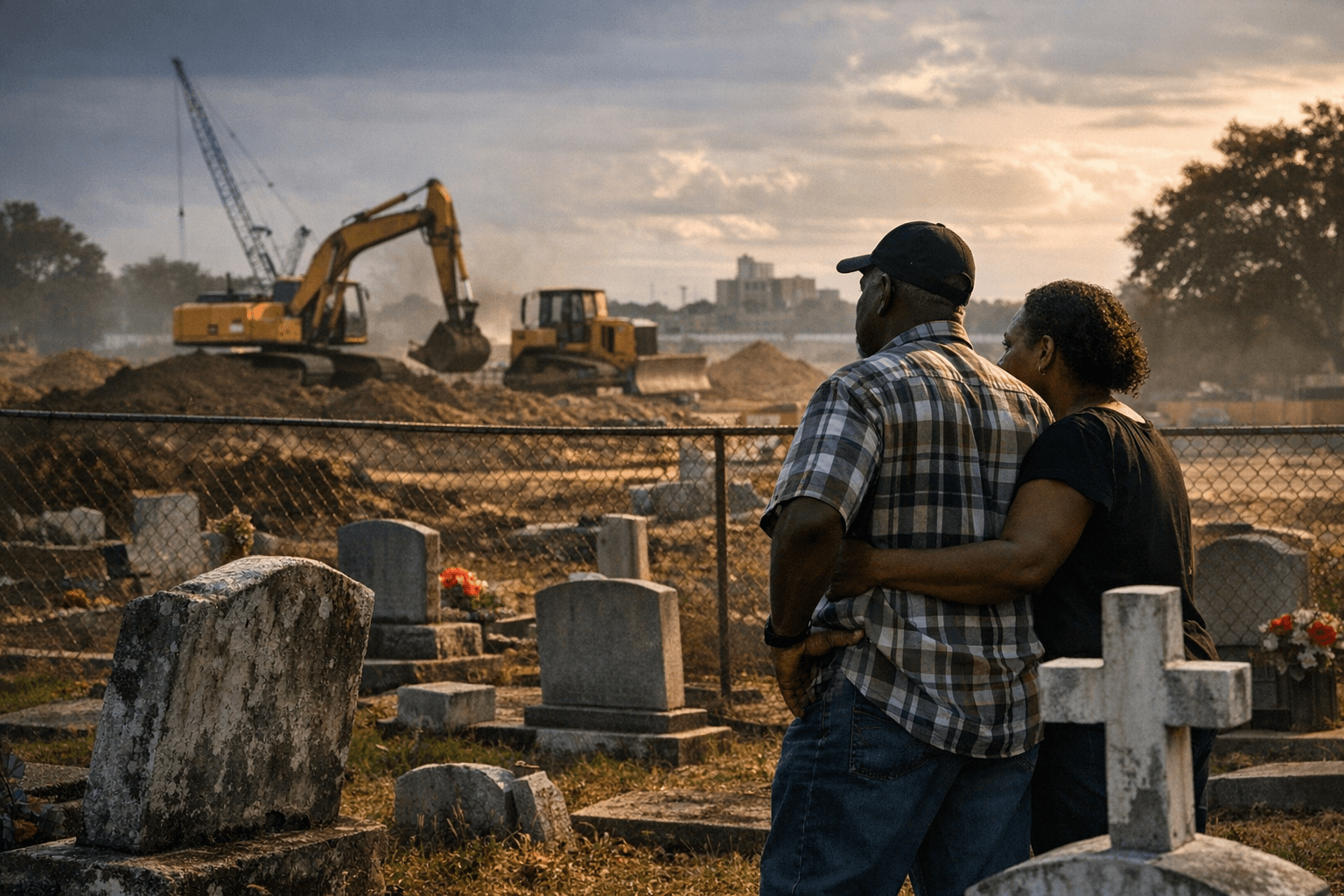
A planned development in northeast Houston has turned into a fight over graves, property rights and who knew what before construction moved forward. Residents say the site may sit on top of a historic cemetery, and they fear dozens of burials could have been disturbed already.
The dispute has sharpened a larger question for Houston and Harris County: if a parcel may contain human remains, what proof is needed before a developer can keep building, and who is responsible for halting work while the record is checked? Community members say the concern goes beyond zoning or land use. They want clearer answers about what the city, the developer and nearby residents knew, and when they knew it, because once a burial site is altered, the evidence that could confirm what lies underground can be lost for good.
The Texas Historical Commission says historic cemeteries are increasingly threatened by development pressures, encroachment, vandalism and theft. But the agency also makes clear that it does not enforce cemetery laws. That responsibility falls to county and municipal law enforcement, including officials in Houston and Harris County. The commission says a Historic Texas Cemetery designation is meant to alert current and future adjacent landowners to the cemetery’s presence, and Texas administrative rules say that designation can be removed only by the commission or by a court order.
That framework matters in a fast-growing city where old burial grounds can sit beneath areas now targeted for redevelopment. In northeast Houston, residents say the concern is not just that a cemetery may have been overlooked, but that basic safeguards may not have been visible before the project advanced. If the site is shown to contain burials, the dispute could force delays, additional surveys and a closer review of records before any redesign or excavation continues.
Houston has seen similar fights before. In the Heights, residents worried in 2023 that a development site could contain unmarked children’s graves. In another case, ABC13 reported that 33 gravesites and the remains of three people were discovered under the Lockwood esplanade after 1960s relocation work missed them. More recently, in March 2026, the remains of 39 Black Americans buried in Fifth Ward’s Evergreen Negro Cemetery were reinterred after being displaced.
Those episodes show why this northeast Houston dispute carries stakes beyond one property line. If developers, city officials and descendants cannot produce clear records now, the city risks repeating a pattern in which burial grounds are acknowledged only after excavation has already done the damage.
This article was produced by Prism’s automated news system from verified source data, official records, and press releases, then run through automated quality and moderation checks before publishing. The system is built and supervised by the people who set the standards it runs under. Read our full AI policy.
Did this article answer your question?