Rising Costs Push More Harris County Drivers to Drop Auto Insurance
Harris County has more uninsured vehicles per driver than anywhere in Texas, with 14.44% lacking coverage as premiums topped $238 a month and climbed over 50% since 2022.

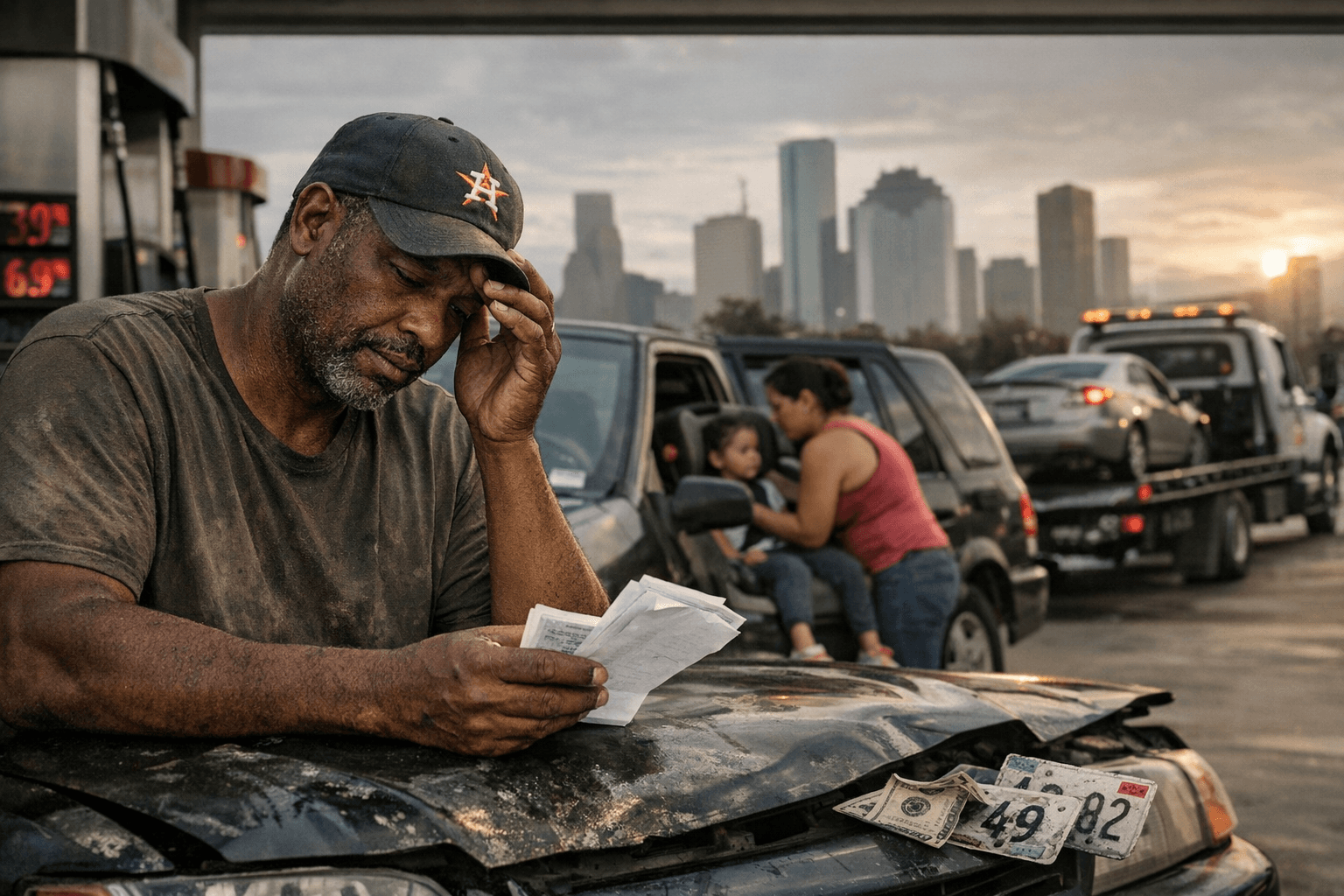
Monica Cabrera's divorce didn't just upend her household budget; it reset her car insurance premium to a figure she could no longer cover. She dropped her policy. On Harris County's roads, she has a great deal of company.
A new study by Texas Appleseed and United Way of Greater Houston found that 14.44% of the county's roughly 3.7 million registered vehicles carry no insurance, a rate that exceeds the statewide average of 12%. The researchers tied that gap directly to cost: average car insurance rates have risen more than 50% across Texas since 2022, forcing many low-to-middle-income residents to drop their insurance and risk legal penalties. Focus group participants in Harris County reported paying an average of $238 per month per car, or $2,856 per year.
"In a place like Harris County, where thinking about going to work, taking your kids to school, having a job, going shopping, all of the day-to-day necessities, doing those without a car can be almost impossible, and so people feel stuck," said Ann Baddour, director of Texas Appleseed's Fair Financial Services Project. "And yet, the cost of the car, plus the insurance, and with the insurance cost going up and up and up, they're starting to feel like [they're] at a breaking point."
What makes the math especially punishing is how insurers set rates. ZIP code, gender, and credit score, as well as gaps in prior coverage, have oversized effects on premiums. A Texas driver with poor credit pays on average three to 3.5 times the premium of a similar driver with excellent credit. A single gap in coverage, even one caused by an unaffordable bill, makes the next policy more expensive still. "Unless you're [a] married Caucasian male living in the burbs, like, you're not going to secure the best rate," Cabrera said.
The consequences reach every insured driver on the road. When an uninsured at-fault driver causes a crash, costs shift to uninsured motorist claims or out-of-pocket losses, and insurers recover those through higher premiums across the entire risk pool. A previous Texas Appleseed analysis found that every $100 increase in insurance costs generates 1.7 additional tickets per 100 residents for driving without coverage, and the average Harris County ticketing rate already runs at 2.2 per 100 residents. The state's TexasSure electronic verification system lets officers confirm coverage in real time during any traffic stop. A first offense brings a fine of $175 to $350 plus a $250 annual surcharge for three years. A second offense within five years can reach $1,000. The fines have not reversed the trend.
Drivers feeling the pressure have several concrete moves available right now. Telematics programs, offered by most major carriers, base rates on actual driving behavior rather than ZIP code proxies and can cut costs significantly for low-mileage motorists. Raising deductibles or dropping collision coverage on older vehicles with low market value reduces the monthly bill without canceling liability protection, which Texas law requires at a minimum of 30/60/25. Insurers are also legally required to offer installment payment plans; asking specifically for one is the clearest way to avoid a lapse that triggers the next premium increase. Drivers who believe their rates do not reflect their actual risk profile can contact the Texas Department of Insurance consumer helpline at 1-800-252-3439.
Texas Appleseed has recommended that the Texas Department of Insurance proactively review pricing models and algorithms before insurers deploy them, limit geography-based pricing to larger territories, and protect safe drivers from premium hikes tied to credit history or gaps in coverage. Until the state acts on those recommendations, the cost of staying legal on Harris County roads will keep shifting onto the drivers who can least afford to absorb it.
This article was produced by Prism’s automated news system from verified source data, official records, and press releases, then run through automated quality and moderation checks before publishing. The system is built and supervised by the people who set the standards it runs under. Read our full AI policy.
Did this article answer your question?