Barn Patrol Fundraiser Boosts Trap, Neuter Efforts in Hernando County
A fundraising event on Nov. 13 at Tidal Brewing in Spring Hill drew strong local support for Barn Patrol Incorporated, a new nonprofit focused on trap, neuter, vaccinate and return work for community cats. The money raised and the launch of a Sponsor a Stray program aim to expand sterilization capacity at a time when county clinics remain limited, a gap that directly affects feline welfare and shelter outcomes.
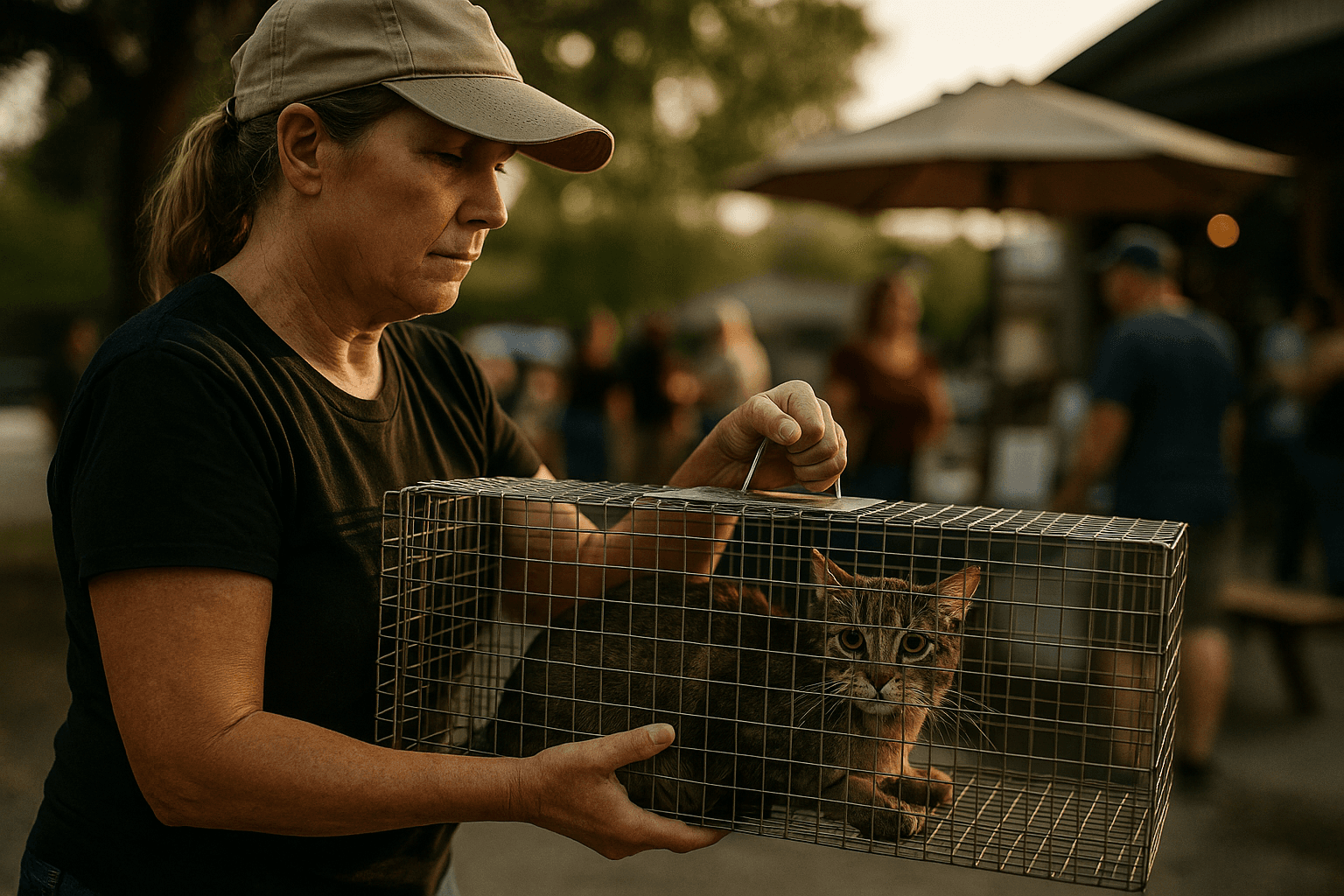
DeeAnn Smith founded Barn Patrol Incorporated in late March to address what she describes as a severe need for sterilization of community cats across Hernando and neighboring Pasco counties. The organization’s Nov. 13 fundraiser at Tidal Brewing in Spring Hill drew a large crowd and generated donations, raffle sales and merchandise revenue that will support the group’s TNVR work.
“I’m ecstatic. Super happy,” Smith said. “We’ve had 33 strays sponsored. Sold a lot of raffle tickets, sold a lot of merchandise, lots of donations. So I’m really very happy. And somebody matched up to $500. So we have that extra $500 coming in. So a really good night. … It’s heartwarming and very reassuring that we can keep going with our mission.” The event also marked the public launch of Barn Patrol’s Sponsor a Stray program which asks for $30 donations to cover sterilization costs. Donors received a small stuffed cat with a Barn Patrol tag and a tipped ear, the commonly used marker indicating a cat has been through TNVR.
Barn Patrol centers its work on TNVR, and it also places working barn cats on occasion to reduce euthanasia of unsocial felines. “Sometimes feral cats end up in the shelter and it’s a really bad place for them to end up. Nine times out of 10 they’ll end up on the euthanasia list,” Smith said. “If it’s a true outdoor, unsocial cat I will pull that cat from the euthanasia list and place it in a barn home just so it doesn’t have to be euthanized and it can have a second chance at living a life outside.” In this region barn homes are often located within horse communities around Brooksville and Ocala where working cats help control rodents.
Institutional context matters for local residents. Pasco County maintains a TNVR program that offers surgeries for five dollars, while Hernando County Animal Services has implemented a free TNVR surgery day on Wednesdays with a two cat limit per resident after signup. “Hernando County has been very good to me,” Smith said. “They’re giving me monthly clinics to bring in 20-30 cats a month. That’s great and it sounds like a lot. But I have to have more appointments than that to even possibly make a dent. Because I can go out right now and before 8 o’clock tonight I’ll have 30 cats if I have the appointments.
“Until you’ve been out in the field and seen some of the things, some of the colonies of cats, you really can’t understand how big the problem is. And the main thing is all these kittens that are being born, 80% suffer and die before they’re six months old. That’s what I’m trying to avoid.” Smith’s account underscores both the scale of community cat populations and the limits of current municipal capacity.
For Hernando County residents, the immediate implications are practical. Expanded clinic slots, greater municipal funding or increased community fundraising would reduce shelter intake of feral cats and lower euthanasia risk while improving public health outcomes related to unmanaged animal populations. Barn Patrol’s early success signals strong local volunteer and donor interest, but Smith and other providers say more institutional support will be necessary to make lasting reductions in stray and feral cat numbers.
This article was produced by Prism’s automated news system from verified source data, official records, and press releases, then run through automated quality and moderation checks before publishing. The system is built and supervised by the people who set the standards it runs under. Read our full AI policy.
Did this article answer your question?