Brooksville museum trio preserves Hernando County history corridor
Brooksville’s three-site museum corridor makes county history a single visit, from the May-Stringer House to the depot and one-room schoolhouse.
Brooksville’s history is easiest to understand by walking it. The Hernando Historical Museum Association runs three linked sites in town, and together they turn downtown and the hilltop streets into a practical history corridor that families, newcomers and longtime residents can use in one outing.
How to plan the visit
The simplest route starts at the May-Stringer House, continues to the 1885 Brooksville Train Depot, then closes with the Countryman One Room Schoolhouse on Russell Street. The association’s site gives the kind of details that make a visit easy to plan: exact addresses, open days, tour windows and phone numbers for each stop.
- May-Stringer House, 601 Museum Ct., Brooksville
Open Tuesday through Saturday, 11:00 a.m. to 3:00 p.m. Tours begin on the hour, and the last tour starts at 2:15 p.m. Call (352) 799-0129.
- 1885 Brooksville Train Depot, 70 Russell St., Brooksville
Open Thursday through Saturday, noon to 3:00 p.m. The last tour starts at 2:15 p.m. Call (352) 799-4766.
- Countryman One Room Schoolhouse, 66 Russell St., Brooksville
Call (352) 515-3054 for site information.
That structure matters because the association is not presenting three disconnected stops. It is inviting visitors to see how a county seat was shaped by domestic life, rail service and education, all within the same small Brooksville footprint.
What each site adds to the story
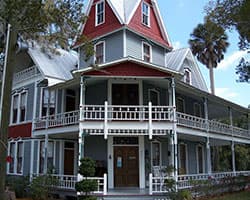
The May-Stringer House is the largest and most layered stop. The association describes it as a four-story, 14-room, seven-gable Queen Anne-era home with decorative spindle work, and its collection gives the house the feel of both a preserved residence and a local-history archive. One source says the museum displays more than 10,000 artifacts, while another directory listing places the total above 11,000, which signals a collection large enough to move beyond a single-family house story and into a broader county memory project.
The house also shows the long arc of preservation in Hernando County. The association’s about page says it leased the property at 601 Museum Ct. in 1980, and a Facebook description says the organization was formed in 1976 to collect, maintain and display items of interest to Hernando County and to provide a place to teach local history. That timeline matters: this is a nonprofit effort with decades of continuity, not a recent tourism experiment.
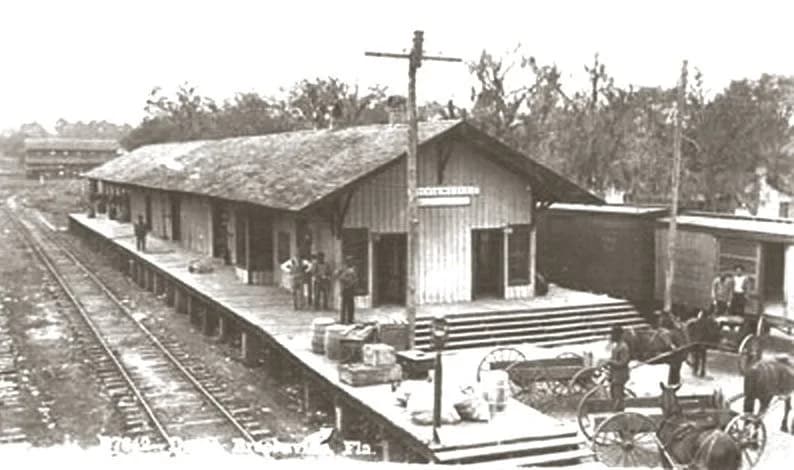
The 1885 Brooksville Train Depot adds a different layer. The association’s links page points readers to material titled “Life and Times of the ‘Brooksville Short’ and the Russell Street Depot,” tying the building to Hernando County railroad history and to rail links in neighboring counties. A 2024 Spectrum News Bay News 9 segment also highlighted that association members use the depot to help visitors understand Brooksville transportation history, which makes the stop especially useful for anyone trying to see how the town grew beyond its original core.
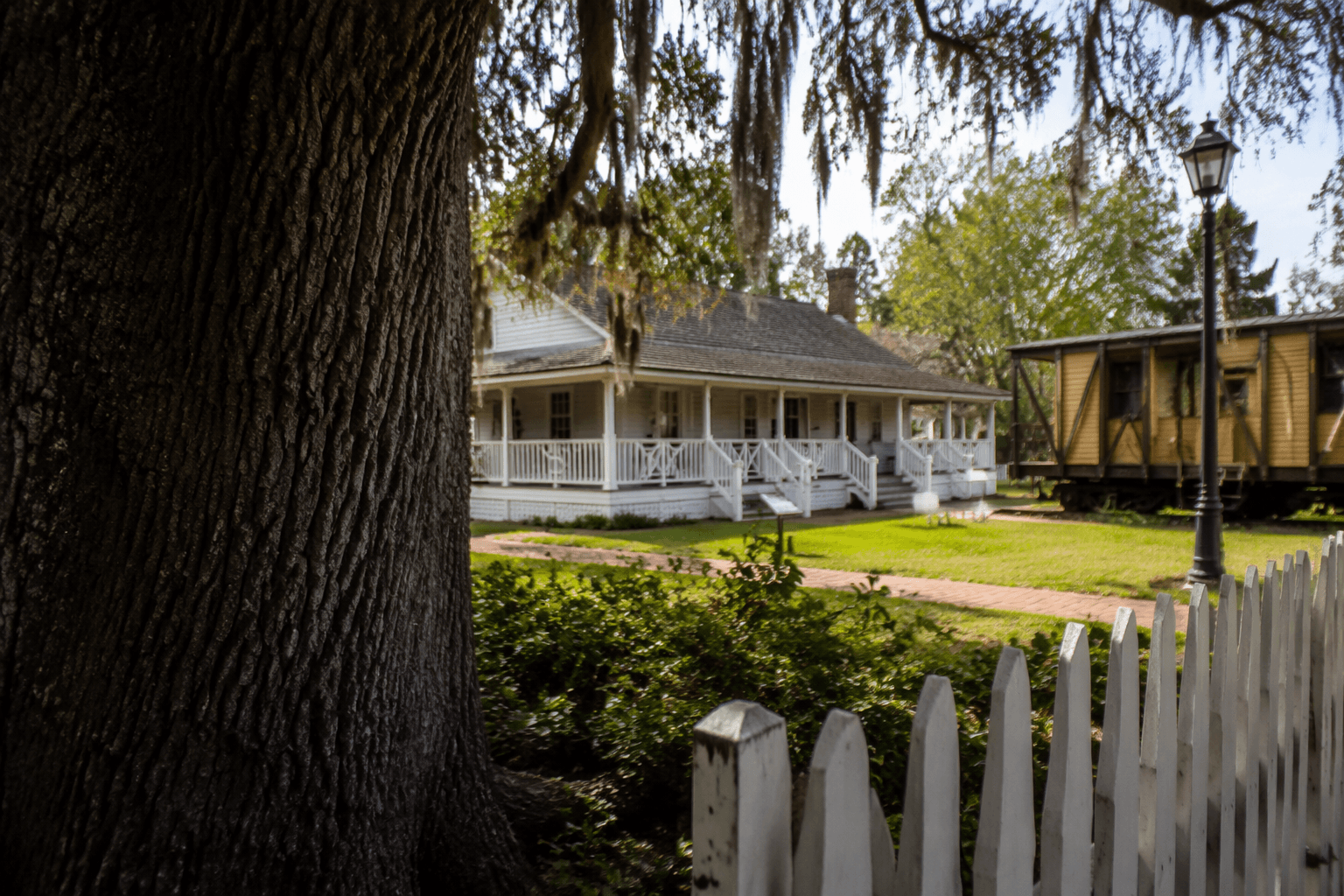
The Countryman One Room Schoolhouse rounds out the corridor by showing how education once worked in a much smaller county. Its address at 66 Russell St. places it close enough to the depot that the two stops fit naturally together, making the schoolhouse a useful final piece in a self-guided visit that moves from trains to classrooms without leaving historic Brooksville.
Why Brooksville is the right setting
Brooksville is Hernando County’s county seat, and the City of Brooksville says it has held that role for more than 100 years. The city also says the town was originally known as Melendez and was settled about 1845, while a Florida history source describes Brooksville as a hill city with elevations roughly between 175 and 274 feet.
That geography helps explain why the city’s historic districts feel different from many Florida communities. Brooksville’s historic core includes preservation-focused areas such as the South Brooksville Avenue Historic District, and Brooksville Main Street says it is focused on preservation-based economic development. In a county where the courthouse, downtown and older neighborhoods carry so much of the civic identity, the museum corridor works as more than a visitor stop. It is one of the clearest ways to read the town’s shape, its elevation and its development history in the same walk.
Local leaders have framed that balance in public terms as well. A 2024 10 Tampa Bay News segment about preserving downtown Brooksville’s historic hometown heritage quoted leaders who want to keep “small town small” while still protecting the character that makes the area distinct.
A civic asset that depends on use
The museum network’s value is not limited to nostalgia or a weekend outing. It functions as a nonprofit-run preservation system that collects artifacts, interprets local places and gives Brooksville a public memory structure that is easy to lose if residents stop using it. The association’s website, ticket information and support pages show a coordinated operation, and the direct phone lines for all three sites make it clear that the corridor is meant to be active, not passive.
That distinction matters in Hernando County. A preserved house, depot and schoolhouse can only keep explaining the county’s story if people still visit, volunteer, donate and talk about them as part of the civic landscape. In Brooksville, the history corridor is already there; the harder question is whether the public attention around it keeps pace with the work being done inside it.
This article was produced by Prism’s automated news system from verified source data, official records, and press releases, then run through automated quality and moderation checks before publishing. The system is built and supervised by the people who set the standards it runs under. Read our full AI policy.
Did this article answer your question?