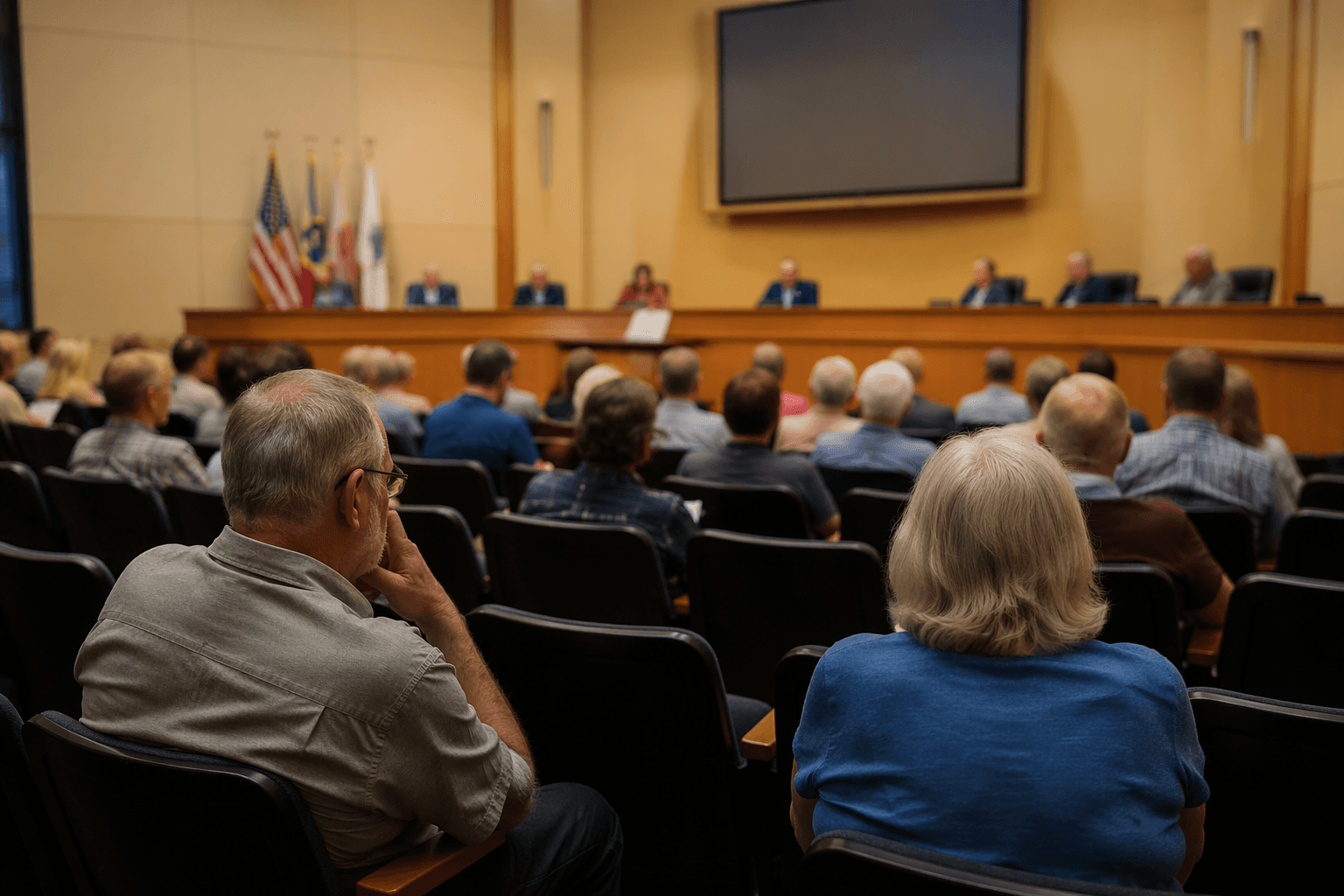
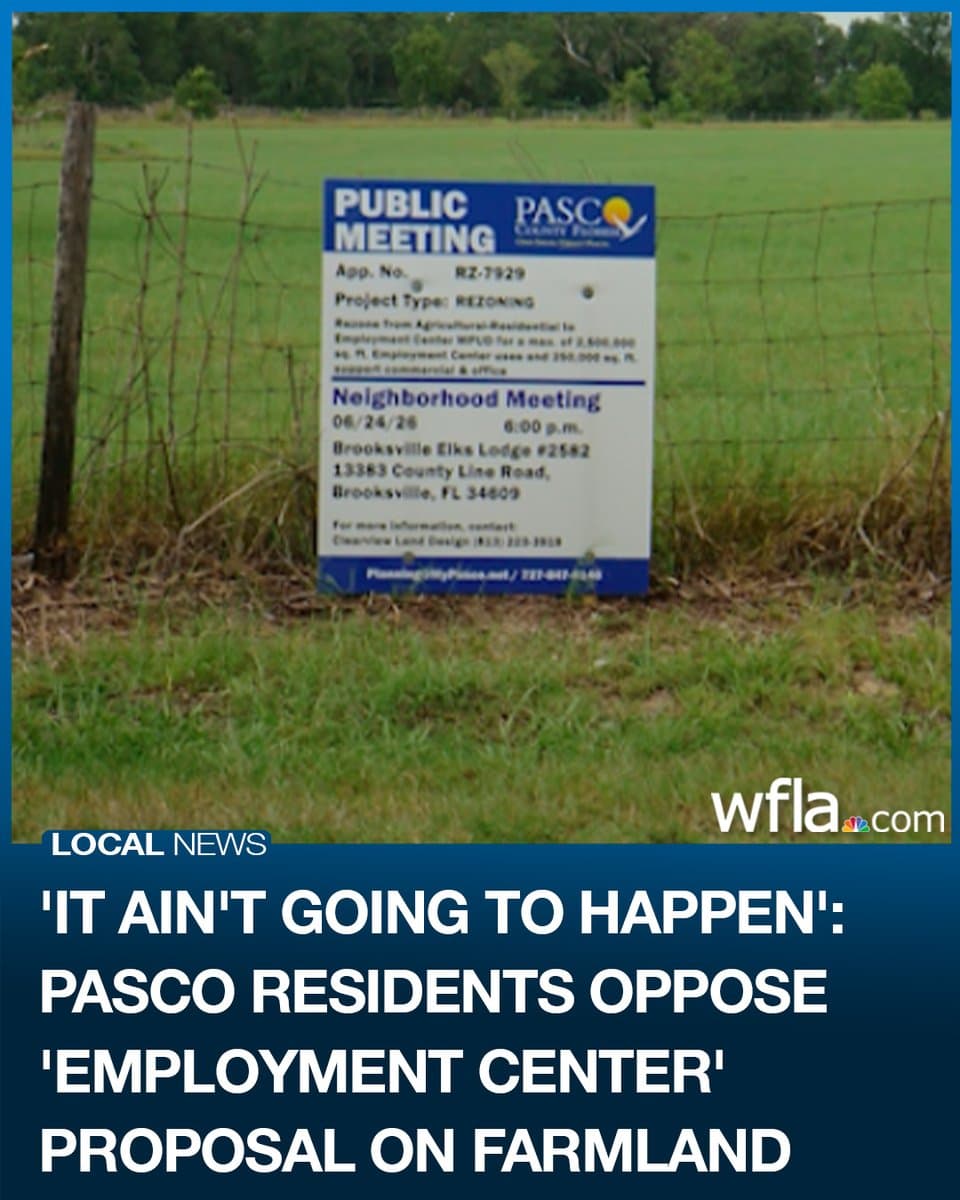
Hernando County growth strains roads, schools, water, and utilities
Hernando County’s growth is hitting households through tighter watering rules, busier roads, crowded schools, and higher development fees. The county is racing to catch up, but the fixes are already scheduled years out.
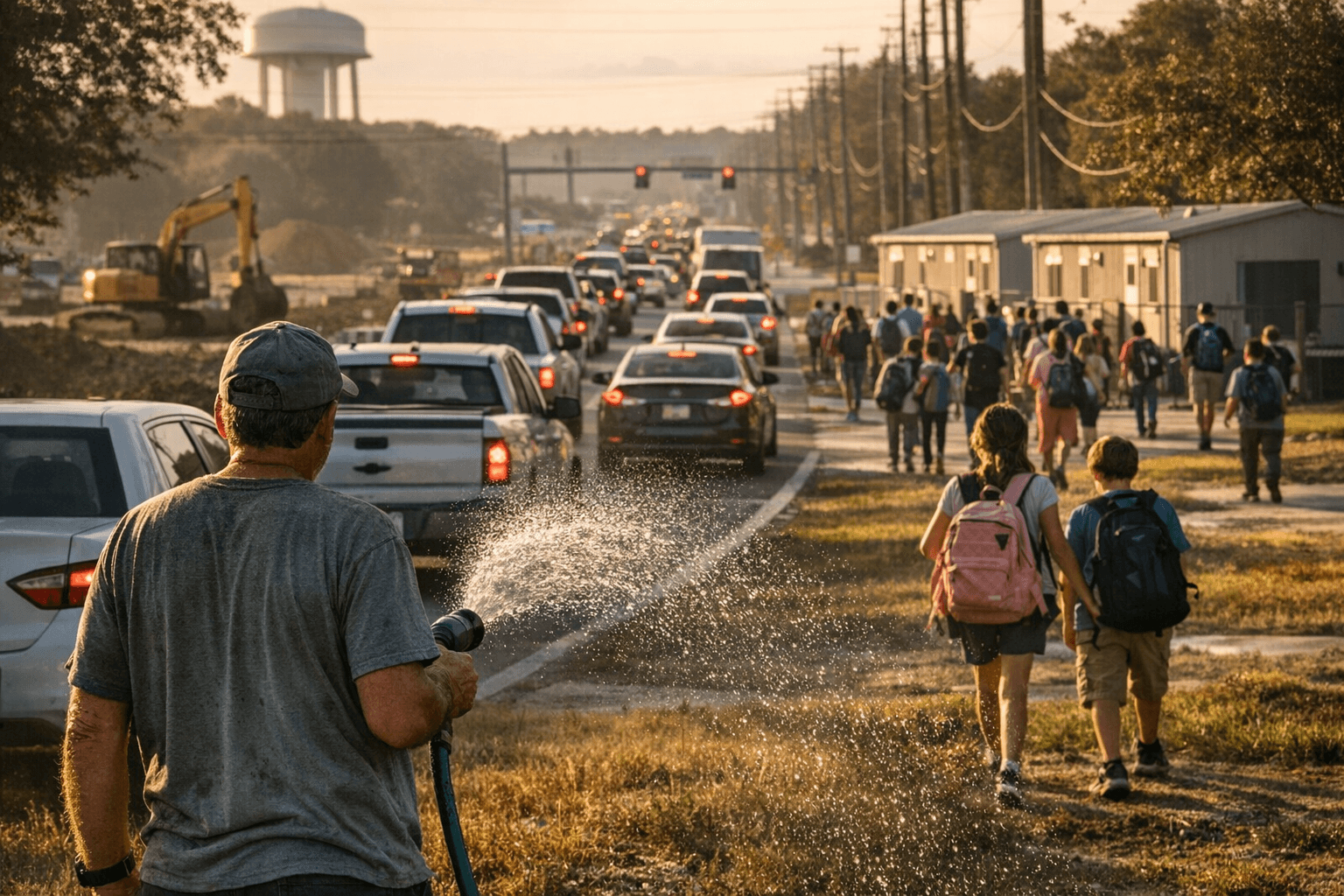
Hernando County households are feeling the cost of growth in real time: tighter watering windows, traffic pressure on key corridors, school-capacity reviews, and higher development fees meant to push some of the bill back onto builders. Voices including John Stratton, Joyce McIntyre, Jim Lipsey, Reagan Brady, Albert Bertram, and Steve Newborn keep circling the same question, who pays when new rooftops arrive faster than roads, seats, and water systems can absorb them.
Water is now rationed by the clock
The clearest sign of strain is the county’s water shortage order. Hernando County entered a Modified Phase III, “Extreme” water shortage on April 3, 2026, and Southwest Florida Water Management District says the modified order runs through July 1, 2026. One-day-a-week watering remains in effect, and watering is limited to 12:01 a.m. to 4:00 a.m. or 8:00 p.m. to 11:59 p.m. That is not a cosmetic policy change, it is a direct response to severe drought conditions colliding with growing demand.
County utilities materials tie the shortage to the regional restrictions, which means the pressure is not isolated to one neighborhood or one subdivision. It shows up in front yards, irrigation schedules, and the reliability of the broader system. Hernando County’s water-quality pages also reflect continuing concern about system conditions, while county utilities say septic-to-sewer conversion is being used in part to reduce nitrogen pollution that can affect Weeki Wachee Springs.
Roads and transit are chasing the subdivisions
The county’s transportation system is being asked to absorb the same growth that is pressuring water and schools. The Hernando-Citrus Metropolitan Planning Organization maintains congestion-management reports and traffic studies for County Line Road, US-41, and SR-200, three corridors that matter to daily commuting, deliveries, and emergency response. When those roads slow down, the cost is not abstract. It is more time in the car, more fuel burned, and more friction for anyone trying to get to work, school, or an appointment in Spring Hill or Brooksville.
County leaders are also trying to plan their way out of the jam. Hernando County updated its 2025-34 Transit Development Plan and held public workshops on September 30 and October 1, 2024. That plan matters because transit is no longer just a nice-to-have service, it is one of the few tools that can reduce dependence on roads that are already under stress. The county’s planning effort shows that officials understand the problem, but the question for residents is whether relief will arrive before congestion becomes routine.
Schools are planning against the next wave
The Hernando County School District says its planning office reviews rezonings and development proposals for school capacity and school concurrency, which is how the district decides whether a project can fit into the existing system. That review process is one of the most important chokepoints in a fast-growing county because it determines whether classrooms, buses, and staffing can keep up before homes are built and occupied.
The district’s 2024 5-Year District Facilities Work Program was adopted on April 9, 2024 and submitted the next day. It lists $278,554,748 in total revenues and $208,363,263 in total project costs across fiscal years 2023-24 through 2027-28, leaving $70,191,485 in remaining funds. The Florida Department of Education treats that work program as an authoritative source for school-facility planning, which makes the numbers more than a bookkeeping exercise. They show a district trying to map future classrooms, roofs, and site work onto a development pipeline that is still moving fast.
The county is trying to make growth pay more of its own way
Hernando County moved to raise development costs with Impact Fee Ordinance No. 2024-10, adopted by the Board of County Commissioners on July 30, 2024. The county held a first public hearing on July 9, 2024 to review the 2024 Impact Fee Study and possible changes to future rates, and the new fees took effect on December 2, 2024. In plain terms, the county is trying to shift more of the infrastructure burden onto new development instead of letting existing residents absorb every added road, pipe, and facility need through the public budget.
That approach lines up with the county’s 2024-2028 Capital Improvement Plan, which includes projects tied to road, transit, water and wastewater, public safety, parks, and airport needs. Hernando County’s Planning and Zoning Department says it manages rezonings, master plans, special exceptions, permits, and concurrency to encourage quality growth and development. Together, those documents show a government trying to use planning tools, fees, and capital spending to slow the gap between growth and infrastructure, even as the gap keeps showing up in daily life.
What relief is actually scheduled
For residents in Spring Hill, Brooksville, and the growing areas between them, the relief is not immediate. The water shortage order runs through July 1, 2026 unless it changes, transit planning continues through the 2025-34 horizon, and the school district’s facilities plan stretches to 2027-28. That is the central reality of Hernando’s boom: the county is building a framework to catch up, but households are already living with the shortages, delays, and higher costs that come first.
This article was produced by Prism’s automated news system from verified source data, official records, and press releases, then run through automated quality and moderation checks before publishing. The system is built and supervised by the people who set the standards it runs under. Read our full AI policy.
Did this article answer your question?