Hernando County in 1943: ration books, shortages and wartime routines
Ration books, school closures and shorter newspapers turned 1943 into a countywide lesson in scarcity, as Hernando County households adapted to war at home.
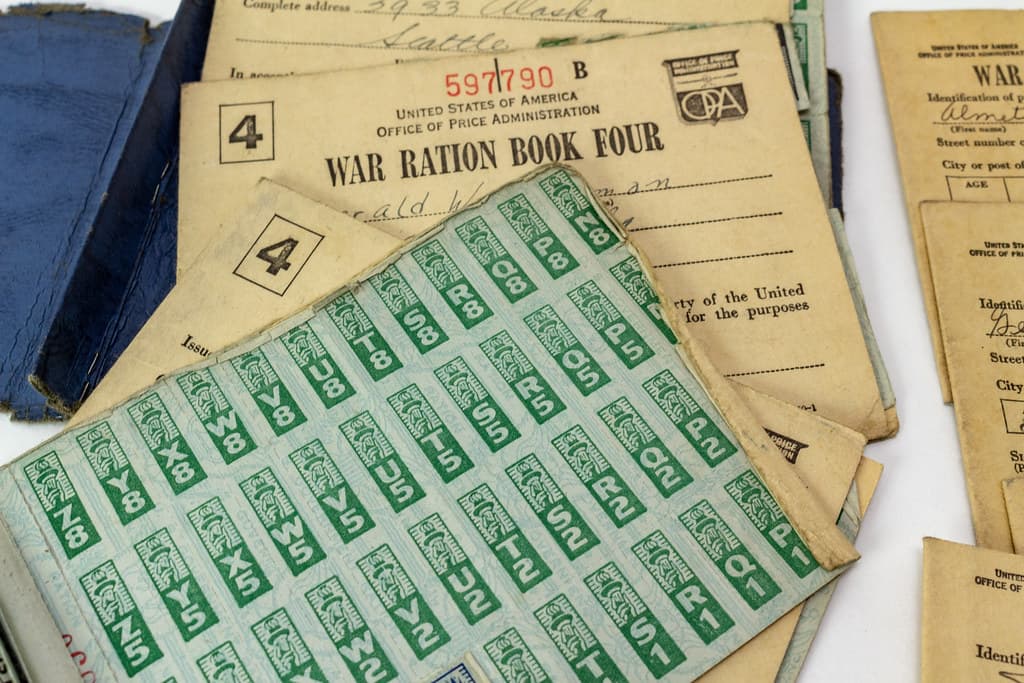
A ration book could change what a family cooked for supper, whether a child stayed out of school, and how often a neighbor made a long-distance call. In Hernando County in 1943, wartime rules reached from kitchen tables to the Brooksville Journal office, forcing residents to plan around shortages, coupons and conservation.
Ration books reached into every household
The federal Office of Price Administration was built to fight price gouging, hoarding and waste, and its wartime system put hard limits on daily shopping. In Florida, rationing began in April 1942 with sugar and soon expanded to coffee, meats, butter, canned goods and other essentials, while wartime shortages also touched metal, rubber, building materials, motor vehicles and food. Families did not simply buy what they wanted. They had to present ration books and surrender the required coupons before they could purchase rationed items.
Ration Book Two made that process even more exact. It used red and blue stamps with different point values for different classes of food, which meant shoppers had to think in terms of points, not just prices. State education materials make clear how far the system reached: every man, woman and child in Florida received a ration book during the war. For a county like Hernando, that meant scarcity was not a special case. It was a routine that shaped ordinary meals and household planning.
Schools turned into registration centers
The ration system also pulled schools into the war effort. In late February 1943, many Florida schools closed for an entire week so teachers could help consumers register for Ration Book 2. In Hernando County, Hernando High School became a registration site for town residents, while rural residents went to churches, offices and neighborhood stores to complete the process.
That arrangement shows how local institutions were repurposed for wartime administration. Schools were not only places for lessons, but also places where families stood in line, filled out forms and took on another layer of government paperwork. The Office of Price Administration’s own school materials from June 1943 asked teachers to help hold down price inflation and rationing burdens, which fit the reality on the ground in a county where classrooms and community buildings became part of the rationing network.
For families, the burden was practical and immediate. Registration meant time away from work and home, and the system depended on local cooperation. Town and country residents used different collection points, but they were all serving the same purpose: making sure every household had the documents needed to buy limited goods.
Phone lines and newspapers also felt the squeeze
Wartime conservation did not stop at the grocery counter. Southern Bell Telephone Company asked residents to limit long-distance calls, especially in the evenings when servicemen might try to reach home. That request turned the telephone into another shared resource that had to be rationed by habit, not by coupons.
The county’s newspapers also tightened their belts. The Brooksville Journal trimmed subscriptions, stopped sending complimentary copies and ran at only four pages for much of 1943. Newspaper readers in Hernando County were seeing the war’s impact in print as well as in the store. Newsprint cuts changed the size of the paper itself, while the smaller format reflected a larger wartime pattern of conserving scarce material for higher-priority uses.
These changes mattered because newspapers and telephones were among the main ways people stayed connected. A shorter paper carried fewer pages of local news, ads and community notices. A more limited phone network meant residents had to think twice before making a call that might keep someone else from reaching a soldier or relative later in the evening.
Shortages changed how people moved and lived
The pressure of wartime scarcity also reached travel and household routines. Hernando County residents cut back on nonessential driving and boating, a practical response to the larger national effort to conserve fuel and other supplies. That kind of adjustment was not glamorous, but it was part of the same discipline that shaped meal planning and shopping trips.
Florida’s home-front shortages made the disruption broader than any single product. Metal, rubber and building materials were all in short supply, along with motor vehicles and food. The effect was cumulative: fewer goods on shelves, fewer materials for repairs and construction, fewer miles driven for errands that could wait. Families that had already endured the hardships of the Great Depression now had to absorb another layer of constraint, this time tied to global war.
A local story with a modern echo
What stands out in Hernando County’s 1943 experience is not only the scarcity, but the way people organized around it. Teachers gave up school time, churches and stores became registration points, telephone habits changed, and the local paper shrank to four pages. Residents adapted because the war left little choice, but they also adapted through shared routines that spread the burden across the community.
That history still feels recognizable. Modern households in Hernando County know how to adjust when supplies tighten, prices rise or travel becomes harder, but the wartime version was more intense and more universal. Rationing did not touch one neighborhood or one income level alone. It reached across Brooksville and the county’s rural communities, making scarcity part of daily life and turning cooperation into a survival skill.
This article was produced by Prism’s automated news system from verified source data, official records, and press releases, then run through automated quality and moderation checks before publishing. The system is built and supervised by the people who set the standards it runs under. Read our full AI policy.
Did this article answer your question?