Historic Cow Palace Faces Rezoning and Restoration Challenges in Dade City
The Cow Palace, a 1957 block structure in Carver Heights that once hosted B.B. King, Ray Charles and James Brown, now faces rezoning and restoration challenges as local leaders and residents weigh its cultural value against development pressures. Decisions by county officials will shape whether the site can be preserved for community use, heritage tourism and neighborhood revitalization.
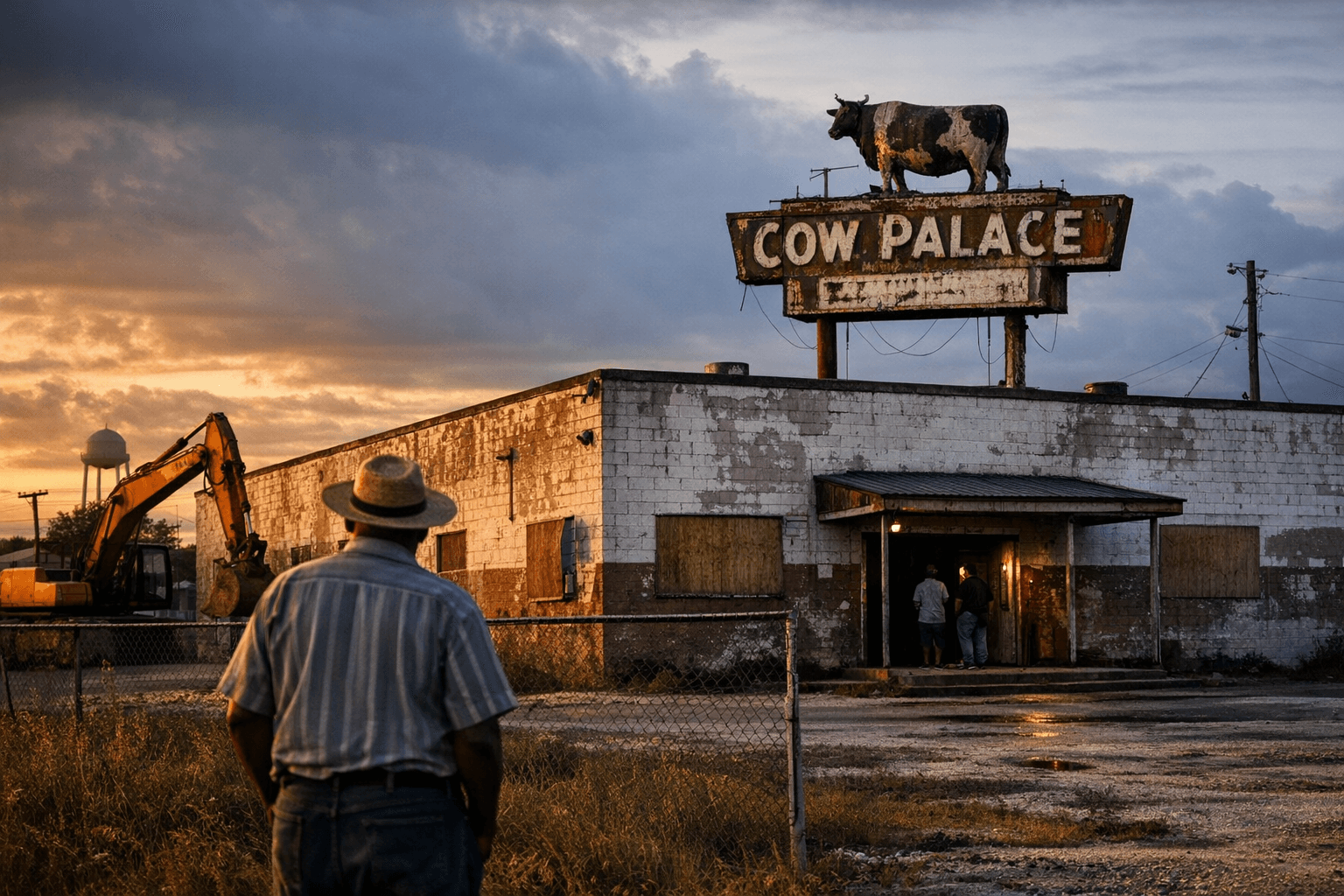
A modest block building on a dirt lane southeast of Dade City that once drew national soul and blues stars is at the center of a local preservation debate. Records with the Pasco County Property Appraiser’s Office show the structure was built in 1957, measures 4,538 square feet, and lacks heat and air conditioning. Located in Carver Heights and situated on Bull Road near Ferguson Lake, the venue was variously known as the Cow Palace, Rabbit’s Place and Jake’s Lakeside Tavern and became an unlikely stop on the Chitlin Circuit.
The site’s history is stark and complex. The neighborhood around the club was and remains economically disadvantaged, and county officials in the 1990s invested in basic infrastructure to improve access. Pasco County spent nearly $2.9 million in federal and state funds to pave 11 miles of roadways in Carver Heights by 1996. That investment illustrates the long standing connection between public infrastructure decisions and neighborhood opportunity.
The Cow Palace drew some of the biggest names in R and B and blues. Musicians who played the stage included B.B. King, Ray Charles, James Brown, Buddy Guy and Joey Gilmore. Joey Gilmore remembered the venue and said, "He was a great human being." The club’s place on the touring Chitlin Circuit helped provide employment to Black musicians at a time when other venues were closed to them. Glenn Thompson, a former secretary of the Pasco County Historical Society, explained the circuit’s name and culinary roots when he said, "The name derives from the soul food item chitterlings, for the uninformed that’s stewed pig intestines."
Accounts of performances and atmosphere underscore both the cultural energy and the social tensions of those nights. Al Brown recalled the venue’s loose security and occasional violence when he said, "I was told there was almost no security most of the time," and "No one was there to stop the trouble when it happened." Even with that reality, community leaders have argued that the Cow Palace offered a unique cultural resource. George Romagnoli, who led Pasco County’s Community Development Department decades ago, said, "There was nothing like that anywhere in Tampa Bay."
The building has not hosted regular events since the mid 1970s and now faces rezoning questions and practical restoration obstacles. Local policy choices will determine whether the property can be protected through historic designation, repurposed for community benefit, or redeveloped under new zoning. Those choices implicate county land use authority, potential eligibility for preservation grants, and the allocation of public funds for infrastructure and safety upgrades.
For residents of Carver Heights and for Hernando and Pasco county leaders considering regional cultural tourism, the outcome will be consequential. Preservation could reinforce local identity and attract visitors. Rezoning and redevelopment could change the neighborhood fabric and tax base. County officials, preservation advocates and residents now confront a decision that will test how public institutions balance heritage, equity and development in a community with deep but often overlooked cultural roots.
This article was produced by Prism’s automated news system from verified source data, official records, and press releases, then run through automated quality and moderation checks before publishing. The system is built and supervised by the people who set the standards it runs under. Read our full AI policy.
Did this article answer your question?