New Study Reexamines Hernando de Soto’s Arrival in Hernando County
The Hernando Sun revisited Hernando de Soto’s June 1, 1539 landing at the head of Charlotte Harbor and cites Charles Enloe Moore linking the expedition to a 4,000-mile trek across 14 future states.
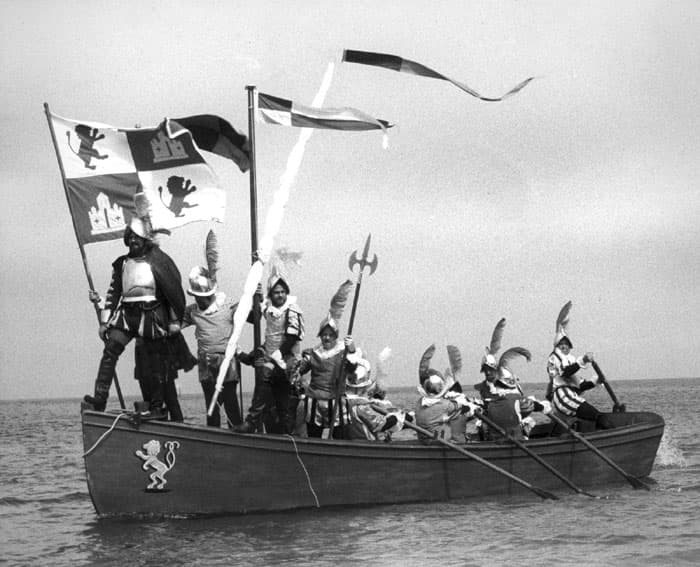
The Hernando Sun published "The DeSoto Campaign" on Feb. 18, 2026, under the page lines "By Special to The Hernando Sun" and "By Doug Sanders," revisiting Hernando de Soto’s June 1, 1539 landing near a native village at the head of Charlotte Harbor and its local legacy for the greater Tampa Bay region. The article anchors its claims in Charles Enloe Moore’s 2020 book The Long Road to Mabila and notes Moore spoke as a guest author at the Pioneer Florida Museum & Village in Dade City.
Moore’s account, as quoted in the Hernando Sun feature, places a formal imperial act on the peninsula: "Commissioned by Charles V, the King of Spain, de Soto took formal possession of La Florida on June 3rd '…and all that was connected to it, today’s North America' writes Charles Enloe Moore in his book, 'The Long Road to Mabila,' published in 2020." The piece frames that act as the legal origin of Spain’s claim in the region.
The Hernando Sun reports expedition scale and composition drawn from Moore: "Heading north in Florida, de Soto’s ambition was to find gold as quickly as possible with 620 men and 223 horses." The article preserves Moore’s description of the party as including "knights, artisans, wives, war dogs, priests, boat builders, servants and cattle," and notes the expedition’s objective was heavily driven by a search for wealth.
On geographic scope, the Hernando Sun repeats Moore’s estimate that Spain’s quest for gold pushed the de Soto expedition "through 14 future states of America" on "a trek of some 4,000 miles," and that "diaries from this expedition have given historians an early account of life in the eastern parts of the United States." The article ties that scholarship back to Moore’s local appearance at the Pioneer Florida Museum & Village in Dade City.
The Hernando Sun recounts de Soto’s end and the fate of his men with two explicit chronology points: quoting Moore, "Finding no gold or food for de Soto to proceed any further, Moore writes, 'He died of anguish in Arkansas in 1542.'" The piece then reports the expedition’s survivors were reduced: "His men, less than 300 in 1543, fled south toward Mexico City, where Spain’s major outpost was located on the continent."

The feature connects the expedition to local memory and mortality: "At least 30 lancers of de Soto’s men headed back and made a rest in Dade City before returning to Spain," the Hernando Sun states, and it records Moore’s assessment of disease impact: "After the losses experienced by de Soto, Moore says thousands died in native tribes when exposed to European diseases brought over from the white expeditions."
For readers seeking deeper documentary context, the Hernando Sun lists several scholarly works with the following descriptions: Ewen, Charles R., and John H. Hann. Hernando de Soto Among the Apalachee: The Archaeology of the First Winter Encampment. Gainesville: University Press of Florida, 1998. "Narrative of the discovery, excavation, and interpretation of the only known de Soto camp site. Provides historical background, detailed description of the site and what was learned from it, and new translations of the portions of the sixteenth century travel narratives relating to this camp. Includes illustrations, maps, bibliographic references, and index." Sola y Taboada, Antonio del, and José de Rújula y de Ochotorena. El Adelantado Hernando de Soto: Breves noticias, nuevos documentos para su biografía. Badajoz, Spain: Ediciones Arqueros, 1929. "Particularly important for its documentary appendices, that include the agreement between de Soto and Ponce de León, de Soto’s capitulation for the conquest of Florida, the information about his background that he submitted to enter the Order of St. James, his will, and an inventory of his property." United States De Soto Expedition Commission. Final Report of the United States De Soto Expedition Commission. Washington, D.C.: Government Printing Office, 1939. "A scholarly, definitive study of the route followed by the de Soto expedition." Galloway, Patricia, ed. The Hernando de Soto Expedition: History, Historiography, and 'Discovery' in the Southeast. Lincoln: University of Nebraska Press, 1997. "Anthology of essays that seeks to expand traditional studies of de Soto’s expedition to discuss its broad cultural implications, as well as focus on specific details such as the daily routine and health of its members. Includes bibliographic references and index." Hemming, John. The Conquest of the Incas. New York: Harcourt Brace Jovanovich, 1970. Note: "An excellent, well-written account of the conquest of Peru, with information about de Soto’s role in it."
The Hernando Sun page presents on-site metadata and elements that bear local verification: the page header strings display "Hernandosun]: HomeAt Home & BeyondThe DeSoto Campaign" and section labels "At Home & Beyond" and "History," the article header line shows "# The DeSoto Campaign," and the byline lines "By Special to The Hernando Sun" and "By Doug Sanders" appear on the page. Near the article header the numbers "0" and "33" are visible and the page lists social-share strings "Share FacebookTwitterEmail" as displayed. Navigation links include "Previous article Hernando Lifter Duran Earns State Medal" and "Next article Notes from the Museums: Winter Staple."
The feature as published raises archival questions for local historians: the Hernando Sun reproduces Moore’s dated assertions but shows a tension in chronology between Moore’s quoted death date, "He died of anguish in Arkansas in 1542," and the article’s separate statement that "His men, less than 300 in 1543, fled south toward Mexico City." Confirming the Dade City rest of "at least 30 lancers," the precise meaning of the page numbers "0" and "33," and the authorship labeling on the Hernando Sun page would clarify local claims and help place Moore’s account alongside primary expedition records and the U.S. De Soto Expedition Commission route analysis.
This article was produced by Prism’s automated news system from verified source data, official records, and press releases, then run through automated quality and moderation checks before publishing. The system is built and supervised by the people who set the standards it runs under. Read our full AI policy.
Did this article answer your question?