Ridge Manor’s lost clubhouse recalls the community’s golf-course heyday
Ridge Manor’s demolished clubhouse once held dinners, dances and civic meetings in one place. Its loss shows how much a town gives up when the social center disappears.
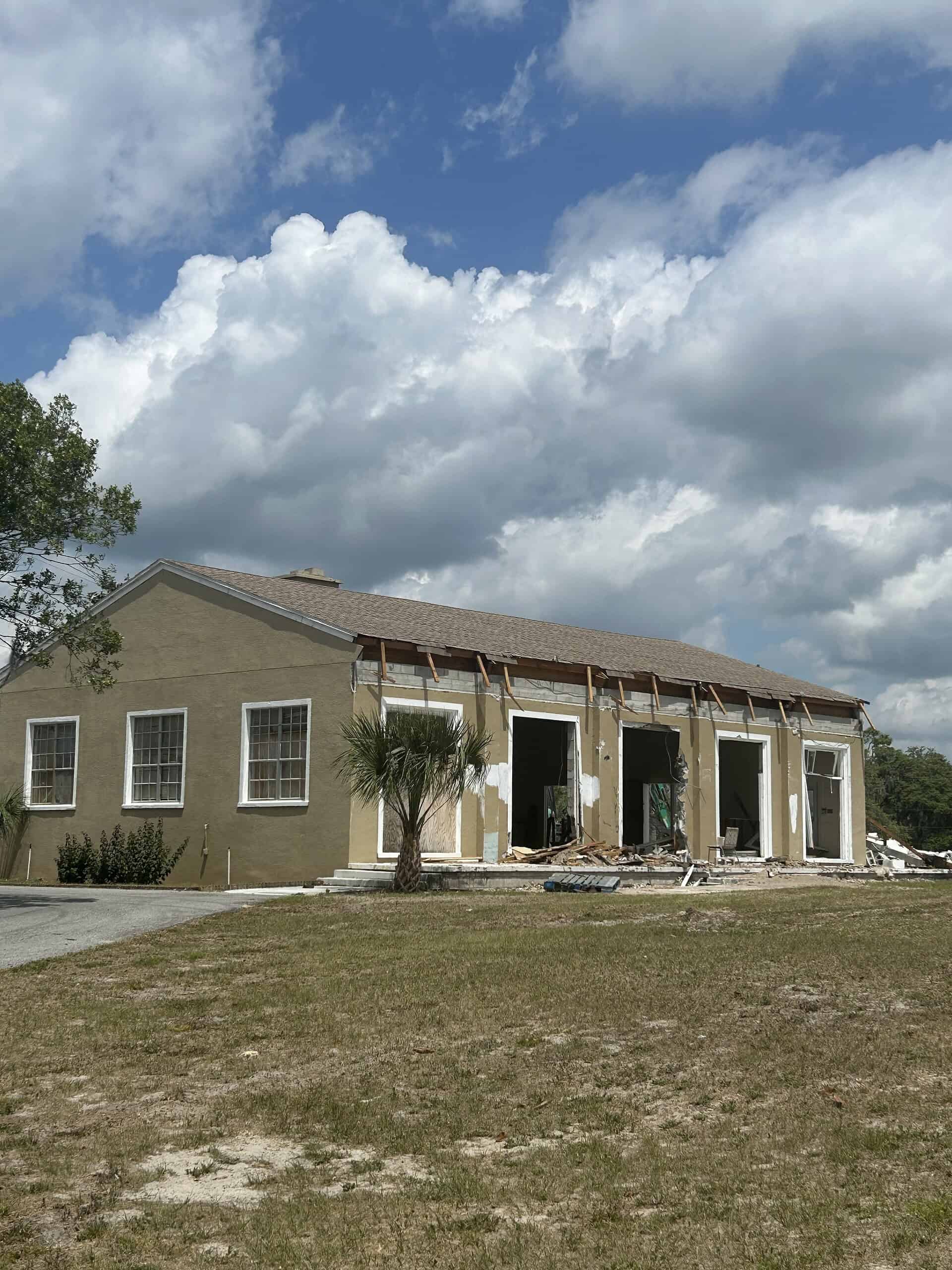
The clubhouse is gone, but the hole it left is still easy to see in Ridge Manor. The 7,665-square-foot building, which stood since 1959, was once the kind of place that made a neighborhood feel organized, visible and whole: clubhouse, pro shop and restaurant in one landmark, set at the center of eastern Hernando County’s golf era.
How Ridge Manor took shape
Ridge Manor began as J. Earl Miller and Frances Miller’s idea of a planned community built around the natural features they valued most. They saw opportunity in the lakes, rivers, fishing, climate and rolling terrain, and Miller started assembling land near the U.S. 301 and State Road 50 intersection in the early 1950s before buying more acreage along the Withlacoochee River.
That land became more than a subdivision layout. By the late 1950s, Ridge Manor had more than 200 houses, paved roads, a new water system and an 18-hole course. The golf club was not an accessory to the community story, it was part of the development itself, helping define how people lived, met and spent their weekends.
The course behind the clubhouse
The golf course that anchored the property has a complicated opening history, but the central facts are clear: Hans Schmeisser designed the original layout, and Willie Ogg later expanded it into the 18-hole course that residents came to know. Golf directories list Whispering Oaks Golf & Country Club as opening in 1954 with nine holes, while local history places the course’s opening in 1956 after Miller hired Schmeisser. In 1958, Ogg added nine holes and redesigned the original nine, giving the club the full footprint that made the clubhouse a larger regional draw.
Schmeisser was no minor local hand. He was born and educated in Germany, came to the United States in the 1920s to work on landscaping at Everglades City and went on to design and build one of Florida’s first golfing facilities. He also helped establish Florida’s first golf course superintendents’ association, and an award notice later described him as a Florida golf course superintendent for more than 50 years. In other words, the man who helped shape Ridge Manor’s golf identity also helped shape Florida golf itself.
What the clubhouse meant to daily life
The clubhouse was where the neighborhood met itself. It hosted dinners, holiday parties, Halloween extravaganzas, dance bands, bridge clubs, Kiwanis meetings, golf clinics, fundraisers, fashion shows, antique shows and music recitals. That range mattered. It was not just a place for golfers to check in before tee time, but a social engine where people who lived nearby could gather without leaving the community.
Its visibility mattered too. The building was a landmark from the surrounding area, the sort of structure people used for directions, for memory and for identity. When a clubhouse also holds the restaurant, the pro shop and the social calendar, losing it means more than losing a building. It means losing a central room where the town’s routines once overlapped.

What Ridge Manor has, and does not have, today
Ridge Manor still carries the old golf name in its geography and branding. Current listings show the Whispering Oaks name remains active in nearby residential development, a reminder that the golf-course identity never fully disappeared, even after the clubhouse did. The name survives, but the kind of shared gathering place that once sat under it is harder to find.
The area is also being shaped by forces that have little to do with clubhouse life. The Florida Department of Environmental Protection describes the Ridge Manor Gap project as a strategic effort about 1 mile north of Ridge Manor and 10 miles east of Brooksville, meant to connect the disjunct east and west units of Withlacoochee State Forest and protect floodplain land from commercial and residential conversion under development pressure. At the same time, modern U.S. 301 widening plans run from State Road 50 to just south of U.S. 98 in eastern Hernando County, showing that the corridor remains a place where land use, access and development are still being decided.
That is what makes the lost clubhouse more than a nostalgic image. Ridge Manor once had a physical center where civic life, recreation and local business met in one building. Today, the closest replacements are spread across conservation planning, roadway expansion and residential branding, not gathered under one roof. The old clubhouse may be gone, but it still marks the moment when Ridge Manor had a shared place that did more than serve golf.
This article was produced by Prism’s automated news system from verified source data, official records, and press releases, then run through automated quality and moderation checks before publishing. The system is built and supervised by the people who set the standards it runs under. Read our full AI policy.
Did this article answer your question?