Transitional kindergarten echoes Montessori approach, meeting children where they are
Transitional kindergarten may sound new, but in Hernando County it mostly echoes a familiar idea: meet 4-year-olds where they are, before kindergarten demands begin.
What transitional kindergarten really means for Hernando County families
Transitional kindergarten is getting fresh attention, but the idea behind it is not new. For many Hernando County parents, the real question is simpler: is this just another label, or does it actually change what a young child experiences in the classroom? The short answer is that it matters most when a family needs a bridge between preschool and kindergarten, especially for a child who is not ready for the full pace, structure, or expectations of traditional kindergarten.
A bridge year, not a brand-new invention
Transitional kindergarten sits between preschool and kindergarten, usually for children ages 4 to 5. The point is to give young students a year that feels more structured than preschool but less demanding than a full kindergarten classroom. That makes the concept useful for families who know their child is bright, curious, and still very much a little kid.
Sunny Day Maglio Talbert’s framing is useful because it strips away the buzzword and gets to the core idea: children do not all arrive at the same readiness level. Some need more time with routines, language, fine-motor work, or social-emotional practice before they are expected to keep pace with older classmates. Transitional kindergarten is built around that reality instead of pretending every child starts from the same place.
Why Montessori keeps coming up in the conversation
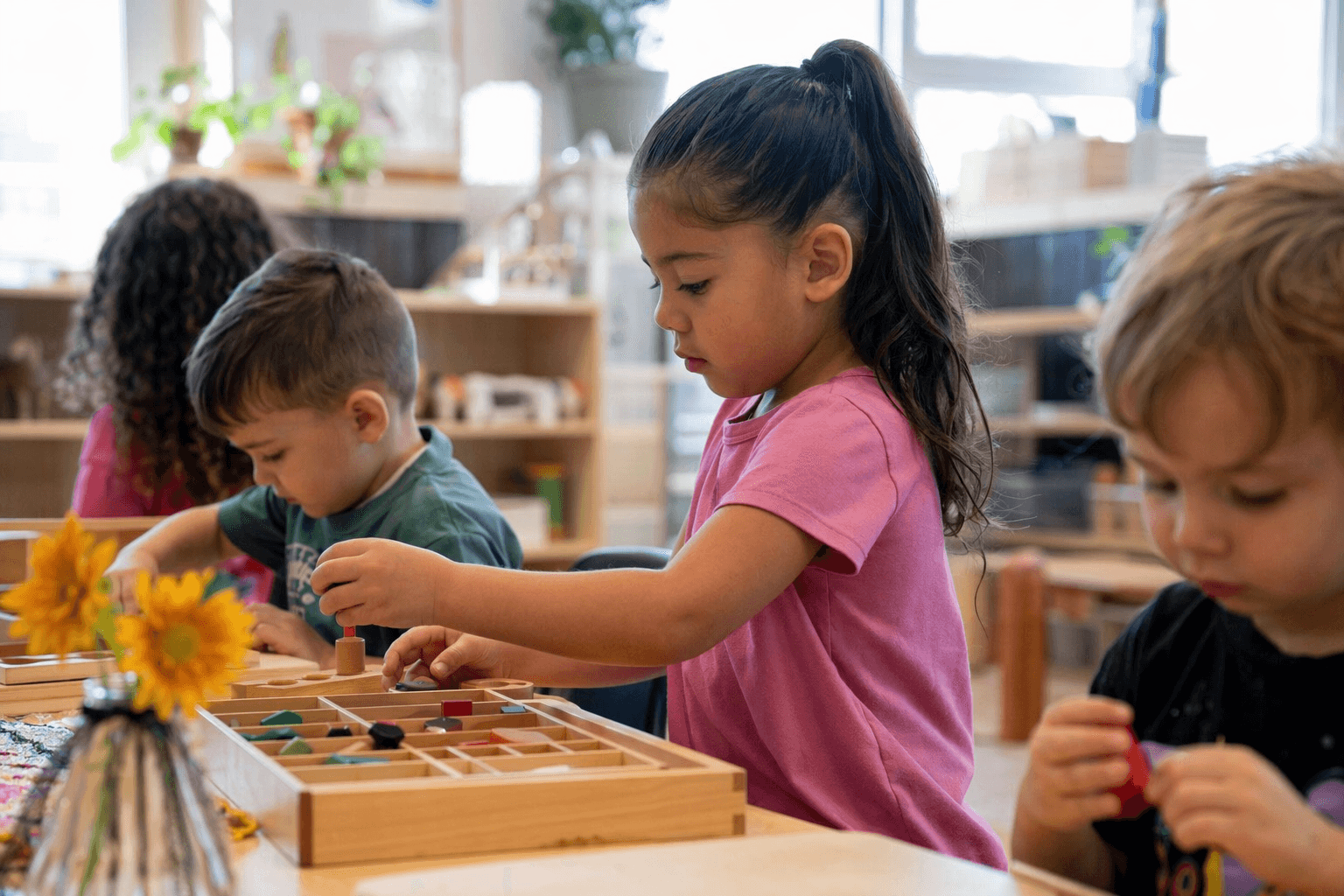
The comparison to Montessori is not accidental. Montessori Early Childhood classrooms are built around many of the same principles people now associate with transitional kindergarten: multi-age groupings, developmentally sequenced materials, and a classroom that asks teachers to meet children where they are. The American Montessori Society says that level serves children ages 2½ to 6 and can include 20 to 30 students across three age years.
That structure matters because it shows the core concept is not revolutionary. Montessori has long treated readiness as something that develops over time, not something a child either has or does not have on a single birthday. For Hernando County families weighing early-learning options, that means the label may be new, but the educational philosophy behind it has been around for decades.
How it differs from preschool and kindergarten
Preschool is generally the gentlest entry point, focused on play, routines, social growth, and early language development. Transitional kindergarten moves a step closer to school by adding more intentional academic readiness work while still preserving age-appropriate pacing. Traditional kindergarten, by contrast, usually assumes children can sit for longer blocks, follow more formal routines, and begin more sustained academic instruction.
The practical difference is not just the subject matter. It is the expectation level. In a transitional kindergarten setting, a child may work on letters, numbers, listening, cooperation, and self-regulation without being pushed into the same benchmark timeline as an older kindergarten student. That can be especially important for children who are socially ready for a classroom but still need time to grow into school habits.
What Florida already has in place
Florida families are not starting from zero. The state’s Voluntary Prekindergarten Program began in the 2005-06 school year and has served more than 3.1 million children. Florida was one of the first states to offer free prekindergarten for all 4-year-olds regardless of family income, which makes access to early learning a policy issue, not just a private family choice.
VPK is generally available to children who are 4 years old on or before Sept. 1. If a child turns 4 between Feb. 2 and Sept. 1, parents can choose to delay VPK until the next year and enroll when the child is 5 before kindergarten. That age flexibility matters for families trying to decide whether a child needs another year of early learning before the kindergarten transition.
What readiness means in Florida schools
Florida’s readiness system assumes that children arrive at kindergarten with uneven preparation. In 2022-23, the state adopted FAST Star Early Literacy as part of its statewide screening and progress-monitoring system, replacing the older Florida Kindergarten Readiness Screener. The state says the results help teachers plan instruction for each child’s needs and give parents useful information.
That approach supports the logic behind transitional kindergarten and other bridge programs. Readiness is not treated as a simple yes-or-no test. It is something that can be measured, supported, and improved, which is exactly why families should look closely at any early-childhood program that claims to prepare children for kindergarten.
Where Hernando County fits into the picture
Hernando County School District already has a stake in early learning. The district points families to Head Start and Early Head Start, which are designed to promote school readiness by supporting social, physical, and cognitive development. That means local schools are already part of the larger early-childhood pipeline, even before children reach kindergarten.
The district also planned to expand VPK enrollment from 253 to 373 students for the 2026-27 school year. The expansion included additional classrooms at Eastside Elementary, J.D. Floyd Elementary, Moton Elementary, Winding Water K-8, and two classes at Suncoast Elementary, which did not previously have VPK. That is a concrete sign that demand for early-learning seats is real in Hernando County, and that district leaders see pre-K as part of the educational system, not an add-on.
Superintendent Ray Pinder has said pre-K is “a really important part” of a student’s educational career and helps the district build relationships with parents from the beginning. The Early Learning Coalition of Pasco and Hernando Counties says VPK prepares 4-year-olds for kindergarten and supports early literacy, executive functioning, and social-emotional skills. Those are the same building blocks families should look for in any transitional kindergarten model.
What parents should ask before enrolling
The label alone is not enough. Before enrolling a child, families should ask what the program actually does day to day:
- Is it free, like Florida’s VPK, or are there fees?
- Is the class meant for 4-year-olds, 5-year-olds, or a mix of ages?
- How much of the day is devoted to play, literacy, early math, and social development?
- Does the classroom use small-group instruction or multi-age grouping?
- What readiness skills are expected by the end of the year?
- How does the program help children who need extra time with language, behavior, or motor skills?
- Does it align with VPK, Head Start, or another state or district program?
Those questions matter because “transitional kindergarten” can describe very different classrooms depending on how a district or provider designs it. A program that truly bridges preschool and kindergarten should be developmentally appropriate, affordable when possible, and clear about what children are expected to learn.
For Hernando County families, the bottom line is that transitional kindergarten may be a new phrase, but the goal is familiar: give young children a better fit before kindergarten becomes the next big step.
This article was produced by Prism’s automated news system from verified source data, official records, and press releases, then run through automated quality and moderation checks before publishing. The system is built and supervised by the people who set the standards it runs under. Read our full AI policy.
Did this article answer your question?