Weeki Wachee paddling surges, residents confront parking and capacity limits
The Weeki Wachee River remains one of Hernando County's top paddling destinations, but growing demand has made reservations, shuttle planning, and early arrival essential for a smooth trip. Parking pressure at Rogers Park and weekend capacity limits at the state park affect residents and businesses and highlight trade offs between recreation and resource protection.

Hernando County's Weeki Wachee River continues to draw paddlers for its clear spring water and scenic runs, but local users say the most popular launch points now require advance planning. The head spring at Weeki Wachee Springs State Park provides immediate access to the clearest water and classic downstream floats, and park concessionaires offer rentals and shuttle service. Reservations are often required for the state park launch and weekend capacity limits mean the park can reach full capacity early on busy days.
Rogers Park in Spring Hill serves as a popular public launch and pickup point, and many paddlers use it to put in for upriver trips. Those who paddle upriver from Rogers Park will work against the current to reach the spring head, then float back downstream. Typical float options range roughly 3 to 6 miles depending on put in and take out, and shuttle services and rental vendors operate on a seasonal basis. Rogers Park parking can fill early, and crowded weekends are common during the fall through spring window when wildlife viewing, including manatee sightings in cooler months, tends to be best.
The local economic implications are material for Hernando County. Seasonal rental vendors and shuttle operators capture visitor spending that supports small businesses, while capacity limits and parking constraints shape the visitor experience and local traffic patterns. Managing access is a balance between preserving the fragile spring ecosystem and supporting an outdoor recreation economy. Park rules that prohibit exiting a vessel in restricted areas aim to protect habitat, but they also require clear communication and enforcement to prevent accidental violations by newcomers.
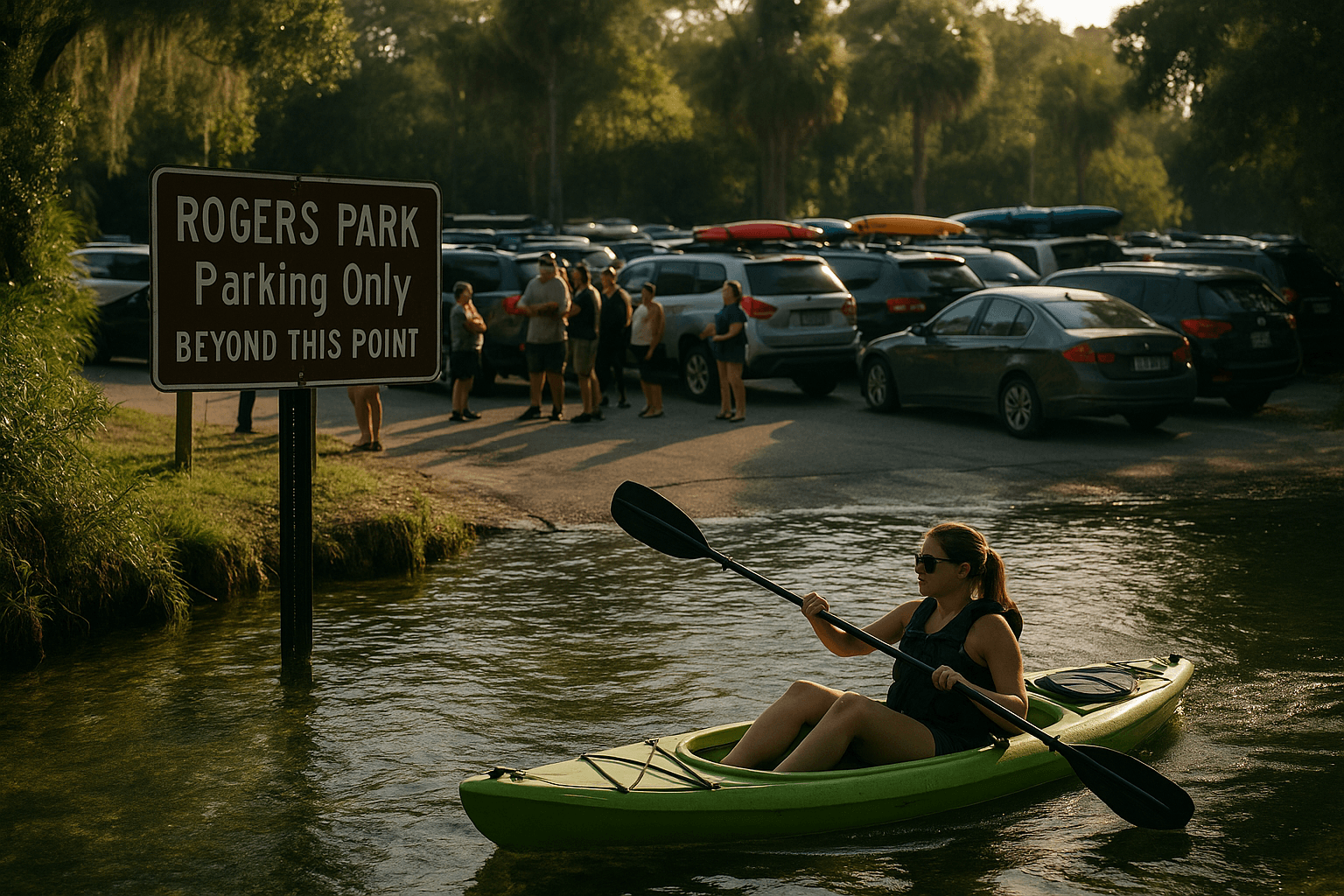
For residents and visitors the practical guidance is straightforward. Arrive early to secure parking, make reservations for the state park launch when required, bring reef safe sunscreen, water, a dry bag and footwear that straps on, and consider using vendor shuttles if you do not want to paddle upstream on your return. From a policy perspective, Hernando County may need to consider coordinated parking and shuttle strategies or expanded seasonal services to ease congestion without increasing pressure on the springs. Preserving water clarity and wildlife habitat while supporting a year round recreation economy will require continued attention to capacity management and vendor regulation.
Know something we missed? Have a correction or additional information?
Submit a Tip