Hidalgo County dispatch and rural addressing keep emergencies findable
A 911 call in Hidalgo County depends on fast dispatch, exact rural addresses, and a countywide EMS network that reaches Lordsburg, Rodeo, Animas and beyond.
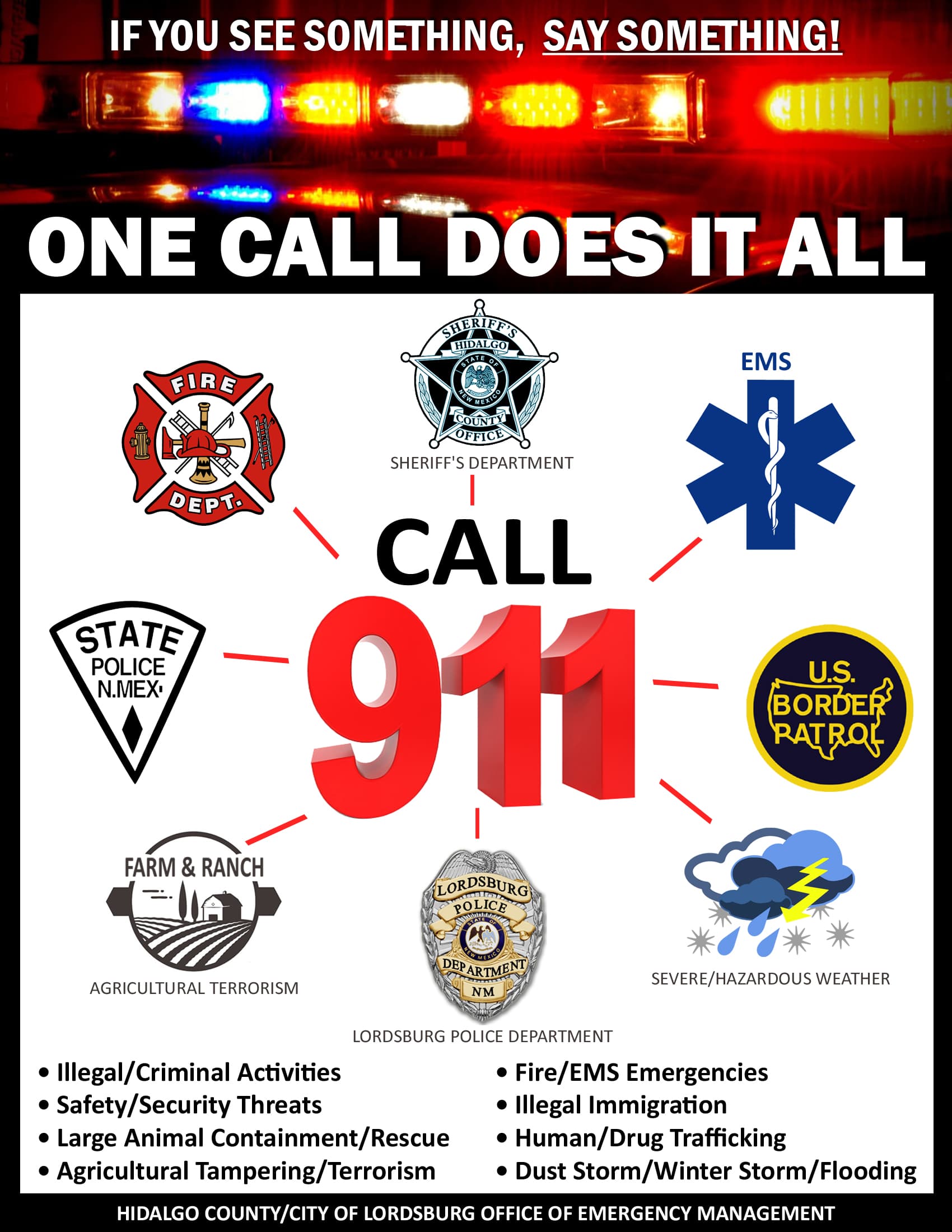
Dial 911 in Hidalgo County and the answer depends on more than a quick voice at the other end of the line. Dispatchers are using computerized telephone and mapping systems to sort law enforcement, fire and medical calls, while a rural address can decide whether help finds a home on the first try or has to search for it.
How the first minutes work
Hidalgo County’s Dispatch Services are built for a geography where roads can stretch long distances between homes, ranches and small communities. The county says dispatchers must stay calm, know county boundaries and all roads, and monitor emergency radio frequencies so they can pass specific, timely information to the right responders. That work is not abstract. It is what links a caller’s voice to the correct crew, unit and route.
When the emergency is reported, the county tells residents to give their name, callback number and address, then answer the dispatcher’s questions fully. Those details help dispatch narrow the location and send the right kind of help, whether the call needs law enforcement, fire personnel or medical response. A rushed call, a vague location or a missed callback number can slow that handoff at the exact moment when speed matters most.
Why rural addressing matters here
Hidalgo County’s Office of Emergency Management & E911 Rural Addressing exists because so much of the county is spread across open country, not neatly packed city blocks. Tyler Plumb is the county’s 911 Addressor, and the rural address application is the county’s way of turning a parcel, driveway and structure into something responders can locate quickly.
The form asks for resident and landowner information, a legal description or parcel number, the structure type, driveway and structure location, GPS coordinates for both the structure and driveway, and whether an address sign was provided. It also instructs applicants to give a copy of the address assignment to each utility company serving the property. That is a small administrative step with real emergency value: once utilities, dispatch and responders are working from the same address, the chance of confusion drops.
For anyone living outside a dense subdivision, the county’s message is simple. Make sure the property has an assigned rural address, make sure the sign is visible, and make sure the details attached to that address are the ones dispatch and utilities will actually use. A ranch road known by one family name but not marked on the county system is exactly the kind of place where a delayed response can start.
What EMS coverage looks like in Hidalgo County
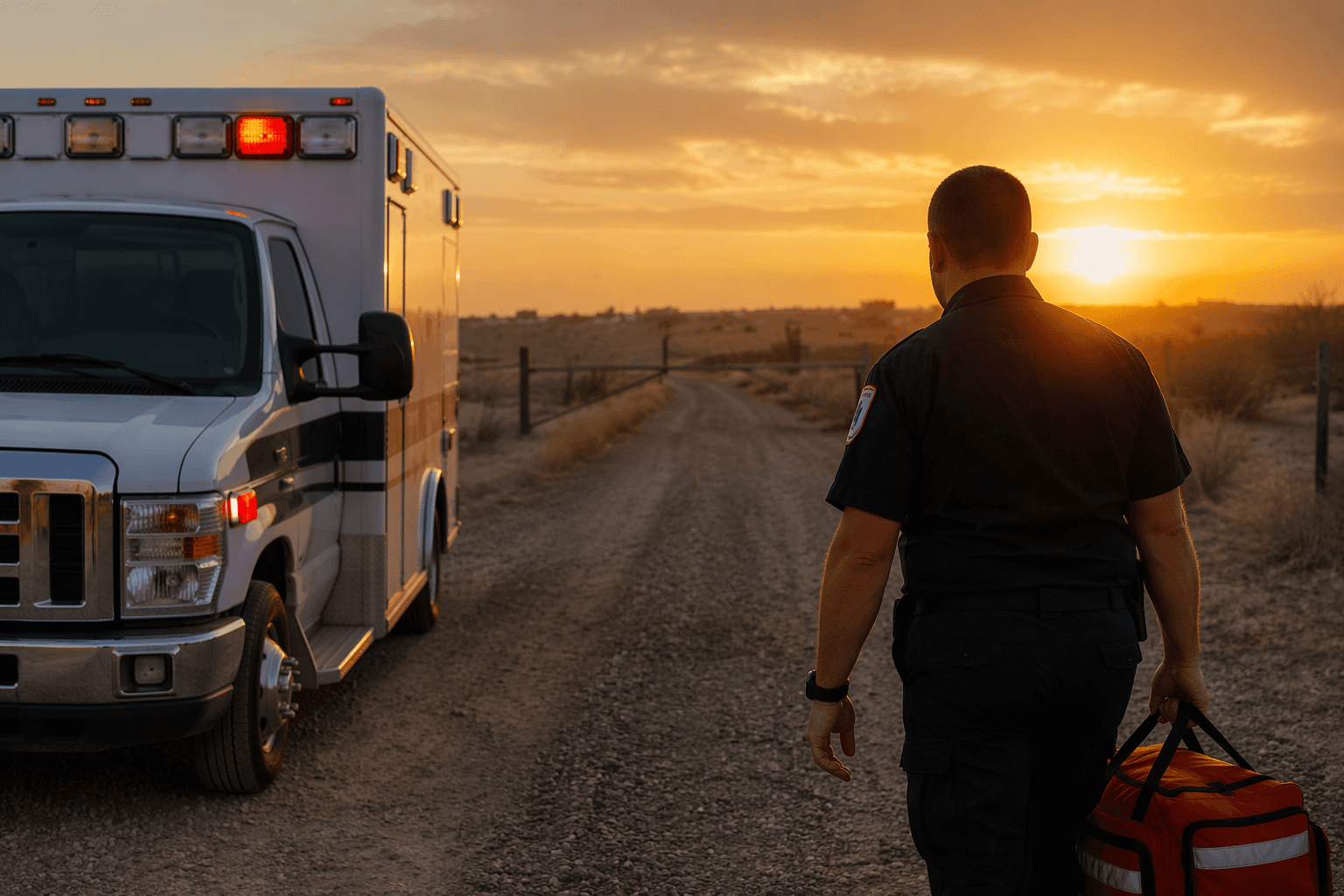
Hidalgo County says its EMS system includes one full-time department in Lordsburg and four volunteer departments in the county’s most rural areas. Together, they provide 24/7 coverage for nearly the whole county and parts of southern Grant County. That is a countywide network built for a place where the nearest ambulance may not be around the corner, but may still need to reach you quickly across a very large map.
The county also says its centralized dispatch system helps those departments work together to provide emergency care hundreds of times each year. That coordination matters in a county that also covers football games, Relay for Life events, county fairs, rodeos and other public gatherings. In practice, the same system that gets a unit to a rural house also helps cover a packed bleacher line or a community event where medical support has to be ready before anyone needs it.
David Whipple serves as EMS Director, and the county’s EMS job posting shows the system is still recruiting the people who keep it running. The posting says Hidalgo County is accepting applications for full-time, part-time or PRN EMTs and offers 100% of health, dental and vision insurance for employees. In a place this large and sparsely populated, staffing is part of emergency readiness, not a separate issue from it.
A county that has to cover a lot of ground
Hidalgo County has 3,438.6 square miles of land area and a 2020 population of 4,178. That works out to about 1.2 people per square mile based on Census figures, while the county’s About page puts the number at 1.4 persons per square mile. Either way, the picture is the same: responders are serving a very large stretch of land with very few people spread across it.
The county is the southernmost in New Mexico, bordering Arizona and Mexico, and Lordsburg is the county seat and largest city. That border geography adds another layer to emergency response because the county is not just covering one town center. It is coordinating across ranch country, smaller communities and long travel distances where an address can be the difference between a direct route and a search.
Why the system looks the way it does
Hidalgo County was created in 1920 after legislation passed on February 25, 1919. The emergency system in place now serves a county that was built after many settlement patterns were already set by farming, ranching and mining. That history helps explain why modern dispatch and rural addressing have become so central: the county has had to adapt older land patterns into a system that emergency crews can navigate fast.
The state framework reinforces that local work. New Mexico’s emergency medical systems rules define a local EMS system as a coordinated system that can include community education, emergency medical dispatch, law enforcement, licensed EMS personnel, fire medical rescue, ambulance and hospital support. New Mexico lawmakers have also described next-generation 911 as supporting voice, text, video and data, along with improved geographic-system-based routing and resilience. Hidalgo County’s dispatch and addressing work fits squarely inside that model.
What to do before you need help
A few practical steps make a real difference in a county like this:
- Confirm that your property has a rural address assigned through the county.
- Check that the address sign is in place and visible from the road.
- Give the correct address assignment to each utility company serving the property.
- Keep the dispatcher’s basics ready: your name, callback number and exact location.
- Be ready to answer every question fully, even if the call feels urgent.
Those steps are small, but they are the way the county’s emergency system stays usable when a caller is scared, a road is unmarked or a home sits far from the nearest pavement. In Hidalgo County, the fastest response still starts with making the place easy to find.
This article was produced by Prism’s automated news system from verified source data, official records, and press releases, then run through automated quality and moderation checks before publishing. The system is built and supervised by the people who set the standards it runs under. Read our full AI policy.
Did this article answer your question?