Hidalgo County's Bootheel Offers Five Remote, Scenic Outdoor Destinations Worth Exploring
Big Hatchet Peak and four other Bootheel destinations offer some of New Mexico's most rewarding and least-crowded outdoor experiences.
The Bootheel gets its name from its shape on the map: a narrow southwestern extension of New Mexico that dips below the rest of the state like the heel of a boot. It is one of the least-visited stretches of the American Southwest, and for anyone willing to make the drive from Lordsburg or Animas, that remoteness is exactly the point. Five destinations stand out for their scenery, wildlife, and the particular kind of silence that only comes from being genuinely far from anywhere.
Big Hatchet Peak and the Big Hatchet Mountains
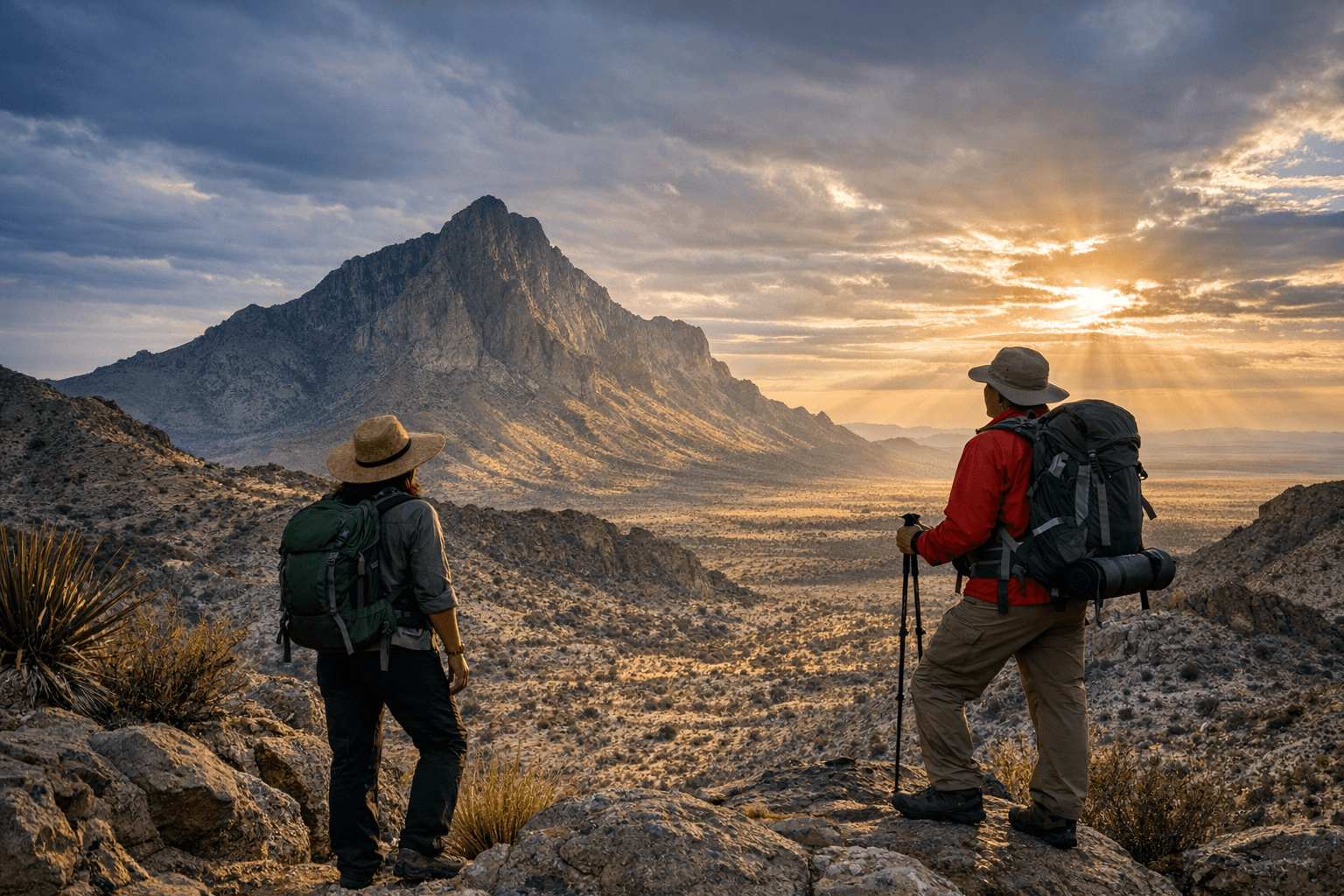
Rising sharply from the desert floor of the Bootheel's interior, Big Hatchet Peak is the defining landmark of the Big Hatchet Mountains, a range that most New Mexicans have never visited and few could place on a map. That obscurity is part of the appeal. The Big Hatchets are managed as a wilderness study area, which means the land remains largely undeveloped and access is deliberately minimal: no maintained trails, no visitor center, no fee station. Navigation here demands map-reading skills and a willingness to route-find across open terrain.
The peak itself draws hikers who want a genuine desert summit without the crowds of more famous New Mexico ranges. The surrounding bajadas and rocky slopes support a surprising range of desert life, including mule deer, javelinas, and raptors that use the ridgeline thermals. Mornings in the Big Hatchets are particularly striking, when low light catches the exposed rock faces and the silence is broken only by wind and birdsong. Anyone heading out here should carry more water than they think they need; the nearest services are a long drive away.
Peloncillo Mountains and Steins Peak
The Peloncillo Mountains straddle the New Mexico-Arizona border and represent one of the most ecologically significant mountain ranges in the region. They form part of a critical wildlife corridor connecting the Sierra Madre of Mexico to ranges farther north, and the biodiversity here reflects that connectivity. Birders in particular treat the Peloncillos as a destination in their own right, with species mixing from both the Chihuahuan and Sonoran desert systems appearing along canyon drainages and wooded slopes.
Steins Peak is the area's most prominent summit and offers a focal point for hikers exploring this range. The ghost town of Steins, located near the base of the mountains along the old Southern Pacific Railroad route, adds a layer of human history to any visit. Once a railway water stop and small community, Steins now stands as a collection of weathered adobe and wood structures that speak to the hard, transient lives of people who tried to put down roots in one of the driest corners of North America. The combination of rugged mountain terrain, canyon birding, and historical atmosphere makes the Peloncillo area one of the Bootheel's most layered destinations.
Lordsburg Playa and the Surrounding Flats
The broad, flat playas that spread across Hidalgo County's lowlands are not the kind of scenery that appears on postcards, but they reward patience and attention. After significant rainfall, the Lordsburg Playa and similar basins fill with shallow water that attracts migratory shorebirds and waterfowl in numbers that can genuinely surprise first-time visitors. The flat, open sight lines that make the playas feel austere in dry conditions become an advantage when scanning for birds, and the reflections of clouds and sky on standing water transform the landscape entirely.
During dry periods, the playas offer a different but equally compelling experience: vast, cracked earth extending to distant mountain ranges on every horizon, with the kind of scale that makes the Bootheel feel like its own world. Early mornings and late afternoons are the best times to visit, both for wildlife activity and for the quality of light across the flats.
Red Rock and the Gila River Corridor
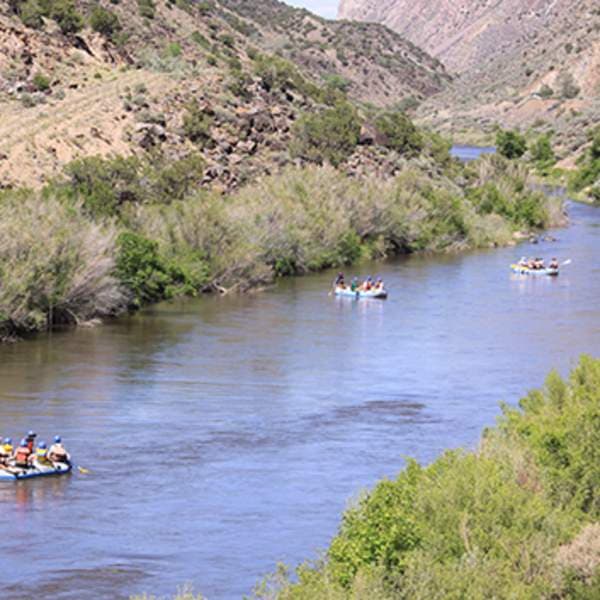
The small community of Red Rock, located in the northern part of Hidalgo County along the Gila River, anchors one of the region's most accessible and productive outdoor areas. The Gila River here supports a ribbon of riparian vegetation, cottonwood and willow corridors that provide habitat dramatically different from the surrounding desert. This contrast makes the river corridor a magnet for wildlife, and birding along the Gila near Red Rock is considered among the best in the state during spring and fall migration.
The red volcanic cliffs that give the community its name rise above the river valley and provide a striking visual backdrop for hiking and wildlife watching. The area is quieter than the more heavily visited sections of the Gila farther north near Silver City, which means a better chance of encountering wildlife without competition from other visitors. Pronghorn antelope are frequently spotted on the surrounding grasslands, and the river itself supports populations of native Gila chub and other fish species that have largely disappeared from other parts of their historic range.
Animas Valley and the Animas Mountains
The Animas Valley is a wide, open grassland basin flanked by the Animas Mountains to the west and the Alamo Hueco Mountains to the east. The valley floor sits at an elevation that moderates temperatures compared to the lower desert, and the grassland habitat here supports one of the more diverse assemblages of grassland birds in the state. Scaled quail, meadowlarks, and various sparrow species are common, and the valley is one of the more reliable locations in New Mexico to find Chihuahuan ravens and other species associated with open desert grasslands.
The Animas Mountains themselves are largely under private ranch ownership, but public land access points exist, and the range's oak-covered upper slopes and rocky canyons have long attracted naturalists and backcountry travelers. The town of Animas, the only incorporated community in Hidalgo County besides Lordsburg, serves as a practical base for exploring both the valley and the surrounding ranges. Fuel, limited supplies, and local knowledge are available there before heading into terrain where cell service and pavement both tend to run out at roughly the same time.
Taken together, these five areas cover the full range of what the Bootheel offers: desert peaks, border mountain ranges, seasonal wetlands, riparian corridors, and open grasslands. Each requires a degree of self-sufficiency and preparation that more developed recreation areas do not, and each delivers a kind of encounter with the landscape that is increasingly rare in the American West.
This article was produced by Prism’s automated news system from verified source data, official records, and press releases, then run through automated quality and moderation checks before publishing. The system is built and supervised by the people who set the standards it runs under. Read our full AI policy.
Did this article answer your question?