High Winds and Dense Fog Disrupted Travel Around Lordsburg Area
High-wind warnings and dense fog advisories impacted Lordsburg and the Bootheel on January 2, producing hazardous travel conditions and increased risk to local infrastructure. The combination of sustained northwest winds and pockets of near-zero visibility mattered for motorists, pilots, emergency services, and residents who rely on electricity and timely access to care.

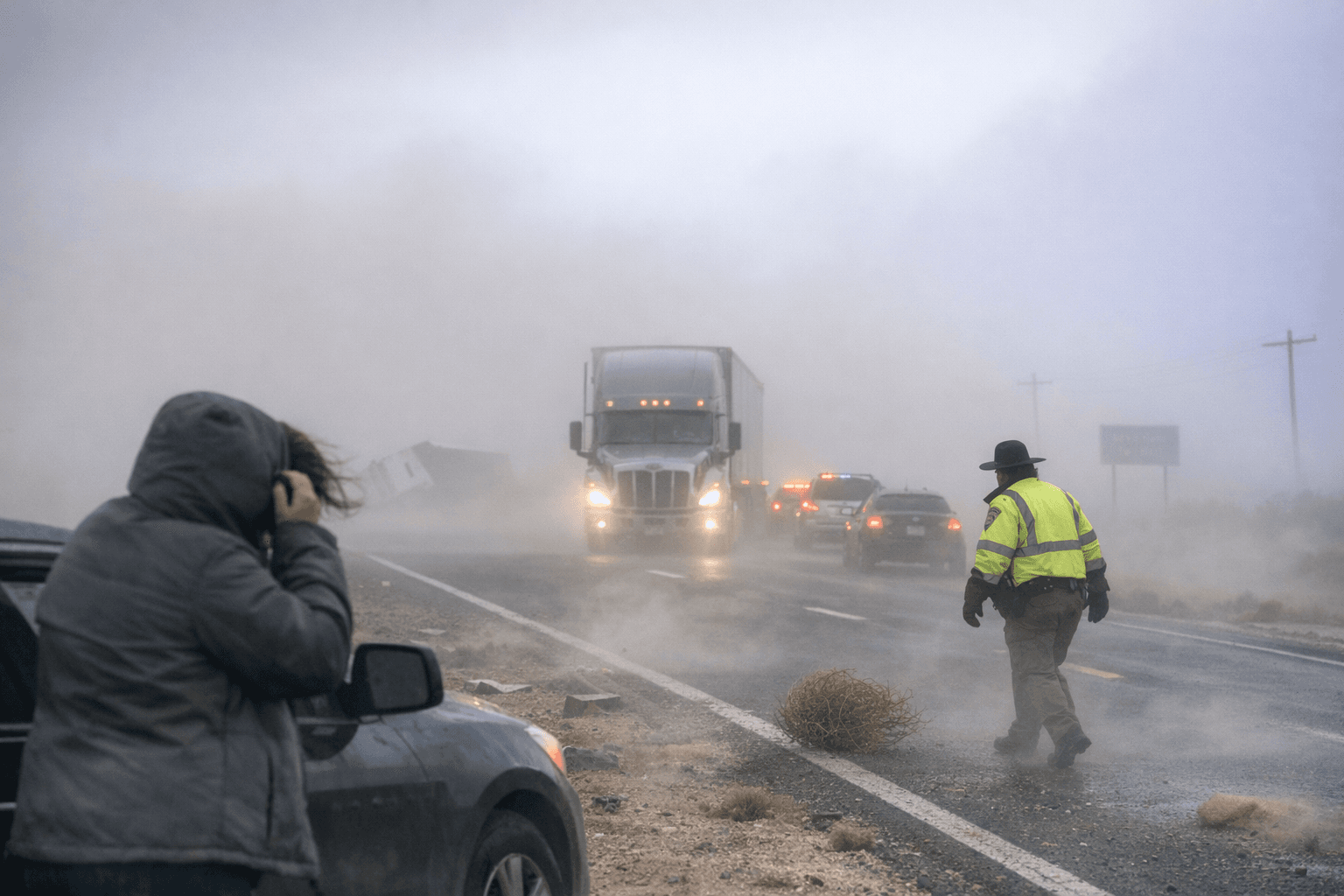
High-wind warnings and dense fog advisories were in effect for Lordsburg, the Lordsburg Playa and surrounding Bootheel lowlands on January 1 and 2, producing conditions that challenged transportation and local services. Forecasts called for sustained northwest winds generally in the 25-35 mph range, with stronger gusts and isolated gusts up to about 50-60 mph in mountain and exposed corridor locations. In lowland areas, visibility in spots dropped below one quarter mile during dense fog episodes.
Those conditions created multiple hazards. Strong crosswinds and gusts made travel particularly dangerous for high-profile vehicles and trailers, while dense fog reduced visibility enough to force slower speeds and likely caused delays on rural highways. Advisories warned of an increased risk of downed tree limbs and power lines, which can interrupt electricity to homes, clinics and critical medical equipment. Pilots and operators of light aircraft were also cautioned about severe turbulence near mountain areas, complicating medevac and other flights.
The local health implications are tangible for Hidalgo County residents. Power interruptions can disrupt refrigeration for medications, operation of oxygen concentrators and other home medical devices, and the functioning of clinic refrigerators that store vaccines and prescriptions. Travel delays and hazardous roads threaten timely access to emergency care and scheduled treatments such as dialysis. Rural and low-income households, people with mobility limitations and residents who lack reliable personal vehicles are disproportionately affected when public transportation is limited and road conditions deteriorate.
Longer-term, these events underscore persistent infrastructure and equity challenges in borderland and rural communities. Investments in grid resilience, targeted tree trimming along critical routes, backup power for community health centers, and robust emergency-communications plans can reduce risks. Ensuring that public notices reach Spanish-speaking residents and seasonal workers, and expanding support for transportation during severe weather, would address equity gaps that amplify harm in storms.
For immediate safety during high-wind and dense-fog events, motorists were advised to slow down, avoid high-profile vehicles during gusty periods, secure loose outdoor items, and expect travel delays. Pilots and small aircraft operators were warned to exercise caution near mountain areas. As weather extremes recur, local planning that centers health care access and vulnerable populations will be essential to limit harm and speed recovery.
This article was produced by Prism’s automated news system from verified source data, official records, and press releases, then run through automated quality and moderation checks before publishing. The system is built and supervised by the people who set the standards it runs under. Read our full AI policy.
Did this article answer your question?