Historic Lordsburg Library continues serving Hidalgo County as vital community hub
The Lordsburg Hidalgo County Library, a small Pueblo Revival building constructed by the Works Progress Administration in 1936 and listed on the National Register of Historic Places, remains an active downtown resource for books and local information. Its ongoing role highlights broader public health and equity issues in rural Hidalgo County, including information access, the digital divide, and the need for sustained investment in community infrastructure.
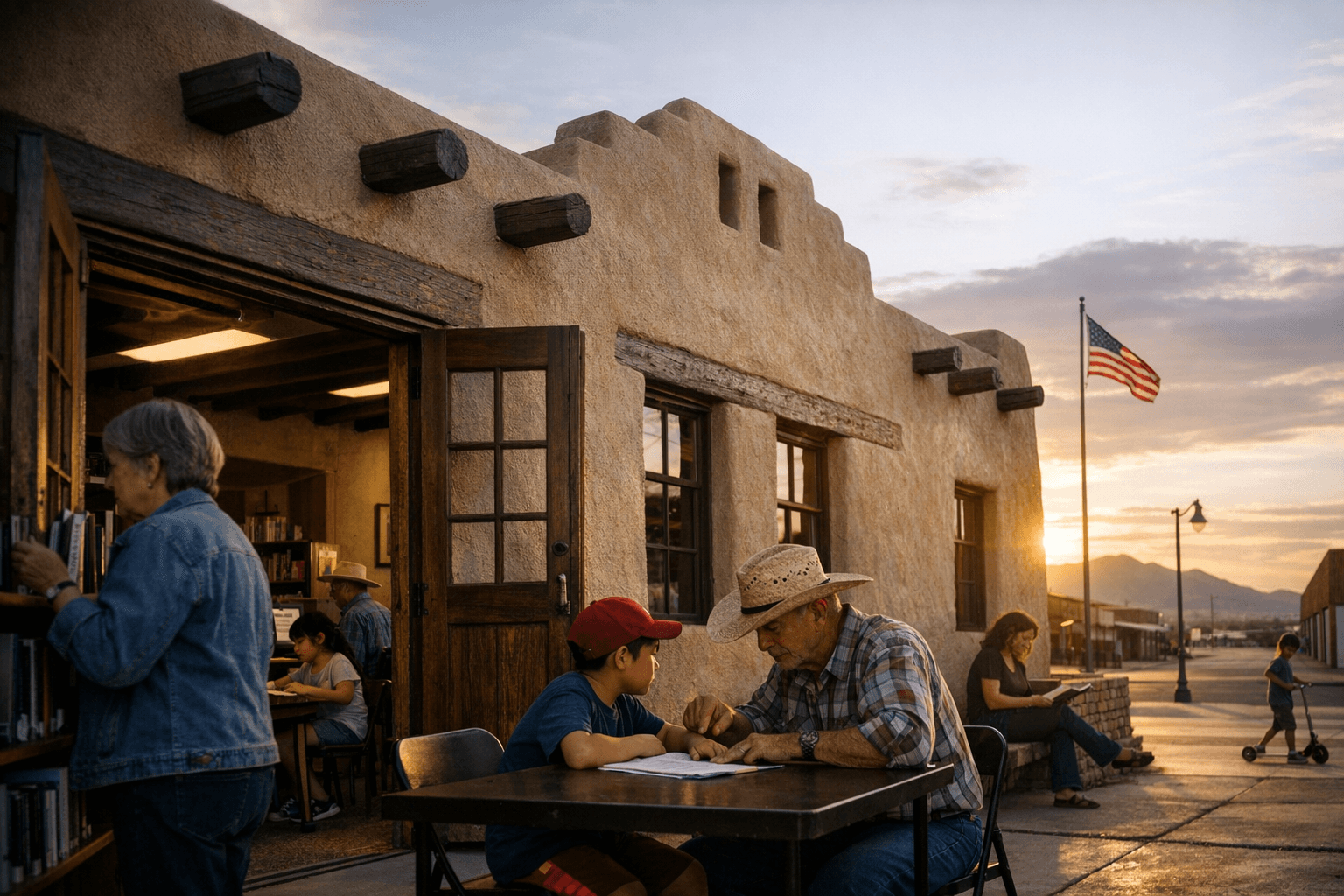
The Lordsburg Hidalgo County Library stands in downtown Lordsburg as both a piece of New Mexico history and a practical resource for county residents. Built in 1936 and 1937 by the Works Progress Administration in Pueblo Revival style, the building is listed on the National Register of Historic Places and continues to house a collection of books and local materials. For many in Hidalgo County the library is more than an archival site, it is a daily hub for information, education, and connection.
In a county with dispersed populations and limited public services, a functioning local library helps address social determinants of health. Libraries provide quiet, safe spaces for study and social interaction, and they help residents find reliable information about health services, social supports, and public programs. The Lordsburg Hidalgo County Library serves residents and visitors alike, and its presence contributes to community cohesion in a rural region where distance and limited transportation can isolate people from resources.
The building s roots in the New Deal era add layers of civic meaning. Constructed by a federal employment program nearly a century ago, the library is a surviving example of investment in public infrastructure that married cultural stewardship with economic relief. As a structure listed on the National Register of Historic Places it carries responsibilities that go beyond books. Preservation and maintenance require funding and technical expertise, and rural cultural properties often compete with immediate social service needs for scarce local dollars.
The library s role also highlights persistent equity challenges. Access to up to date health information increasingly depends on digital connectivity, and rural communities frequently face slower internet speeds and fewer affordable broadband options. Public libraries can mitigate the digital divide by offering internet access and basic digital literacy support, yet they require stable operating budgets, staffing, and infrastructure upgrades to do so effectively.
For Hidalgo County residents policy choices matter. Sustaining small libraries supports public health goals by promoting health literacy, reducing social isolation, and offering a trusted venue for outreach by health and social service providers. Preserving historic civic spaces also preserves local identity and tourism value. Community leaders and policymakers who prioritize funding for maintenance, broadband expansion, and partnerships between libraries and county services can strengthen both the cultural legacy and the practical utility of institutions like the Lordsburg Hidalgo County Library.
As an accessible downtown presence, the library remains a quiet but essential anchor for Hidalgo County. Supporting its continued operation is a matter of cultural preservation, public health, and social equity for residents across the county.
Know something we missed? Have a correction or additional information?
Submit a Tip