Lordsburg plan charts 20-year growth, water and road needs
Lordsburg’s 20-year plan points to slower, more deliberate growth, with water and roads set up as the biggest hurdles. The result will shape housing, downtown work and daily county travel.
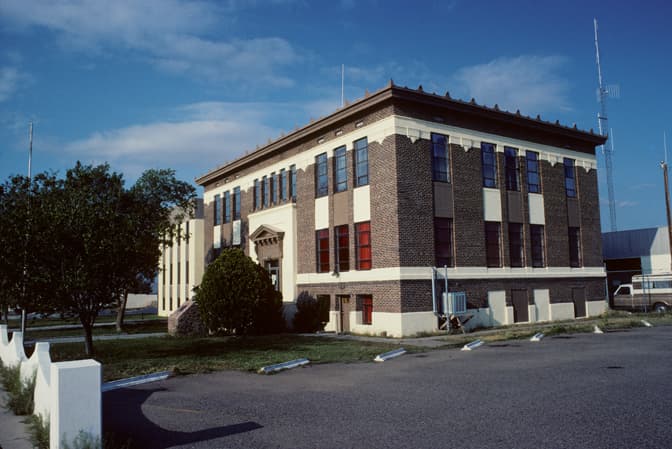
Lordsburg’s newest comprehensive plan is less a paper exercise than a map of what has to happen before the city can grow in a durable way. Adopted Jan. 17, 2024, and prepared by Emily Gojkovich, the city’s economic development specialist, the 103-page update says its purpose is to help Lordsburg prepare for the future over the next 20 years. For Hidalgo County, where Lordsburg is the county seat and the main service center in the southwestern corner of New Mexico, that means the plan reaches far beyond city hall.
What the plan is really for
A comprehensive plan does not spend money on its own and it does not build a single road, house or water line. It sets the rules for where growth should go, what kinds of land uses fit the city, what facilities will be needed, and how public investment should support those choices. The City of Lordsburg says the document was created to accomplish the city’s vision for the next 20 years, which makes it a guide for everything from subdivision decisions to downtown reinvestment.
The city’s acknowledgment page shows how closely tied the plan is to local leadership. It names Mayor Glenda Greene and councilors Julie Montenegro, Manuel D.V. Saucedo, Martin Neave, Rodney Plowman, Irene Galvan and Sean Lindsay. That matters because a plan only turns into visible change when elected officials, staff and outside partners use it to steer zoning, capital spending and grant applications.
Why water has to come first
In Lordsburg and across Hidalgo County, water is the limiting factor that shapes almost every other growth decision. A University of New Mexico water factsheet describes Hidalgo County as a rural county with 4,214 people spread across 3,445.63 square miles. It also says the county’s only perennial stream is the Gila River, which crosses the top of the northern panhandle, and that most water used in the county is groundwater.
The same factsheet says 2015 water withdrawals in Hidalgo County totaled 52,201 acre-feet, with 90% coming from groundwater and 10% from surface water. That is the kind of number that explains why a city plan cannot treat water as a background utility. Any new homes, industrial sites or expanded business districts will depend on whether the city can support them without straining the groundwater system that already carries most of the load.
For residents, the first visible changes are likely to come through planning and permitting rather than shovel-ready projects. Before new neighborhoods or larger commercial sites appear, the city has to line up land-use decisions, utility capacity and funding. In a place like Lordsburg, that usually means careful sequencing instead of fast expansion.
Housing will grow slowly, if it grows at all
The plan’s housing picture is modest, and that is one of its most important practical findings. A search snippet from the comprehensive plan says new residential development is difficult to justify in Lordsburg and Hidalgo County because there are fewer than 10 home sales per year. That low transaction volume tells a lot about the local market: demand is thin, lenders are cautious, and large-scale subdivision development is hard to support.
The likely result is that housing changes will happen in small steps. If the city wants more homes over the next decade, it will have to work within a market where every new lot, utility extension and zoning approval matters. That could make infill, rehabilitation and incremental growth more realistic than big subdivisions at the edge of town.
This is where the plan’s long horizon matters most. It gives Lordsburg a way to prepare for a stronger housing market if one emerges, while also recognizing that growth in a county seat of just over 2,000 residents is not going to look like growth in an urban corridor.
Downtown and business development are already in motion
The plan’s economic development focus also connects to work already underway in town. On Jan. 31, 2024, New Mexico MainStreet welcomed Lordsburg Economic Advancement Project, known as LEAP, and Revitalize San Pedro into its Accelerator Program after they completed economic development projects through the MainStreet system. That is a concrete sign that downtown and community revitalization are not just planning ideas; they are part of an active pipeline.
For daily life, the most visible early improvements may come in the business district rather than in new neighborhoods. MainStreet-backed work can affect storefronts, public space, building reuse and the feel of the downtown core, which is often where residents notice change first. In a small county seat, those projects can also shape where people shop, meet, and spend money before longer-term infrastructure work reaches full scale.
Why Lordsburg’s history still shapes the next 20 years
Lordsburg’s identity as a railroad town still sits under the city’s planning choices. The city’s history page says the town dates to 1880, when the Southern Pacific Railroad came through from the west. Local history sources add that Lordsburg was founded on the Southern Pacific line and named for railroad supervisor Delbert Lord.
That origin matters because it explains why Lordsburg functions as more than a small municipal center. As the county seat in Hidalgo County, it serves residents across the county, nearby communities and travelers moving through a rural border region. The city’s future will depend on whether it can keep roads serviceable, water available and downtown active enough to hold its role as the place where county life comes together.
The comprehensive plan does not promise instant transformation. What it does offer is a realistic sequence for how Lordsburg can grow without outrunning its water, its land base or its public services. In Hidalgo County, that kind of discipline will shape what residents actually see on the ground over the next decade: slower growth, more careful zoning, targeted investment and a stronger test of whether the city can turn a railroad past into a stable future.
This article was produced by Prism’s automated news system from verified source data, official records, and press releases, then run through automated quality and moderation checks before publishing. The system is built and supervised by the people who set the standards it runs under. Read our full AI policy.
Did this article answer your question?