Lordsburg warns of high fluoride in water, advances new treatment plant
Lordsburg is telling families with children under 9 to switch to low-fluoride water now as it pushes a reverse-osmosis plant to fix a long-running problem.
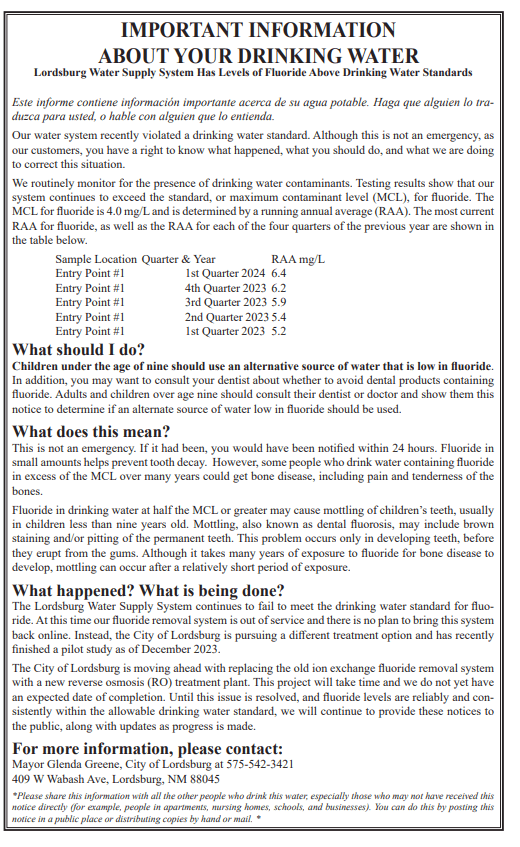
Lordsburg residents with children under 9 should use an alternative low-fluoride water source now while the city works to fix a fluoride problem that has stayed above the drinking-water standard. At the same time, the city is warning homeowners that buried gas service lines downstream of the meter are the customer’s responsibility, and that digging without checking first can create a dangerous accident.
The City of Lordsburg said in a March 4 notice that the Lordsburg Water Supply System had violated the drinking-water standard and that updates would continue until fluoride levels fall back under the limit. A December 2024 city notice showed the fix was already underway: the city was moving ahead with a new reverse-osmosis treatment plant and said the project was about 65% complete. That same notice said there was no plan to bring the old ion-exchange fluoride-removal system back online.
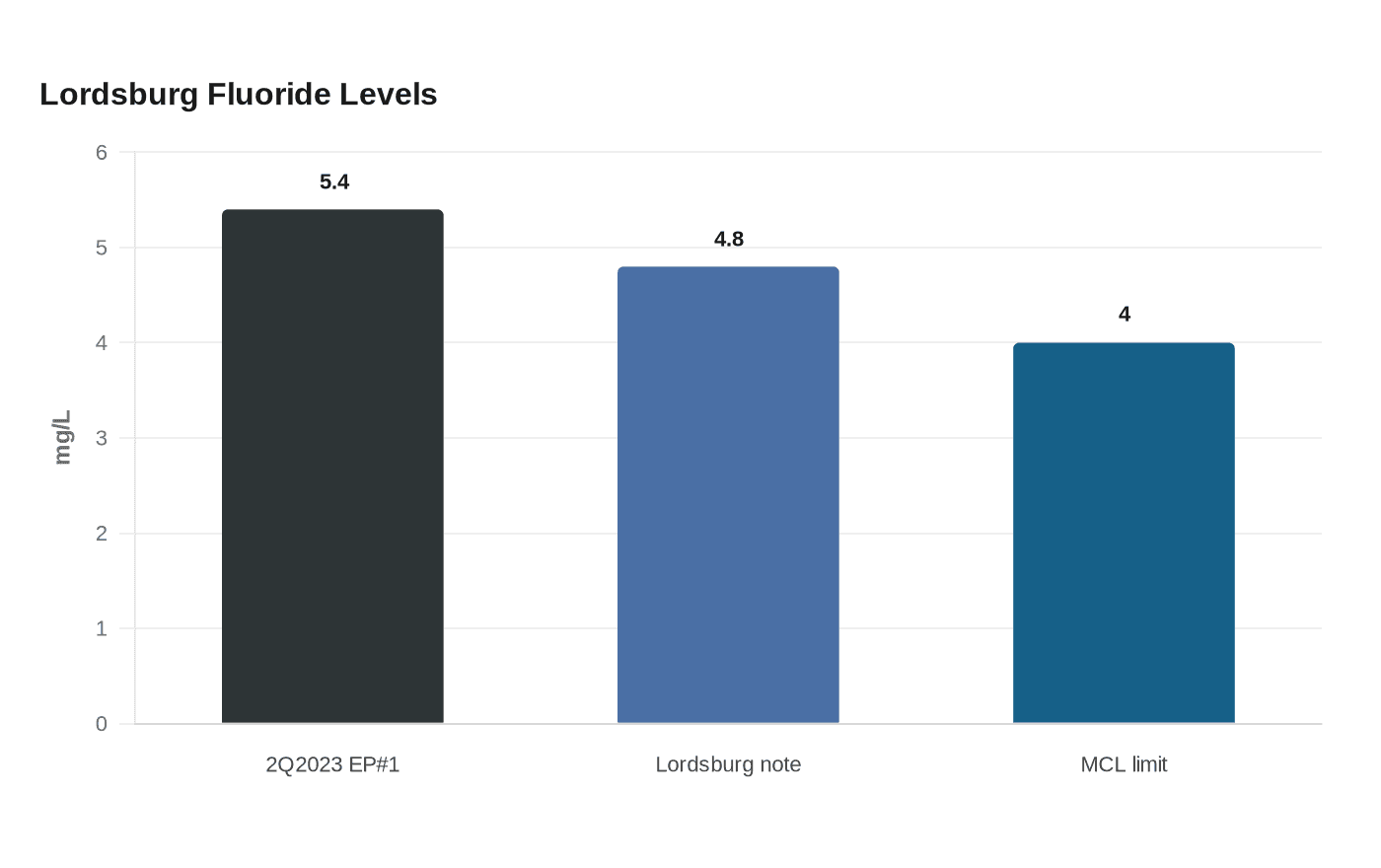
State records show the problem has been persistent. New Mexico Environment Department materials list a fluoride running annual average of 5.4 mg/L at Entry Point #1 for 2Q2023, above the 4.0 mg/L maximum contaminant level. Another New Mexico notification for the Lordsburg system listed a running annual average of 4.8 mg/L, also above the standard. In 2024, NMED Water Protection Division Director John Rhoderick said naturally occurring fluoride is common in New Mexico and that “regionalization may help small systems address naturally occurring contaminants.”

The city’s notice tells families what to do right now. Children under age nine should use an alternative low-fluoride water source. Adults and children over nine are told to consult a dentist or doctor about whether they should use an alternate source. The city has not said the issue is resolved, and its notice says it will keep posting updates until fluoride levels are back under the standard.
Lordsburg’s gas notice is a separate reminder with immediate safety implications. The city says customer-owned buried gas service line piping is not the city’s responsibility downstream of the meter. Federal pipeline-safety rules require operators to notify customers when they do not maintain customer buried piping up to the building entry point or equivalent endpoint, and that piping can run to the first building, the principal gas-utilization equipment, or the first fence or wall around that equipment. The city says those lines should be checked regularly for leaks or corrosion, unsafe piping can prevent service, and any work may require a written agreement with the property owner.
Before digging, residents should call 811 or 1-800-321-2537 for underground utility locating. New Mexico 811 says it is the state’s free call-before-you-dig service, and utility crews will mark underground lines once a ticket is filed. For households in Lordsburg, the message is simple: protect young children from fluoride exposure, and do not treat buried gas or excavation work as routine.
This article was produced by Prism’s automated news system from verified source data, official records, and press releases, then run through automated quality and moderation checks before publishing. The system is built and supervised by the people who set the standards it runs under. Read our full AI policy.
Did this article answer your question?