Museum clay outreach gives Animas students hands-on art history lesson
Claude Smith III’s weekly clay lessons in Animas linked a tiny rural district to Mimbres history, museum-quality art, and a possible long-term outreach model.
Claude Smith III brought more than clay to Animas. Each week, the retired Western New Mexico University ceramics professor carried historic examples, tools, and materials into a school system serving just 162 students across three campuses, turning a small rural art lesson into a direct connection with regional history and museum practice.
A rural classroom with museum-scale lessons
The Animas School District asked for the program, and the Southwest Regional Museum of Art and Art Center turned that request into its inaugural outreach effort. Smith, a museum board member and professor emeritus at Western New Mexico University, developed and taught the sessions himself, traveling to Animas weekly so elementary students could work with clay in person rather than just read about it.
That matters in a place like Animas, where the elementary campus serves preschool through 4th grade and the district operates only two campuses, Animas Elementary School and Animas High School. With an estimated population of 186 in the Animas CDP in 2024, the community does not have the kind of built-in access to museums, studio spaces, and rotating arts programming that larger towns often take for granted.
What students actually got from the program
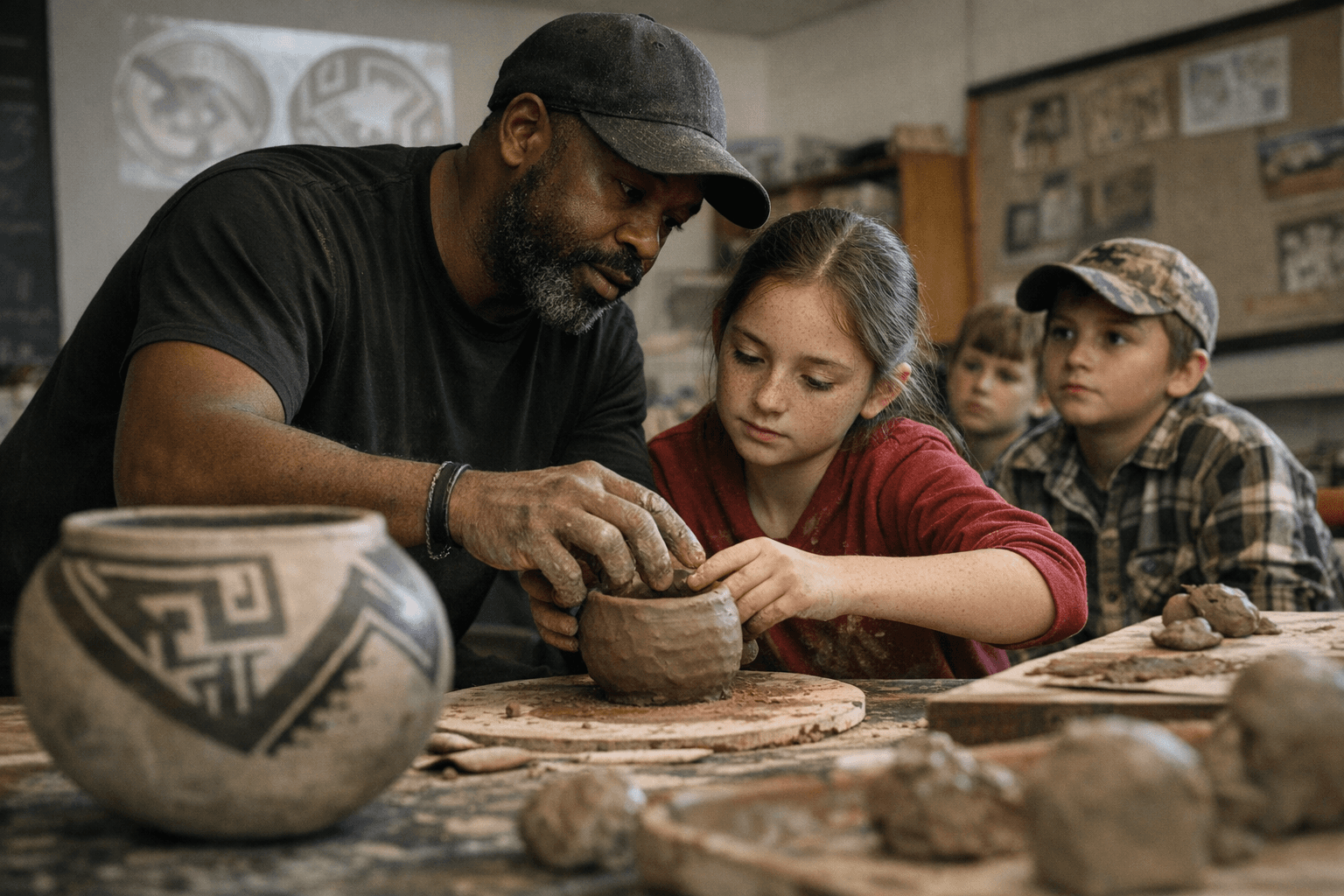
The outreach was not a passive presentation. Smith demonstrated techniques, guided students through the creative process, and encouraged them to make their own designs. He also used the sessions to explain how clay work connects to local and regional art history, giving students context for the material in their hands.
The lessons moved from basic making to the deeper story behind pottery in the Southwest. Smith discussed the history of pottery, including the Mimbreño tradition and more recent Native American artists who continue making pottery in the region. He also brought in contemporary ceramic examples and a potter’s wheel demonstration, showing students that clay can be shaped in multiple ways before it becomes a finished work.
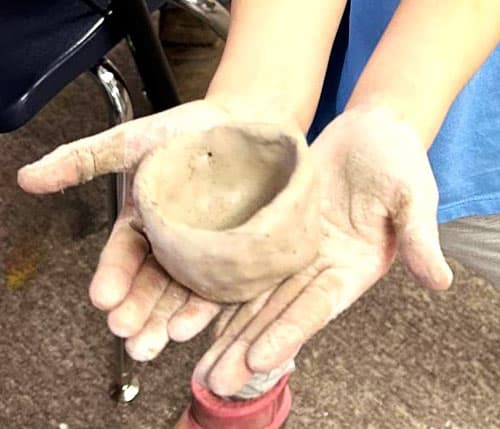
By the last day, the children were able to see their own pieces after they had been glazed and fired. The WNMU Ceramics Department supported the program with clay and kiln time, and Smith transported the works back and forth so the students could follow the full process from raw material to finished object.
Why the Mimbres connection matters in Hidalgo County
This was more than an arts enrichment exercise. Smith’s instruction tied Animas students to a larger Southwestern story grounded in the Mimbres River region, where the Mimbres people flourished from about A.D. 800 to 1250, with the Classic Mimbres period commonly dated to about A.D. 1000 to 1130. That history gives local children a chance to see pottery not as a distant museum subject, but as a living regional tradition shaped close to home.
Western New Mexico University Museum deepens that link. Its educational tours focus on Mimbres prehistory and other Southwest history topics, and the museum says it is home to the NAN Ranch Collection, described as the largest and most complete collection of Mimbres artifacts from a single prehistoric site. For students in a small rural district, that kind of institutional knowledge can turn abstract history into something specific to their own corner of New Mexico.
Smith’s own background added credibility to the lessons. The museum board identifies him as professor emeritus and past chairman of WNMU’s Expressive Arts Department. He retired after 33 years of teaching ceramics at Western New Mexico University, and his work spans functional dinnerware and sculptural vessels using raku, salt, soda, saggar, and reduction-fired techniques.
A museum outreach model still taking shape
The Animas program also reveals something larger about the Southwest Regional Museum of Art and Art Center itself. The museum has said outreach was a goal from the beginning of its planning, even before it had a building of its own. In other words, the Animas lessons were not an afterthought; they were part of a broader vision that the museum says should reach beyond Silver City.
That vision is tied to a capital campaign of $1,200,000 to buy the old Silver City Post Office on Broadway and renovate it to American Alliance of Museums standards. The museum’s stated plan is to build a world-class fine art museum in Silver City while also serving the entire southwest quadrant of New Mexico. Until that building is secured, the outreach program is already functioning as a way to carry original works, artist stories, and art history into schools, civic groups, and senior centers.
That makes Animas an important test case. If a museum can build audience and educational value by traveling to communities instead of waiting for visitors to come to it, then outreach becomes more than a nice extra. It becomes a delivery system for art education in places where geography alone can limit access.
Why the district’s response matters
The district gave glowing reports about the program and praised the positive response from students. In a community as small as Animas, that kind of reaction carries weight because there are few alternatives that can match it. A weekly visit from a museum educator, backed by WNMU ceramics resources and rooted in regional history, delivers something most rural schools cannot easily assemble on their own.
The importance is not only in the art itself. It is in what the program says about access: that children in a small Hidalgo County community can handle the same material, hear the same history, and see the same transformation from raw clay to fired work that students in more urban settings may encounter more readily. If the museum follows through on its outreach ambition, Animas may be remembered less as a one-time stop and more as an early demonstration of how a traveling museum model can expand learning across southwestern New Mexico.
This article was produced by Prism’s automated news system from verified source data, official records, and press releases, then run through automated quality and moderation checks before publishing. The system is built and supervised by the people who set the standards it runs under. Read our full AI policy.
Did this article answer your question?