Behalt mural tells Amish and Mennonite history in Holmes County
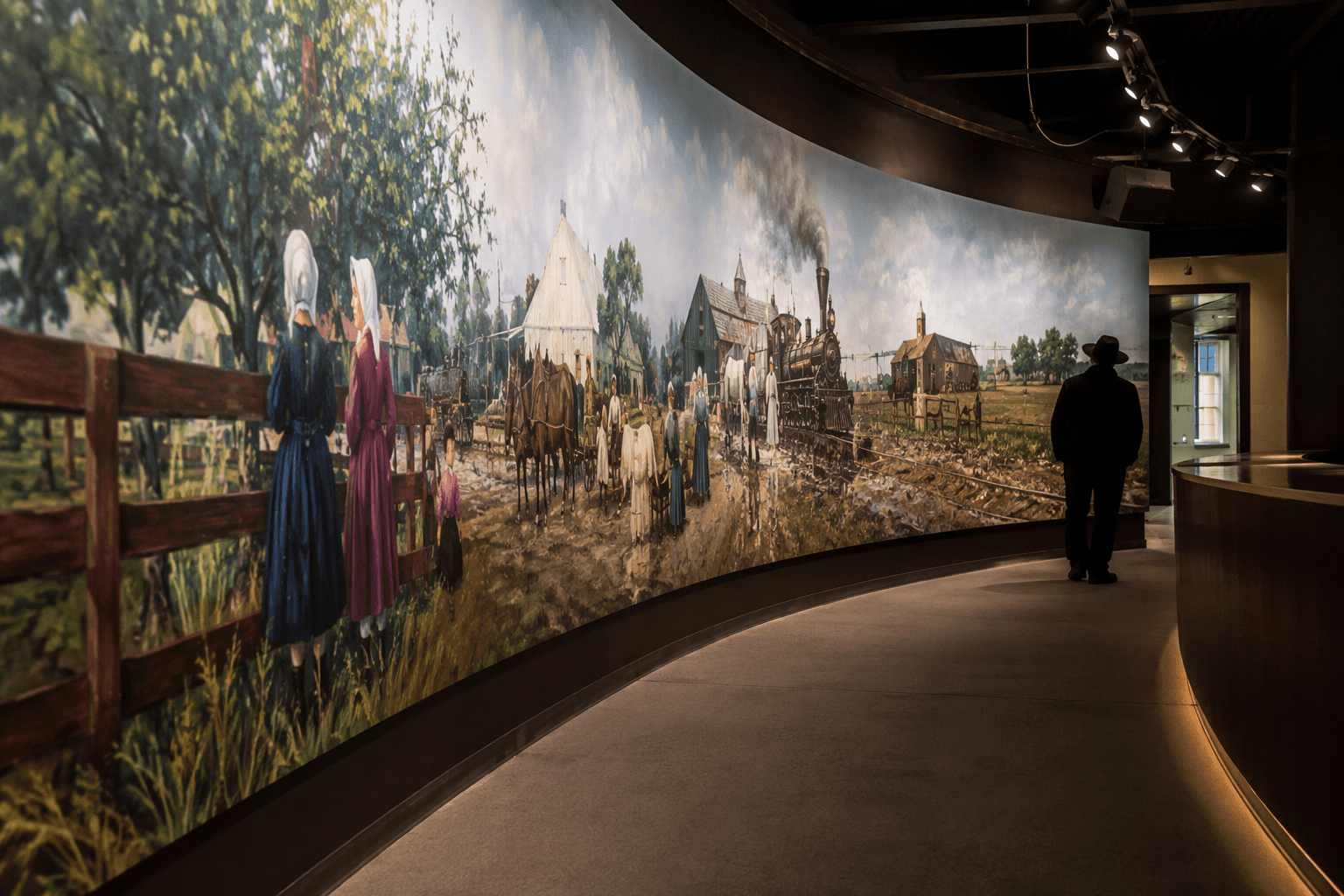
Behalt turns 500 years of Amish and Mennonite history into one 10-by-265-foot cyclorama, giving Holmes County visitors a fast read on the forces behind daily life.

Behalt is the quickest way to see how Amish and Mennonite history still shapes Holmes County. The 10-foot-by-265-foot oil-on-canvas cyclorama at the Amish & Mennonite Heritage Center compresses five centuries of Anabaptist history into one panoramic work, from Zurich in 1525 to the present day.
What Behalt shows
The name itself points to the mural’s purpose: Behalt means “to keep” or “to remember.” The center uses that idea to frame the work as more than an art piece, because it traces the heritage of Amish, Mennonites and Hutterites from their European beginnings through their life in America. That sweep helps explain why the center presents it as a first stop in Amish Country. If you understand the historical roots first, the farms, businesses, churches and family life across Holmes County read differently.
The center also describes Behalt as America’s most exciting cyclorama of Amish, Mennonite and Hutterite history, a claim that fits the scale of the work. This is not a small exhibit or a roadside display. It is a full-length visual narrative built to hold a visitor’s attention long enough to make the county’s religious and cultural landscape legible.
The history behind the canvas
Behalt’s story begins well before the mural was finished. Wikipedia lists the work as starting in 1978 and being completed in 1992, which means the project took 14 years to bring to completion. Ohio Cooperative Living says self-taught artist Heinz Gaugel completed it in 1992, matching the completion date attached to the work in other references.
The center’s biography of Gaugel gives the artist’s own path a place in the story. He was born in 1927 in Eybach, a village in the Swabian Alps of southern Germany, and moved to Canada in 1951, where he began his artistic career. The center says he worked in oils on canvas, ceramics, stained glass, fresco and sgraffito, which helps explain why a monumental canvas like Behalt fit his range so well.
Gaugel’s death also marked a local milestone. The Daily Record reported in January 2001 that he had died at age 73 and that the mural had already drawn hundreds of thousands of visitors to the Mennonite Information Center near Berlin since its unveiling nearly a decade earlier. That visitor count shows that Behalt had become more than a museum object by then. It had already become one of the most recognized ways people encountered the county’s Anabaptist story.
Where it is and how to visit
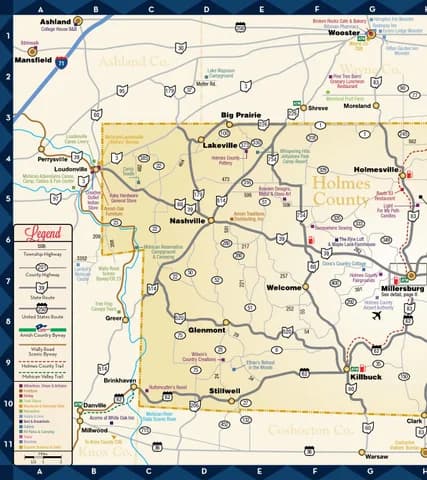
Behalt sits at 5798 County Road 77 in Millersburg, Ohio 44654, with a mailing address in Berlin. That location places it squarely in the heart of Holmes County’s Amish Country corridor, within easy reach of Berlin and Walnut Creek and close enough to serve as a starting point for a day of travel through the county.
The Amish & Mennonite Heritage Center lists seasonal hours from March through October, 9 a.m. to 5 p.m. From November through February, visitors are told to call for hours, and the center is closed on Sunday. Tours run on the top of each hour during posted hours, so timing a visit matters if you want to see the mural with the full explanation rather than arriving between scheduled talks. The center also lists the phone number as (330) 893-3192.
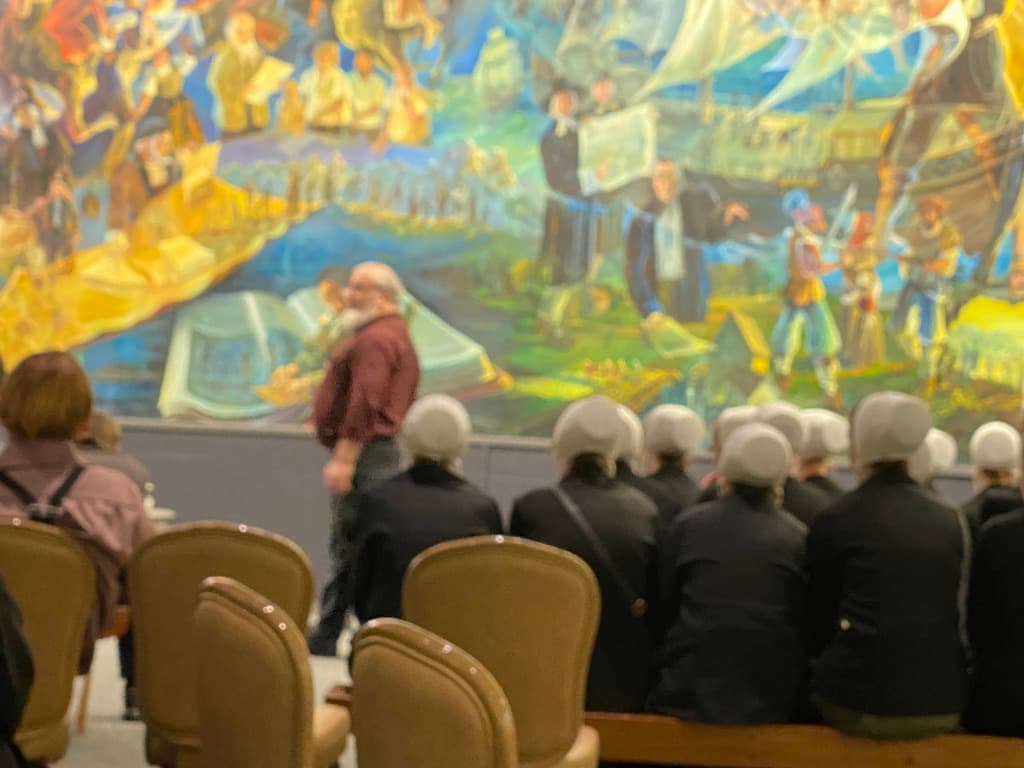
For a county guide, those details are practical because Behalt works best when visitors plan around it instead of treating it as a quick stop. The hourly tour schedule, the seasonal hours and the Sunday closure all shape when the mural can actually be seen.
Why it keeps drawing attention
Behalt endures because it does something unusually direct: it gives Holmes County a visual shorthand for its own history. A 2013 Times Reporter story called the Amish and Mennonite Heritage Center a unique and educational destination in Berlin, and that remains the right way to think about the mural. It is educational not because it simplifies the past, but because it lays out the long arc of Anabaptist migration and identity in one place.
Amish America has described Behalt as a pictorial history of Anabaptists from their European beginnings through their existence in America and says it has been dubbed “the most exciting cyclorama in America.” That description gets at why the mural keeps its place in the county conversation. It is a rare object, but its real value is local: it gives residents and visitors a common frame for understanding the churches, businesses, farms and family patterns that define Holmes County every day.
Behalt endures because it turns history into orientation. In a county where the past still shapes how people live, work and gather, the mural remains one of the clearest ways to understand what most visitors miss on a first pass.
This article was produced by Prism’s automated news system from verified source data, official records, and press releases, then run through automated quality and moderation checks before publishing. The system is built and supervised by the people who set the standards it runs under. Read our full AI policy.
Did this article answer your question?