How Christmas Traditions Evolved, What Holmes County Residents Lost and Gained
On December 25 Holmes County observed a holiday shaped by both century old customs and modern commerce, highlighting a long history of changing practices from handcrafted ornaments to catalog and department store shopping. That history matters for local residents because it touches economic patterns, community institutions, and efforts to preserve cultural heritage.
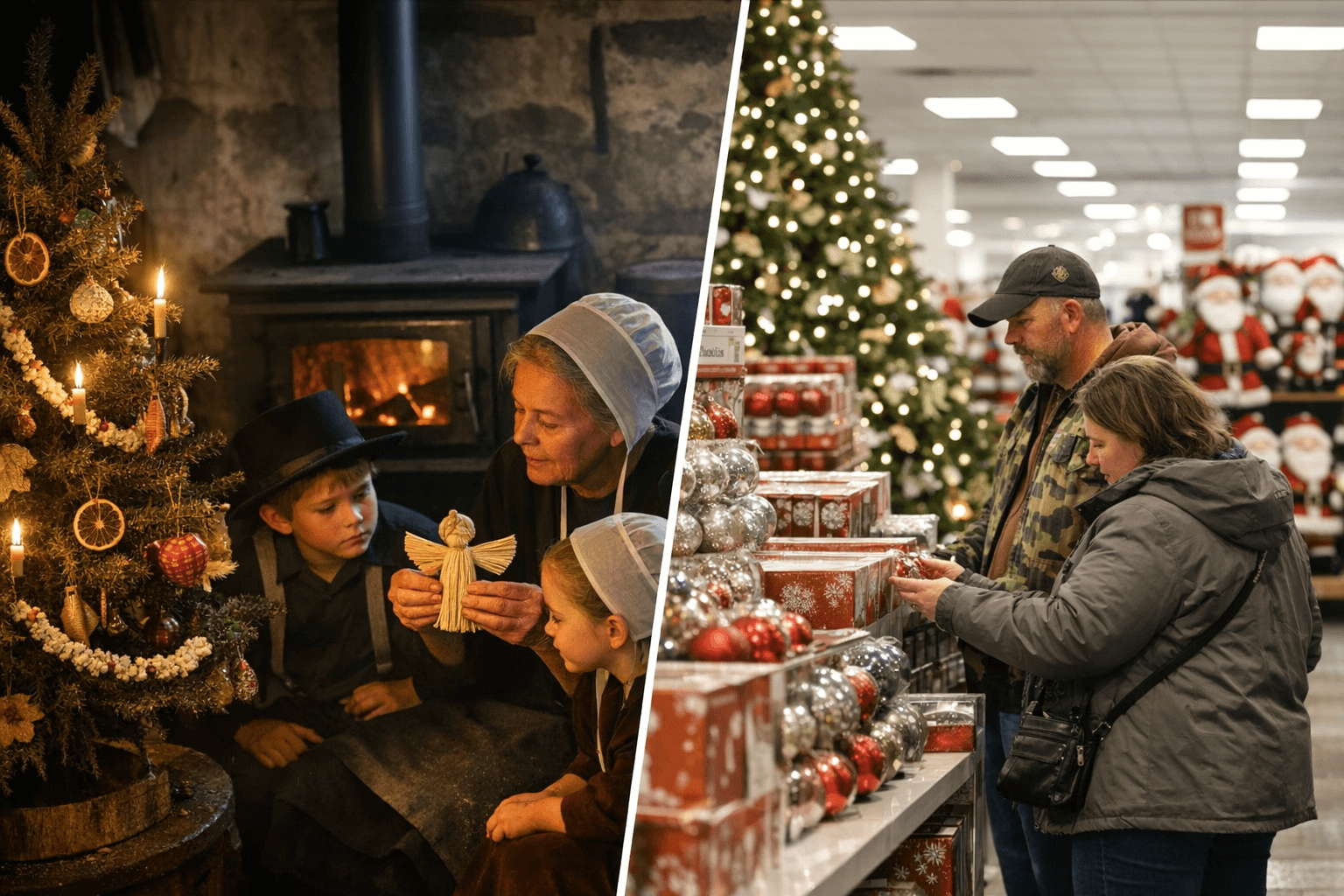
Christmas in Holmes County on December 25 reflected a cultural arc that stretches back more than a century and reaches into practices established over three centuries. Families still gather around evergreens, and many homes kept alive simple handmade traditions such as ornaments, strings of popcorn or cranberries, and gifts produced at the kitchen table. Those customs recall an era when knitted scarves, wooden toys and baked goods were the main currency of gift giving.
A century ago the holiday also began to show modern influences. Early electric lights appeared in homes that could afford them, and retail windows and mail order catalogs expanded the range of goods available to rural households. Catalogs like Sears and Montgomery Ward introduced a new relationship between consumers and distant markets, and department store displays made holiday shopping a public ritual for those with access to town centers. Over time the rise of store bought goods has shifted family spending patterns and reshaped local retail economies.
The historical continuity and change described here have practical implications for Holmes County today. Local small businesses face competition from national chains and online sellers, a structural shift that affects local tax revenues and downtown vitality. Churches and family networks that have long anchored holiday social life remain important civic institutions, helping to sustain volunteerism and community support during winter months. Preserving and documenting the county's material culture and seasonal practices supports heritage tourism and educates younger residents about community identity.
Public officials and civic leaders can respond by supporting the institutions that sustain these traditions. Investments in local historical societies, targeted small business assistance during peak retail seasons, and policies that encourage community events in town centers would reinforce the economic and social benefits tied to holiday customs. As residents move between the homemade and the commercial, Holmes County faces choices about what traditions to conserve, and how local institutions can adapt to preserve civic cohesion while supporting a resilient local economy.
This article was produced by Prism’s automated news system from verified source data, official records, and press releases, then run through automated quality and moderation checks before publishing. The system is built and supervised by the people who set the standards it runs under. Read our full AI policy.
Did this article answer your question?