Millersburg Glass Museum showcases Holmes County’s rare collectible glass history
Millersburg’s glass boom lasted only a few years, but the museum’s 200-plus pieces show why collectors still prize it. The county’s lost industry still shapes local identity.
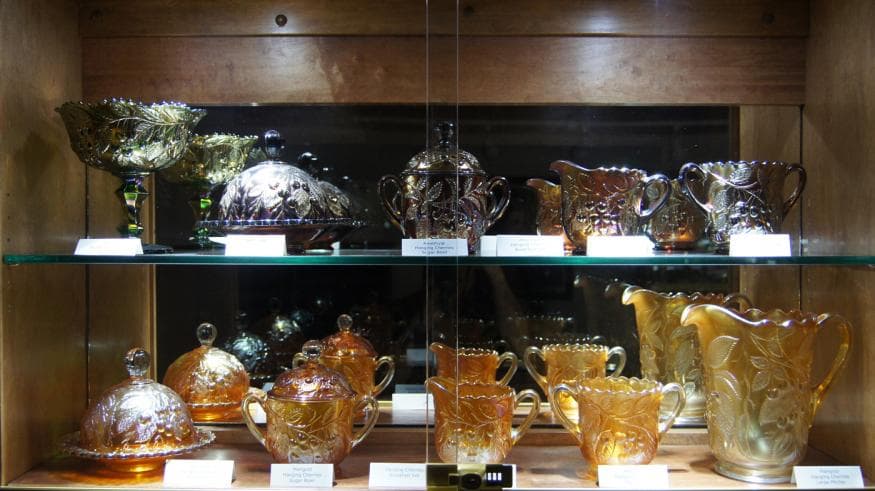
Millersburg’s glass boom burned only for a few years, yet the pieces it left behind still pull people into Holmes County. Inside the Millersburg Glass Museum, more than 200 examples of carnival and crystal glass sit under LED lighting, preserving a chapter of local industry that many residents know mostly as a name. The collection turns a short-lived factory story into a lasting part of Millersburg’s identity.
Why the glass era burned so fast
The Millersburg story begins with a split in the glass world. John W. Fenton left the Fenton Art Glass Company in 1908 after a falling-out with his brother Frank Fenton, and Millersburg Glass is commonly described as starting in 1908 and beginning production in 1909. Fenton Art Glass had introduced iridescent ware in late 1907, helping set off the carnival glass boom that Millersburg joined almost immediately.
That timing matters because the company’s life was unusually brief. Visit Amish Country says the museum’s collection represents the largest public display of Millersburg Carnival and Crystal Glass, the glassware produced between 1909 and 1912. A National Depression Glass Association article dates Millersburg Glass Co. from 1910 to 1914, which shows that the exact chronology shifts from source to source even while the larger picture stays the same: the factory operated for a narrow window and then vanished quickly from the production line.
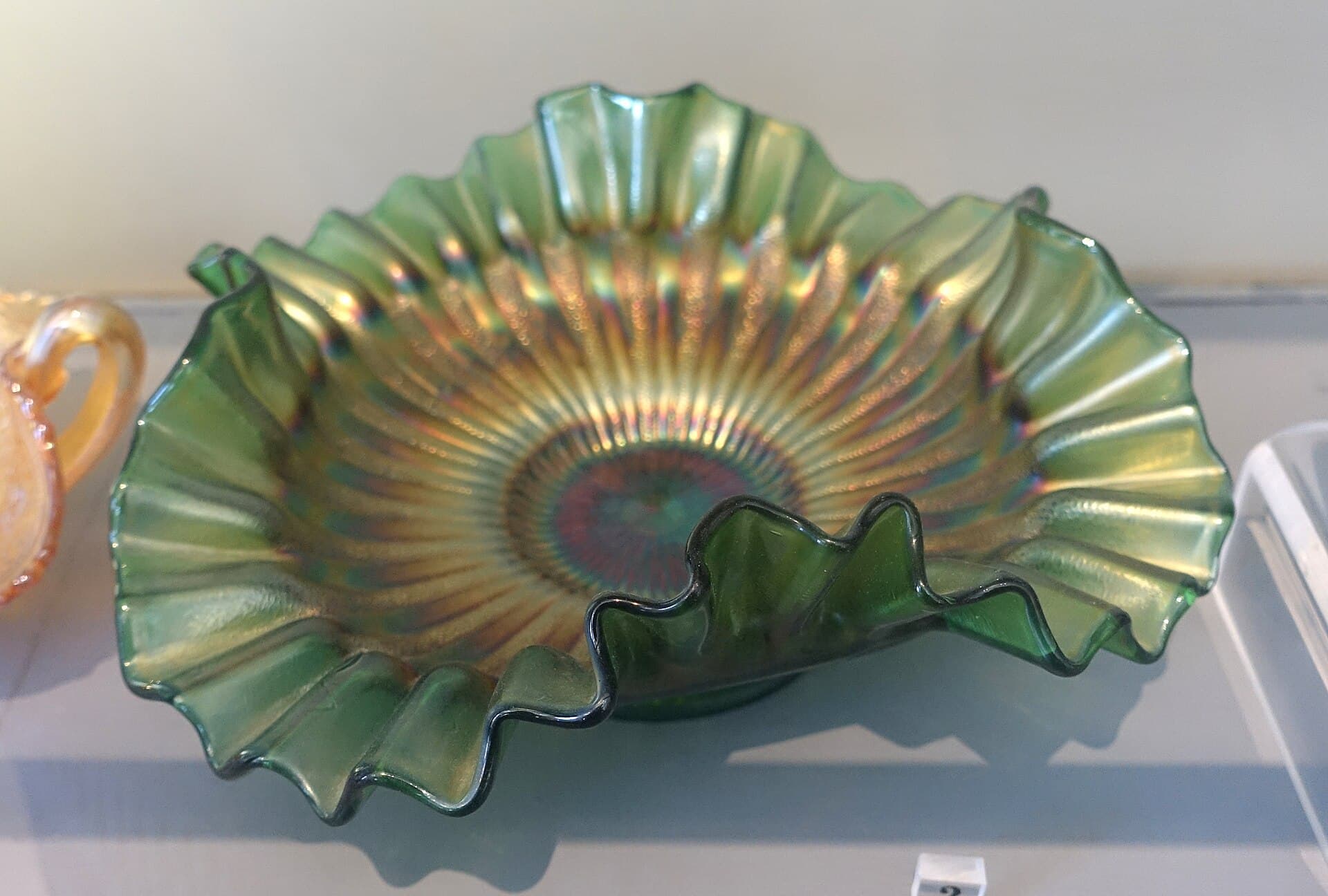
One reason collectors still chase the work is that the company’s output was concentrated in that narrow early carnival glass period. Glass-history sources describe Millersburg as making iridescent, or carnival, glass as its principal product, the kind of bright, reflective ware that helped define the era. When a local factory produces a recognizable style for only a short span, surviving pieces become more than household objects. They turn into artifacts of a vanished industrial moment.
What the museum preserves
The museum’s core appeal is not just that it has glass, but that it has enough of it to show the range of the company’s work. Visit Amish Country says the display includes more than 200 pieces, and the state-of-the-art LED lighting makes the colors, patterns and iridescent finishes easier to see. That lighting matters in person, because carnival glass changes character with the angle of the light, revealing detail that photographs often flatten.
The collection now sits below the Victorian House in Millersburg on the Holmes County Historical Society’s museum campus. Ohio Amish Country says the museum recently moved from a storefront in historic downtown Millersburg to a new permanent home on the Holmes County Cultural Center campus, where it is handicap-accessible and the interpretive space has been renovated to highlight the glass and its history. The historical society’s campus also includes the Victorian House Museum, the Sieverdes Millersburg Glass Museum and Castle Club.
That setting gives the glass display a stronger local frame than a stand-alone antiques room would. The Victorian House Museum is a 28-room Queen Anne-style home listed on the National Register of Historic Places, so the glass collection now lives inside a broader historic site rather than a temporary storefront. For visitors, that means the museum reads as part of Millersburg’s built heritage, not a detached specialty stop.
Why it matters to Holmes County
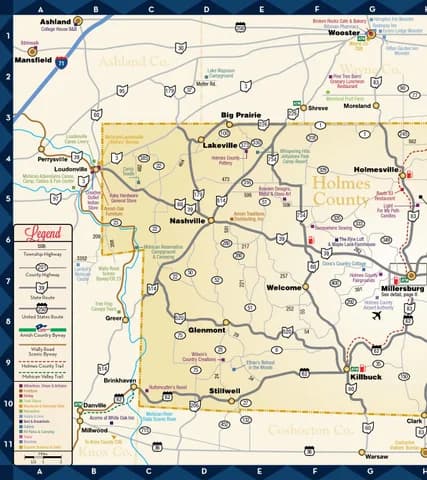
Millersburg glass fits into a county history that is broader than the image many outsiders carry of Holmes County. Most visitors know the area for Amish Country, scenic small towns, roadside produce stops and the Amish Country Byway. The glass museum shows that Millersburg also sat inside an industrial culture built around skilled labor, specialty manufacturing and national collecting trends.
That history is easy to miss because the glass era was so short. A factory that operated for only a few years did not leave a long paper trail in the way a century-old institution might, but it left behind objects that traveled far beyond Holmes County and still draw attention today. The museum preserves that legacy in a local place where residents can see how a brief industrial experiment became a collectible category with national reach.
The museum also restores a piece of county identity that can be overshadowed by newer tourism narratives. Millersburg’s glass story predates much of the modern heritage economy, and it shows that Holmes County was not only a place of farming and small-town commerce. It was also connected to the fast-moving early-20th-century world of design, color and consumer taste.
Planning a visit to the museum
The Millersburg Glass Museum is at 434 N. Washington St., Millersburg, OH 44654, and Ohio Tourism lists the phone number as 330-674-0022. Ohio Tourism also says the glass museum is open during the holidays only on Friday and Saturday, so holiday-season visits need a little planning. Guided tours and group tours are available by appointment.
The museum’s new home makes it easier to pair a glass visit with the rest of the Holmes County Historical Society campus. The lower-level setting in the Holmes County Cultural Center campus keeps the collection close to the Victorian House Museum and within easy reach of downtown Millersburg. That arrangement gives the glass display a stronger sense of place, which is exactly what makes it worth preserving.
The Millersburg Glass Museum does more than show pretty glass. It keeps alive the memory of a brief industry that helped define a corner of Holmes County, and it gives the county a physical record of a local story that might otherwise fade into family recollection and collector lore.
This article was produced by Prism’s automated news system from verified source data, official records, and press releases, then run through automated quality and moderation checks before publishing. The system is built and supervised by the people who set the standards it runs under. Read our full AI policy.
Did this article answer your question?