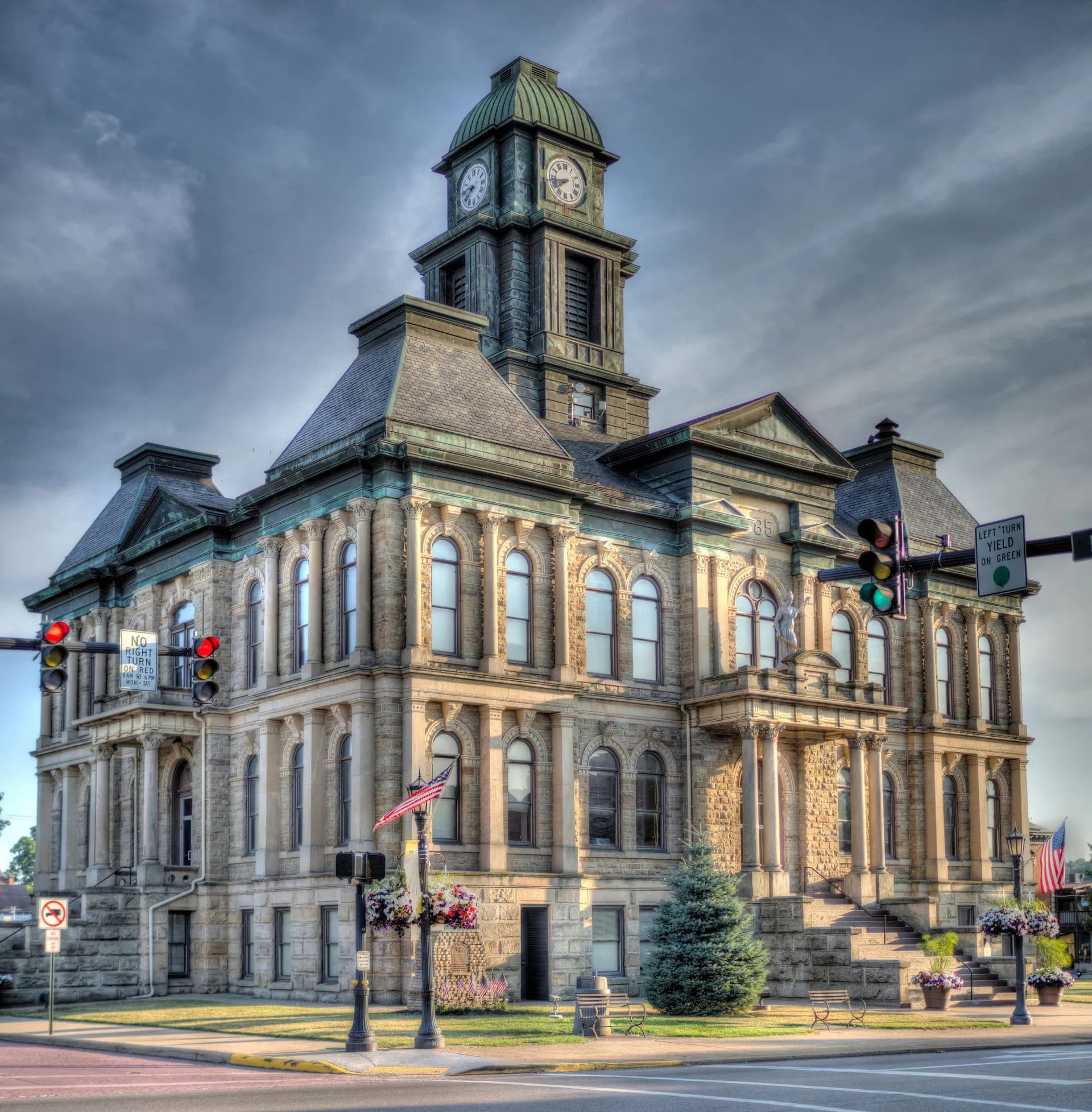
Millersburg historic district rules guide downtown changes
Millersburg’s downtown can’t be altered at will. Chapter 1349 sends exterior changes, signs, and landmark work through a Design Review Board before the village square is changed.
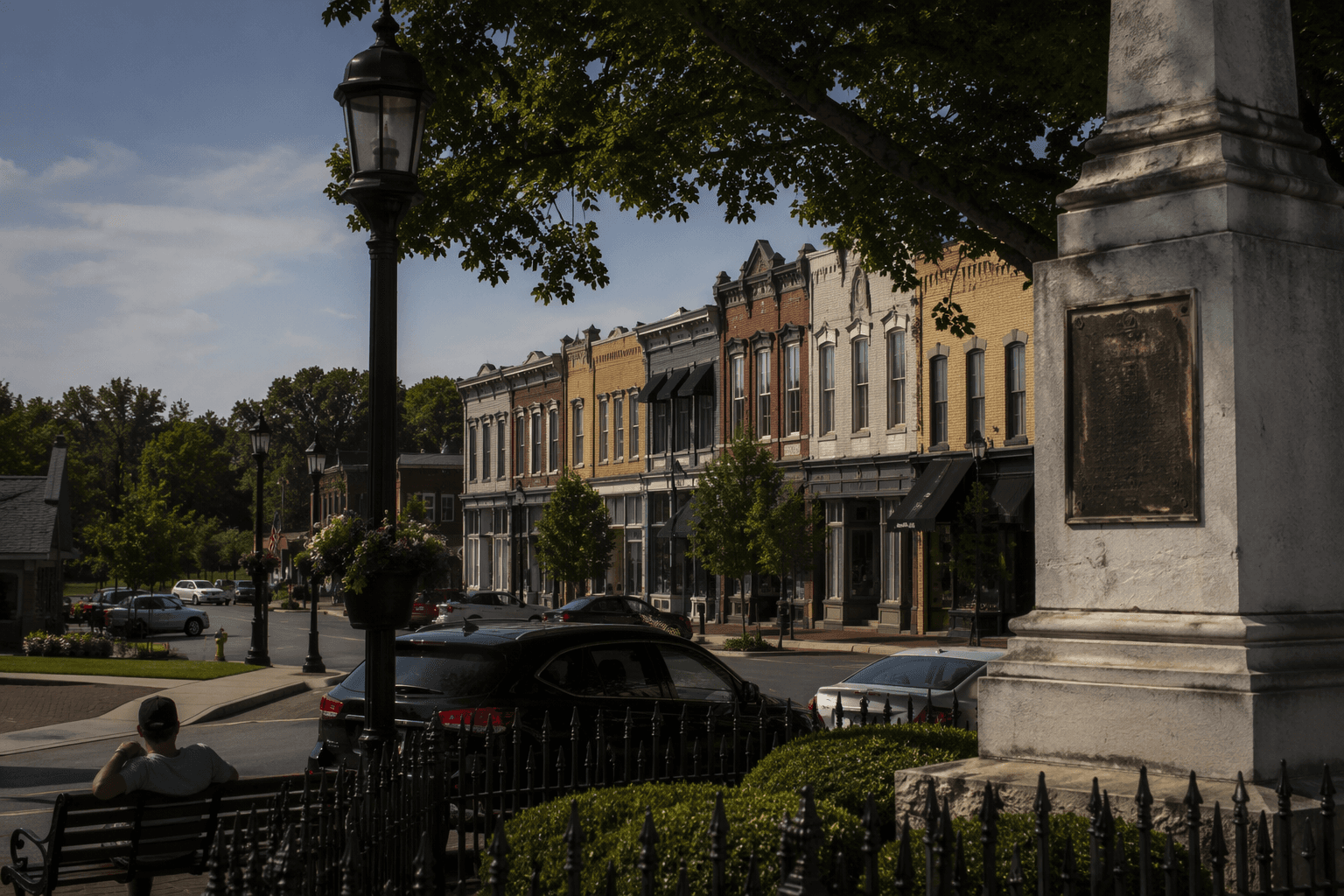
Millersburg’s downtown is not just scenic, it is regulated. The village has tied its historic-district rules to Chapter 1349 of the codified ordinances, which creates a Design District and a Design Review Board that can control visible changes in the core around the courthouse square.
How Millersburg’s design district works
The village’s Historic District Design Guidelines say the rules were adopted to educate current, new, and prospective property owners and tenants in the Design District. The stated goal is direct: maintain and strengthen the historic integrity of the district by protecting, enhancing, and preserving the physical assets of downtown. That means the district is not treated as a museum piece, but as a working commercial center where changes still have to fit the village’s historic scale.
Chapter 1349 gives the Village Council the power to designate areas within Millersburg as part of the design district. Once an area is designated, the Design Review Board is authorized to regulate those district areas and other designated or historic landmarks within the village. In practical terms, the village has created a formal approval structure for the parts of town that shape the public face of Millersburg.
Who has to get approval
The people most directly affected are property owners, tenants, and businesses inside the Design District. The village’s guidelines are written for current and future owners and tenants because the rules follow the property, not just the person occupying it. If you own a storefront, lease a commercial space, or control a building that sits in the district, visible exterior work can bring you into the review process.
Chapter 1349 also reaches beyond the district itself when a property has been designated as a historic landmark. That matters in a place like Millersburg, where downtown buildings, the courthouse-square setting, and nearby commercial blocks are all part of the village’s identity. The local rules are meant to keep one owner’s decision from changing the look of the whole block.
What changes trigger review
The most basic trigger is any change to the external appearance of a building or structure. Chapter 1349 defines an alteration as any change in the external architectural features of a building or structure, which is broad enough to cover storefront updates, façade work, and other visible exterior modifications. In a historic district, that definition is the line between ordinary maintenance and a project that needs review.
The rules also specifically cover signs. Chapter 1349.11 says that before any person or entity erects, constructs, reconstructs, replaces, or modifies any exterior sign on any building or structure, including window signage, the change falls under the district’s sign and window-display regulations. For a downtown business, that means even a seemingly small branding update can trigger a formal look at materials, placement, and appearance.
Demolition is another high-stakes issue. Millersburg’s own demolition permit form asks for tax parcel information, a scaled plot plan, building size, lot size, and a legal description of the property. That paperwork shows how seriously the village treats removal work, especially in an area where tearing down one structure can affect the continuity of an entire block.
How decisions are made
Chapter 1349 says the Design Review Board uses the Village of Millersburg Design Guidelines when it evaluates a certificate of appropriateness. That gives the board a common rulebook instead of leaving decisions to personal taste or case-by-case improvisation. The system is meant to bring consistency to what gets approved and what gets held back.
The village’s code also establishes the board as the body that administers the district, which means this is not an informal advisory panel. The board’s authority flows from ordinance, and the Village Council’s designation power gives the district legal force. For property owners, that means design decisions are not just about aesthetics. They are about compliance with a local regulatory process.
What downtown owners can and cannot do
Owners and businesses in the district can renovate, repair, and improve their properties, but they have to work within the design rules when changes affect the outside of a building. A fresh sign, a rebuilt storefront, new window treatment, or a façade change may be possible, but it has to align with the district standards and go through review where required. The point is not to freeze downtown in place, but to keep new work compatible with the old fabric.
What they cannot do is treat the district like an ordinary commercial corridor. A business owner cannot assume that any exterior sign, any replacement window, or any façade change can go up without review. The historic-district system is built to stop one project from breaking the visual rhythm of the square, even when the change might be cheaper or easier in the short term.
That tension is the real policy story in Millersburg. Preservation protects the village’s recognizable look, but it can also add time, design constraints, and added expense for owners trying to modernize. A simple vinyl sign, for example, may be cheaper than a design that fits the district, but the rules are there to keep short-term savings from undercutting the downtown streetscape that draws customers in the first place.
Why the local rules matter beyond one block
Millersburg’s downtown sits inside a broader preservation and revitalization network. Historic Downtown Millersburg is described as listed on the National Register of Historic Places and accredited by Main Street America and Heritage Ohio. Heritage Ohio says the Ohio Main Street Program is a Main Street America Coordinating Program, and Main Street America says its network includes more than 1,200 community-based organizations and more than 40 coordinating programs.
That matters because Millersburg is not acting alone. The village’s design rules fit a wider model used by downtowns that want to protect heritage while keeping commercial activity alive. Main Street-style preservation is about making historic places usable for shops, diners, offices, and visitors without letting each update erase what makes the place distinct.
The historical stakes are deep. Living Places says Millersburg and Holmes County were established in 1824, that Millersburg became the county seat in 1825, and that it has long served as the commercial center for Holmes County. A separate downtown image caption identifies the Millersburg Historic District as added to the National Register in 1984. Together, those details explain why the village guards its center so closely: downtown is not just where business happens, it is where Millersburg tells its story to the county and to every visitor who arrives at the square.
This article was produced by Prism’s automated news system from verified source data, official records, and press releases, then run through automated quality and moderation checks before publishing. The system is built and supervised by the people who set the standards it runs under. Read our full AI policy.
Did this article answer your question?