Ohio Magazine spotlights Holmes County’s newest covered bridge
Holmes County’s 300-foot Spellacy Bridge opened in 2023 with federal and local bridge replacement dollars. The county now treats it as both a working road asset and a tourism draw near Loudonville.
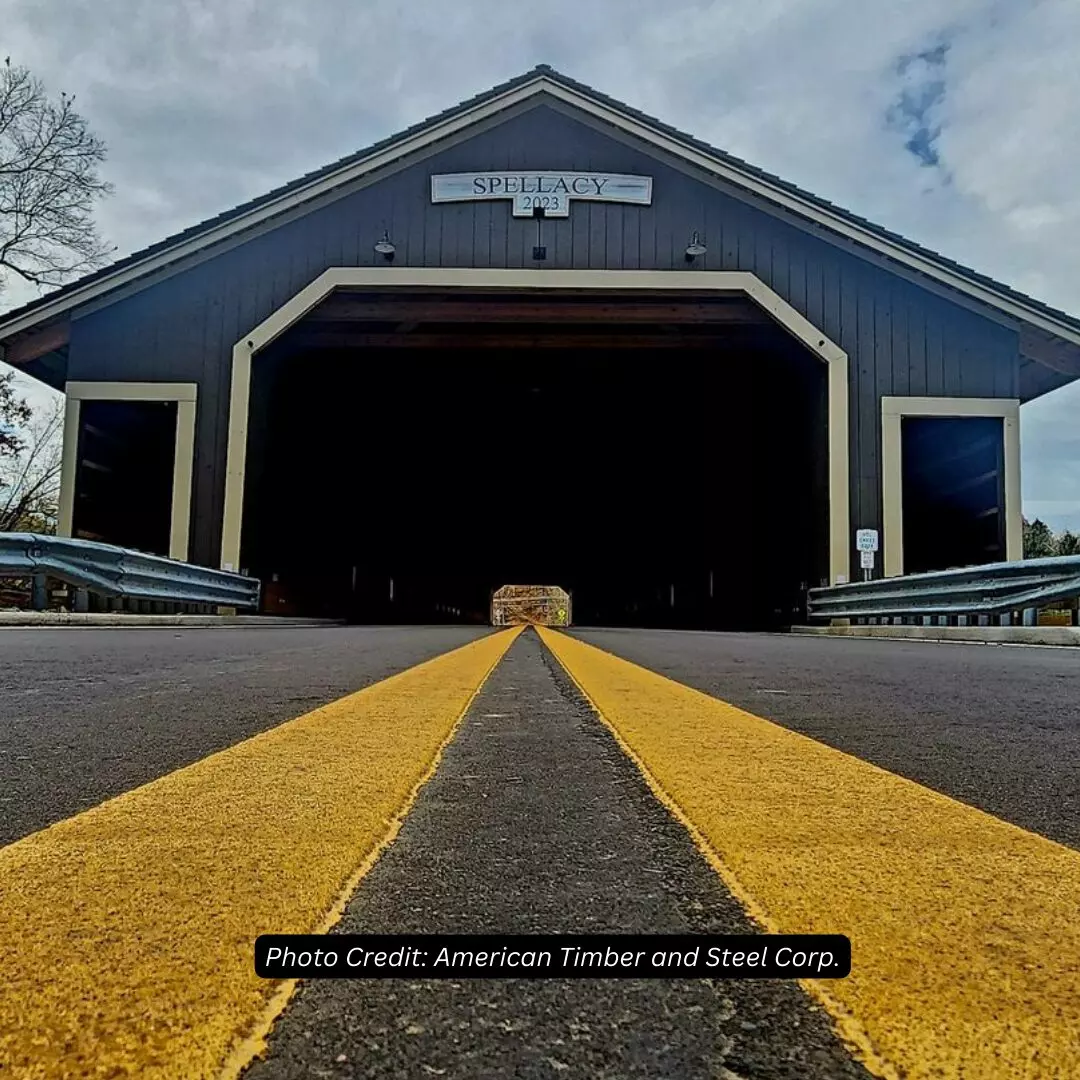
Holmes County’s newest covered bridge is not just a photo stop. Spellacy Bridge, a 300-foot timber span over the Mohican River near Loudonville, opened in 2023 as a replacement project funded with federal and local bridge replacement money, and it now serves as both infrastructure and visitor attraction for the county.
Why Holmes County built it
The bridge grew out of a long-running local replacement effort on Wally Road, about 5 miles south of Loudonville. Holmes County Engineer Christopher Young said in 2018 that the county planned to build a wooden covered bridge there to replace an iron span known to historians and locals as the Spellacy bridge, with the new structure intended to carry the road across the Mohican River.
That decision turned a worn crossing into a larger public asset. Rather than leaving the corridor to a simple modern replacement, the county chose a covered timber design that preserved the bridge name and tied a routine road project to Holmes County’s identity as a place where roads, farms, and tourism overlap.
Who paid for it and what the cost means
OHM Advisors has said the bridge construction cost was $3.2 million, and that it was paid for with federal and local bridge replacement funding. That matters because Spellacy Bridge was not built as a private attraction or a standalone tourism amenity. It was financed as a transportation project, with public dollars directed toward a crossing the county still has to maintain.
WoodWorks Innovation Network describes the bridge as Holmes County’s largest local-let project, which puts the scale in context for a county that manages a large road and bridge network. The Holmes County Engineer’s Office says the county engineer is responsible for the maintenance, repair, widening, resurfacing, and reconstruction of 250 miles of roadways and 283 bridges in the county highway system.
What Ohio Magazine highlighted
Ohio Magazine featured the bridge in an article titled “Visit Ohio’s Newest Covered Bridge in Holmes County,” using an image credited to the Ohio Department of Transportation, courtesy of the Holmes County Engineer’s Office. The magazine’s Facebook post identified it as the Spellacy Covered Bridge and said it was completed in 2023.
That framing matters because it places Spellacy Bridge in the county’s public-asset story, not just its travel marketing. The bridge is new, but it is also a county-maintained crossing with a known budget, a construction timeline, and a direct connection to local infrastructure decisions.
What the bridge means for tourism traffic and nearby businesses
OHM Advisors says the bridge provides access to many recreational amenities in the area. That is the practical reason it draws visitors: the bridge sits in the Mohican River corridor, where outdoor travel, day trips, and family stops already feed local spending in and around Loudonville.
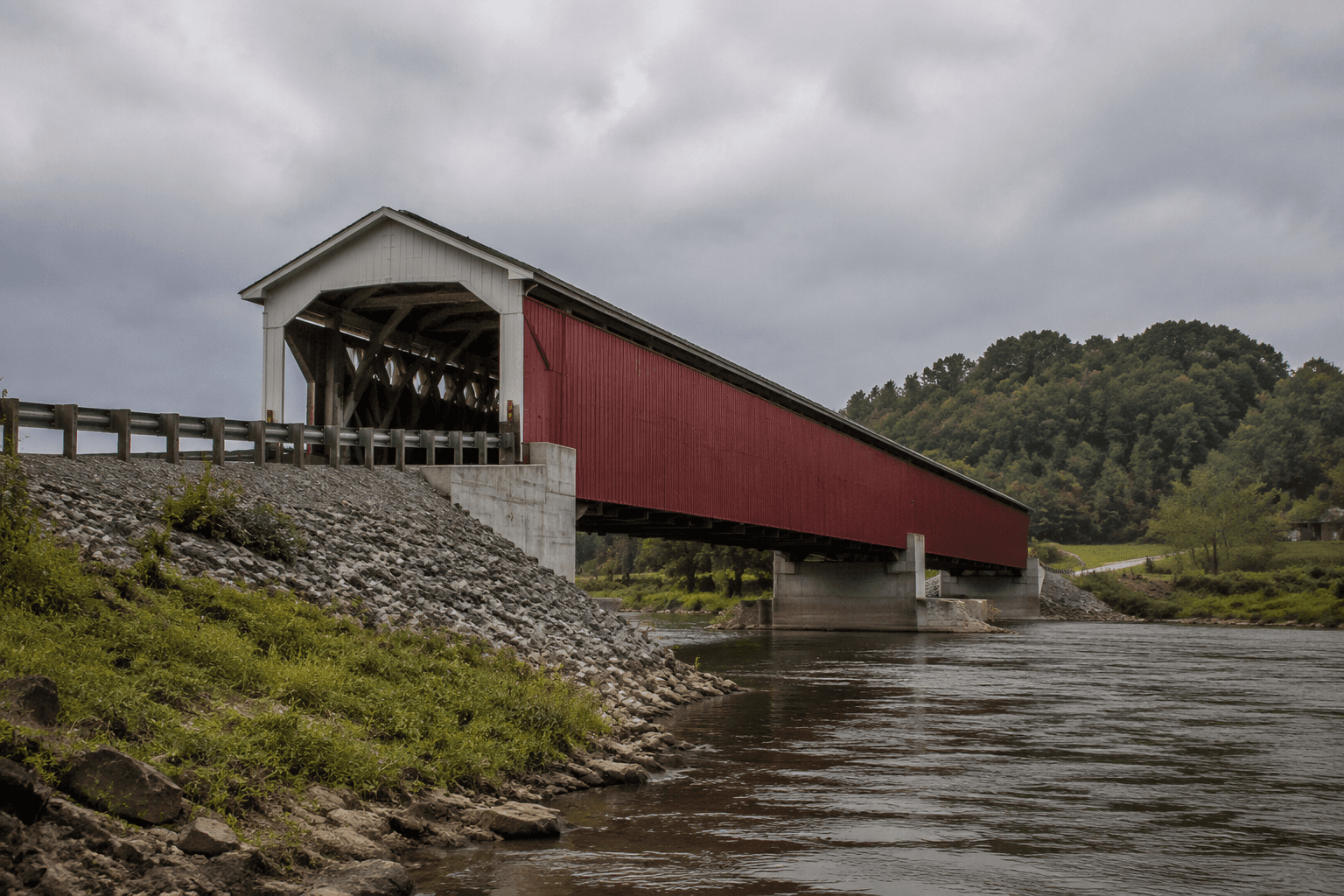
For nearby businesses, the effect is less about one single destination than a traffic pattern. A bridge that appears in statewide travel coverage and engineering recognition can pull more vehicles onto Wally Road and nearby routes, which can benefit gas stations, restaurants, lodging, outfitters, and other small businesses serving the Mohican River valley.
The county’s tourism economy is built on that kind of layered use. A bridge that was funded as transportation infrastructure now helps reinforce the visitor experience in a region where the built environment itself is part of the draw.
Why engineers and preservation advocates pay attention
Spellacy Bridge has gained recognition beyond Holmes County. Engineering News-Record named the Spellacy Bridge Reconstruction Project a 2024 Midwest Best Project in the Small Project category, and OHM Advisors later described it as one of the nation’s top engineering achievements and an ENR Best of the Best winner.
That recognition matters for county policy because it shows the bridge was not simply preserved as decoration. It was engineered to last, with the team later honored in New York City at a gala reception for top engineering projects. In other words, Holmes County chose to invest in heritage infrastructure and then proved it could meet modern standards.
A video produced by Kokosing Construction, Holmes County, and ODOT District 11 looks back on the construction of the all-wooden covered bridge and includes interviews with Kokosing Construction, the Holmes County Engineer’s Office, Smolen Engineering, Palmer Engineering, and ODOT District 11. The project’s technical partners and public agencies were all part of the same effort to keep a historic form functional.
What long-term maintenance says about county priorities
Spellacy Bridge only works as a public asset if the county keeps up with it. Holmes County’s engineer is already responsible for 283 bridges, which means the new covered bridge will compete with every other structure in the county system for inspection, repair, and upkeep.
That ongoing maintenance load shows where the county is putting its priorities. Instead of treating heritage infrastructure as a one-time photo opportunity, Holmes County has absorbed a covered bridge into its regular transportation system, where it will need the same discipline as any other road asset: monitoring, repairs, and funding.
The bridge’s timeline also shows that this was planned, not improvised. A project first described in 2018, completed in 2023, and recognized again in 2024 and 2025 now stands as a test case for how Holmes County preserves a familiar Ohio form while still serving the daily needs of residents, commuters, and visitors moving through the Mohican River valley.
This article was produced by Prism’s automated news system from verified source data, official records, and press releases, then run through automated quality and moderation checks before publishing. The system is built and supervised by the people who set the standards it runs under. Read our full AI policy.
Did this article answer your question?