Advocates urge FERC hearings in Humboldt on Potter Valley project
FERC’s Potter Valley hearings are set for Ukiah, and Humboldt leaders say that could shut out the people living with the Eel River decision.

Humboldt County tribes, water users and fishery advocates are pressing federal regulators to bring Potter Valley Project hearings north, warning that scoping meetings in Ukiah could leave North Coast residents on the sidelines of a decision that will shape Eel River flows, tribal water rights and fish habitat for years.
The Federal Energy Regulatory Commission has scheduled scoping meetings for June 24 in Ukiah at the Ukiah Valley Conference Center as part of its review of Pacific Gas and Electric Company’s plan to surrender and decommission the Potter Valley Hydroelectric Project. The federal review now centers on the environmental impacts of surrender, decommissioning and PG&E’s proposed non-project use of project lands. Because the project sits on the Eel River and the East Branch of the Russian River in Lake and Mendocino counties, critics say hearings far from Humboldt could make it harder for people most affected to speak up.
PG&E filed its final License Surrender Application and Decommissioning Plan on July 25, 2025, after deciding in 2019 not to seek a new license. The century-old system stopped generating power in 2021, and its license expired in April 2022. The project occupies federal lands managed by the U.S. Forest Service, which puts the removal process squarely in the hands of agencies that will weigh public comment on river restoration, access and long-term land use.
Humboldt County officials approved a water diversion agreement in July 2025 after nearly a decade of planning and negotiations. County materials describe the deal as a “two-basin solution” meant to balance Eel River restoration with water reliability in the Russian River watershed. The framework would support a new Eel-Russian Facility, or NERF, and includes performance metrics, adaptive management and a shift that would charge downstream users for Eel River water for the first time instead of leaving those diversions free.
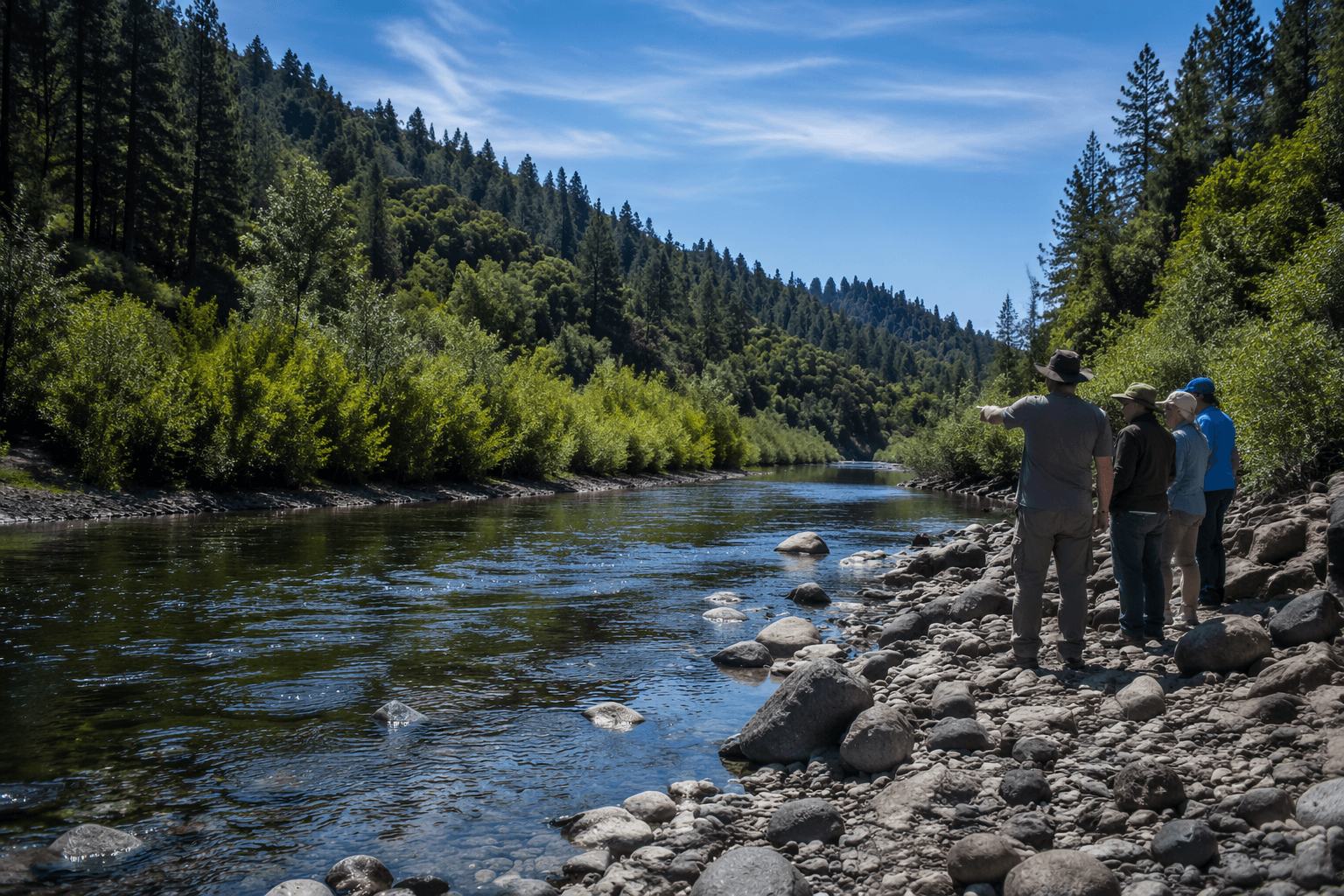
Under the proposed structure, the Eel-Russian Project Authority would pay the Round Valley Indian Tribes $1 million a year for use of tribal water rights, along with a separate restoration payment of $750,000 to $1 million annually. The Round Valley Indian Tribes and the Yurok Tribe deepened that regional alliance in 2025 by signing a Treaty of Friendship to restore the Eel River and its fish populations. Yurok leaders pointed to their role in helping lead the 2023-24 removal of four Klamath River dams as a model for what could come next on the Eel.
Environmental groups say removing Scott Dam and Cape Horn Dam would reopen habitat for Chinook salmon, coho salmon, steelhead and lamprey. PG&E says decommissioning would be more affordable for customers and would allow fish access to upstream Eel River habitat. Public materials point to a multi-year timeline, with dam removal work potentially beginning in 2028 if federal review stays on schedule.
This article was produced by Prism’s automated news system from verified source data, official records, and press releases, then run through automated quality and moderation checks before publishing. The system is built and supervised by the people who set the standards it runs under. Read our full AI policy.
Know something we missed? Have a correction or additional information?
Submit a Tip