Fort Humboldt reveals how Eureka grew through army and logging history
Fort Humboldt turns a bluff above Humboldt Bay into a map of Eureka’s Army, logging, and Gold Rush past, with trails and exhibits that still frame the city today.
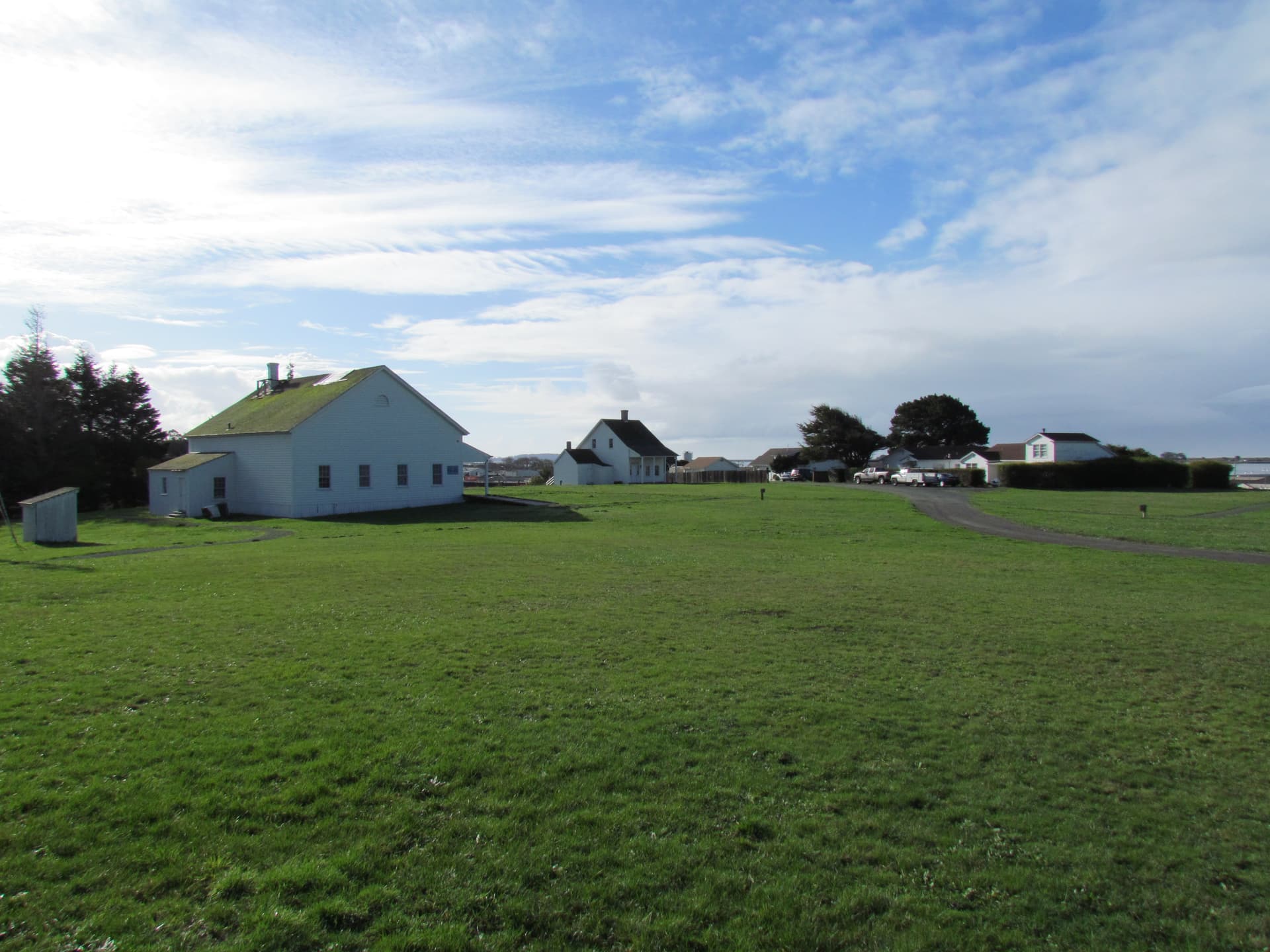
A bluff above Humboldt Bay still explains why Eureka took shape where it did. Fort Humboldt State Historic Park was established in 1853 as a remote military post, and its placement above the harbor put federal power, shipping access, and the region’s timber future in one view. The park now reads as more than a scenic stop: it is a compact place to see how the Army, the logging economy, and the settlement era made modern Eureka.
Why this bluff mattered
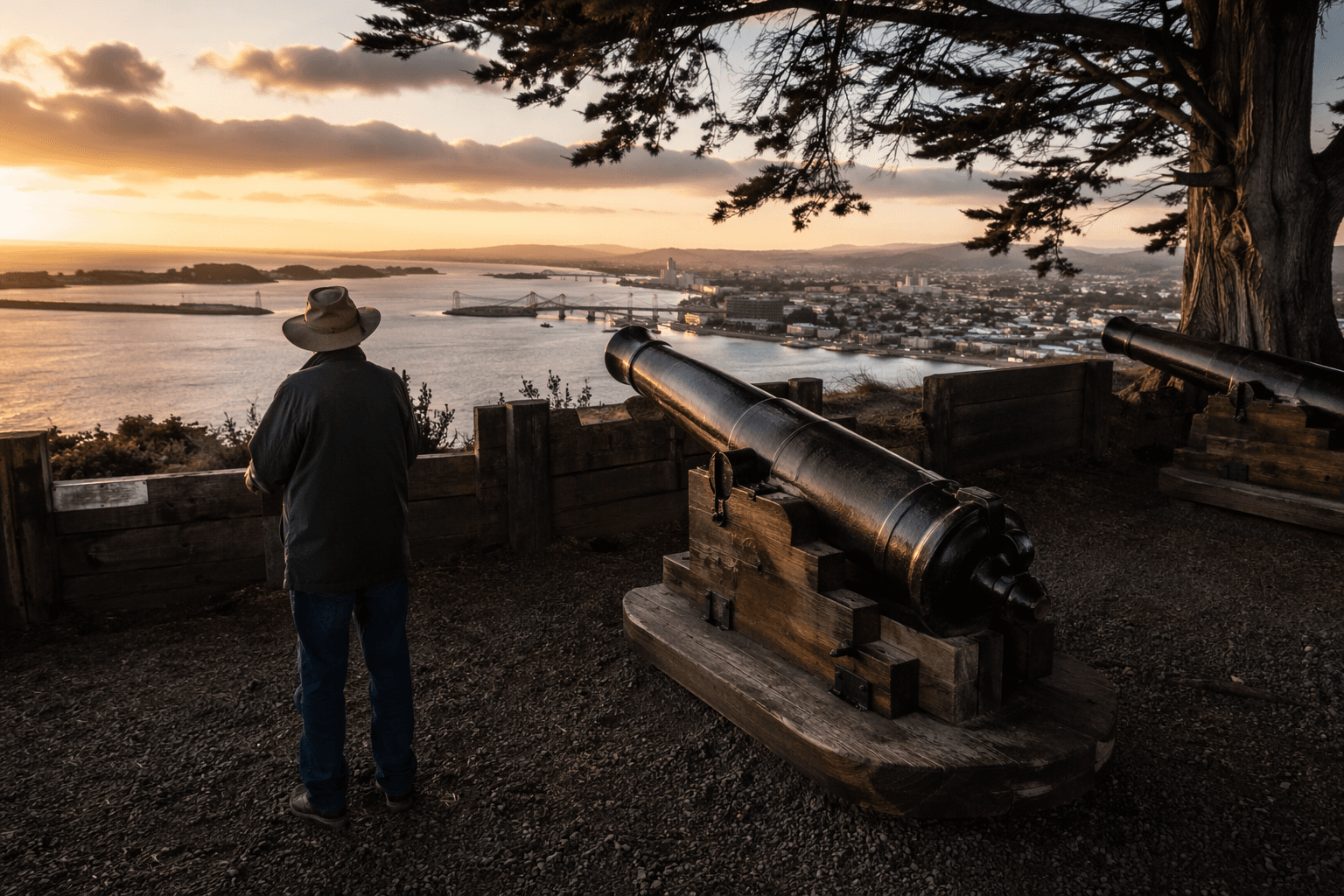
Fort Humboldt’s location was no accident. California State Parks describes it as a historic military fort overlooking Humboldt Bay, and that vantage point mattered in the 19th century because the bay linked the North Coast to trade, transport, and military oversight. The post later became the headquarters for the Humboldt Military District, which makes the site a direct entry point into Eureka’s early civic and federal history.
The fort also belongs to the harder, less comfortable story of how the North Coast changed under U.S. expansion. The same years that produced the post also brought new military control, new industries, and new pressure on Indigenous communities across Humboldt County. Standing on the bluff today, the view over the harbor and toward the city helps explain why that transition happened here, not somewhere else.
How the timeline unfolds
The fort’s history is easy to follow because the dates line up cleanly. FortWiki places its establishment on Jan. 30, 1853, during the California Gold Rush, under Captain Robert C. Buchanan of the 4th U.S. Infantry. Fort Humboldt was abandoned on Sept. 14, 1867, which gives the site a relatively short life as an active post but a long afterlife in local memory.
That history breaks into useful chapters. The outline commonly used for the site divides it into the early years from 1853 to 1860, the Civil War years from 1861 to 1865, and the final years and abandonment from 1865 to 1867. Ulysses S. Grant served there briefly in 1854, a reminder that a post now known for local history also touched a national military career.
For readers trying to place Eureka in a larger American context, that matters. The fort was not built as a decorative landmark. It was a working army post in a Gold Rush-era frontier economy, and its timeline overlaps with the period when Humboldt Bay and nearby settlements were being folded into the federal map.
What the park shows now
The park’s present-day value comes from how it layers exhibits onto the remains of the outpost. California State Parks lists Fort & Logging Museums and self-guided interpretive trails, so the visit does not depend on a scheduled tour. That structure works especially well in Eureka, where visitors can move from the military story to the timber story without leaving the same site.
The accessible-features information adds another important detail: the park preserves the remains of the military outpost, and reconstructed buildings house exhibits that provide glimpses of the past. That means the site is not just open space with a marker. It is a built environment that helps visitors understand how the post functioned and how the later museum pieces interpret it.
The logging focus is just as important as the fort itself. Humboldt County’s image was shaped by timber, and local heritage still carries the shorthand of “steam donkeys and sawdust.” The park’s logging materials connect Fort Humboldt to the wider redwood economy that transformed Eureka into a harbor city built to move wood, equipment, and labor in and out of the county.
How to read the logging story in Eureka
Fort Humboldt works best when you use it as a lens on the city beyond the park boundary. Downtown Eureka, Old Town Eureka, the harbor, and the broader regional heritage scene all make more sense once you have seen the blufftop post. The Timber Heritage Association keeps that logging memory alive in the city, and the fort’s logging exhibits sit naturally beside that local history.
The point is not simply that Eureka once logged trees. It is that the city’s harbor, its industrial growth, and its place in the North Coast economy were all tied to timber technology and transport. Seeing Fort Humboldt before walking into Old Town or along the waterfront gives that landscape a chronology: Army post first, logging economy next, then the layered city that grew around both.
What to know before you go
Fort Humboldt State Historic Park is at 3431 Fort Avenue in Eureka. The park is open daily from 8:00 AM to 5:00 PM, and the main contact number is (707) 445-6547. The current park page notes that the Museum and Surgeon's Quarters are closed to visitors due to construction, so the experience may be more trail-heavy than exhibit-heavy on a given visit.
The self-guided route still gives visitors a lot to work with. The Fort Humboldt Trail averages 7 feet in width, uses aggregate, wood, and asphalt surfaces, and has an 8% maximum running slope. Those measurements make the park easier to evaluate before you arrive, especially if you are planning a low-stress walk, bringing family members with mobility concerns, or simply want a clear sense of how much ground the site covers.
A stop here also fits cleanly into a day in Eureka. The fort gives the military origin story, the logging exhibits explain the city’s industrial rise, and the harbor view shows why both mattered in the first place. That combination is why Fort Humboldt still belongs at the center of any serious understanding of Eureka, not as a relic off to the side, but as one of the places where the city’s modern identity was first set in motion.
This article was produced by Prism’s automated news system from verified source data, official records, and press releases, then run through automated quality and moderation checks before publishing. The system is built and supervised by the people who set the standards it runs under. Read our full AI policy.
Did this article answer your question?