Humboldt Cannabis Farmers Struggle as Wholesale Prices Plunge from $2K to $250 per Pound
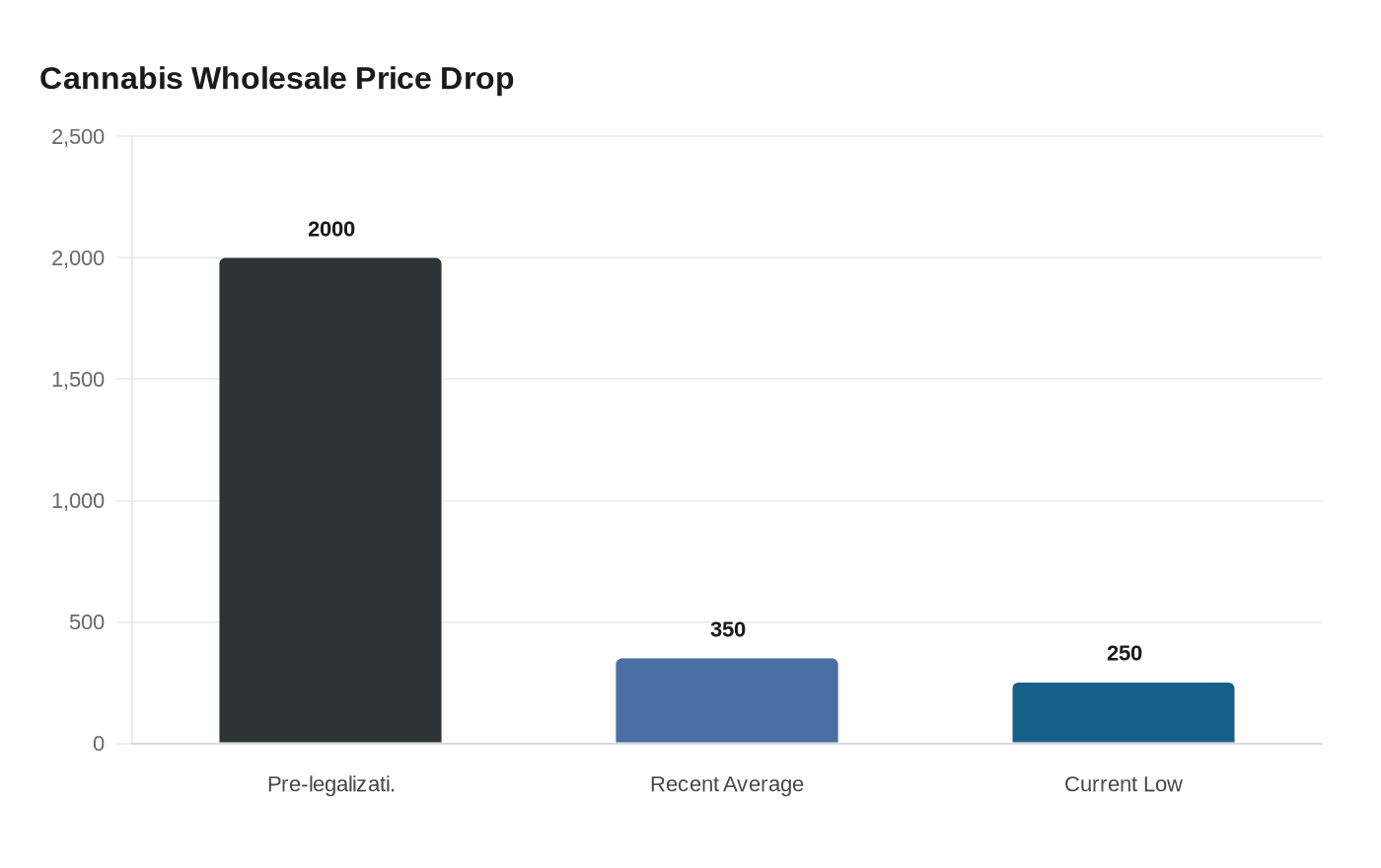
Wholesale cannabis prices have collapsed from $2,000 to as low as $250 per pound since legalization, and Humboldt County has lost roughly half its farms since 2021.
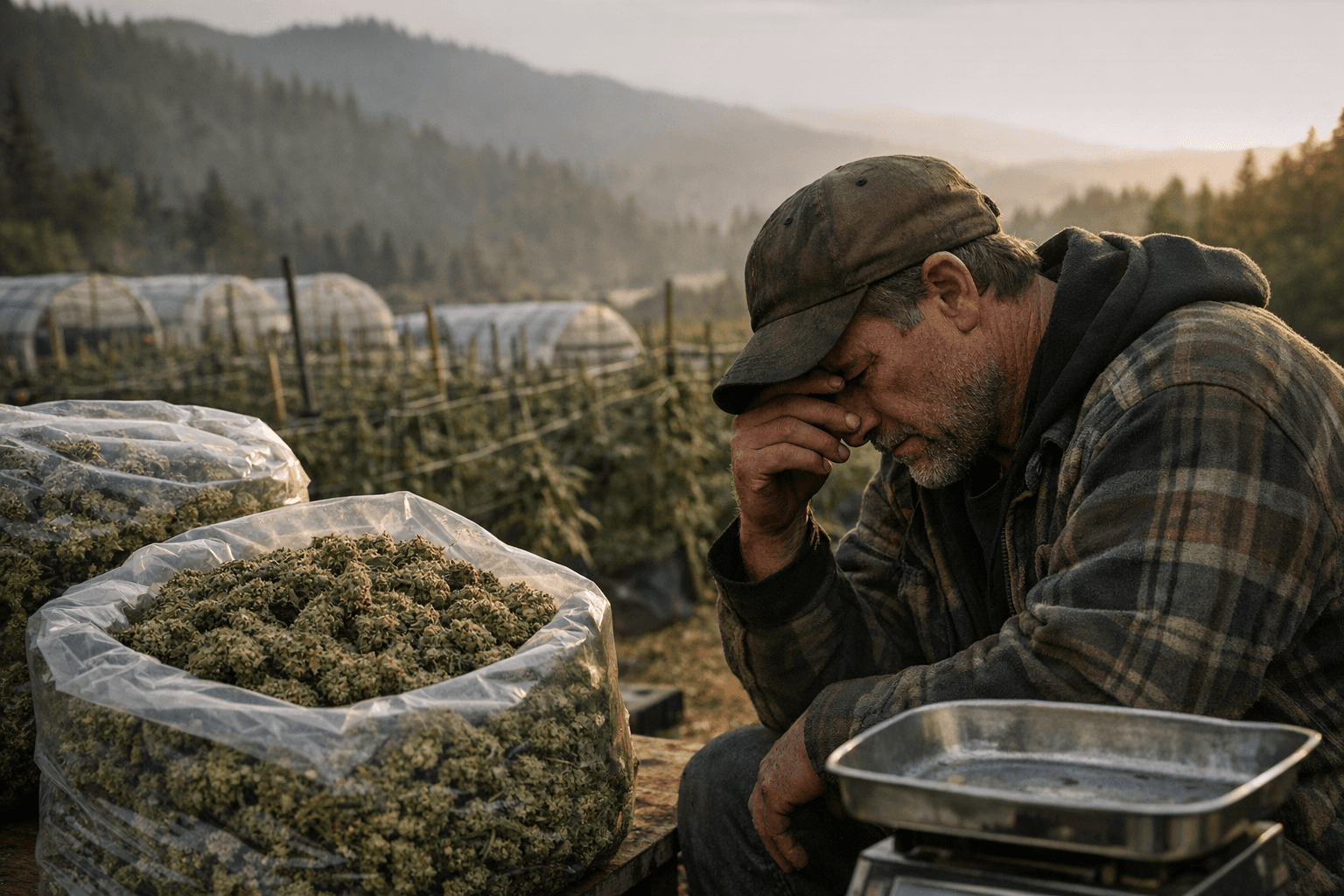
The price a Humboldt County cannabis farmer receives for a pound of flower has fallen so far, so fast, that many can no longer cover the cost of growing it. Since recreational legalization passed in 2016, wholesale cannabis prices went up in smoke, driven by massive overproduction when venture capital firms jumped into the new market, resulting in record-breaking grows concentrated in central and southern California. What once fetched $2,000 per pound at wholesale now sells for as little as $250.
Ross Gordon of the Humboldt County Growers Alliance says the average wholesale price fell from $350 to $250 per pound within a single year, and that the county has lost roughly half of its farms since 2021. "Even if every small farmer in Humboldt quit today, it wouldn't matter," said Jason Gellman of Ridgeline Farms in Southern Humboldt. "There are one or two mega-farms down south that can supply all of California."
The financial carnage is visible across the region. Cratering wholesale prices have sent property values crashing, forced stores and restaurants to close, and caused locals to leave town. Gellman said the region has "hardly any jobs left" and personally knows five growers who moved elsewhere in recent months to find work. Storefronts in Garberville, a town of about 1,500 residents, are boarded up, and no more than two restaurants remain open.
The tax burden compounding the price collapse has become an existential threat. More than 75% of Humboldt's roughly 1,000 cultivation permit holders carry some Measure S tax debt. The average outstanding bill is $12,000, though some owe more than $150,000. Natalynne DeLapp of the Humboldt County Growers Alliance said paying off a $30,000 tax debt "has been nearly impossible" for most farmers, and that around 75% of growers are at risk of losing their permit.
Craig Nejedly, CEO of Talking Trees Farms, put the stakes plainly when he addressed the Board of Supervisors earlier this year. "There wasn't any way he would be able to come up with over $30,000 he owed by the end of the month," Nejedly said. "It'd be putting my farm, my family, my employees out of business essentially. I feel like I'm being penalized for going all in on legal cannabis."
The Humboldt County Board of Supervisors reduced the Measure S cannabis excise tax rate to zero in October, ending a long debate over its effect on struggling growers. But the back-tax debts remain. Starting in 2026, cannabis farmers will pay 25% of what they owe each year over a four-year period. Planning Director John Ford said 518 permit holders still owe Measure S taxes, a little more than half of the total number of permitted cultivators.
Smaller-scale farms are having the hardest time adapting to the legal cannabis economy, a trend reflected in the tax debt numbers. Most revoked permits were for cultivation areas under 10,000 square feet, with 65 total revocations recorded through mid-2025.
One local expert warned the Board of Supervisors that permit losses could become permanent: "What I see is just like a permanent extinction event, where if you turn those licenses off, they can't be turned back on without a whole lot of lobbying and policy effort."
Some see a path forward through terroir. As the market matures, consumers may move away from valuing only high-THC products. "Consumers don't walk into a wine store and choose their wine based on how much alcohol it has," one industry observer noted. Luckily for Humboldt farmers, some of the best cannabis in the world can be grown in the region's unique soil and climate. In wine terms, Humboldt has first-rate terroir.
A 2024 Sonoma State economic study found that legal cannabis contributes $669 million in economic activity annually to Humboldt County and supports 5,651 jobs, roughly 10% of the county's total economic activity. The county's latest budget carries a $10 million deficit, in part because of declining sales tax revenue as cannabis businesses retract and fewer workers remain to spend money locally. The region that built its modern identity around cannabis cultivation is now watching that foundation crack under the weight of a market it helped create but can no longer control.
This article was produced by Prism’s automated news system from verified source data, official records, and press releases, then run through automated quality and moderation checks before publishing. The system is built and supervised by the people who set the standards it runs under. Read our full AI policy.
Did this article answer your question?