Humboldt Trails Summit offers preview of Great Redwood Trail future
The Great Redwood Trail is moving from plan to ground truth, with new funding, named local segments and Humboldt Bay Trail South showing what residents may soon use.
A trail residents can picture, not just imagine
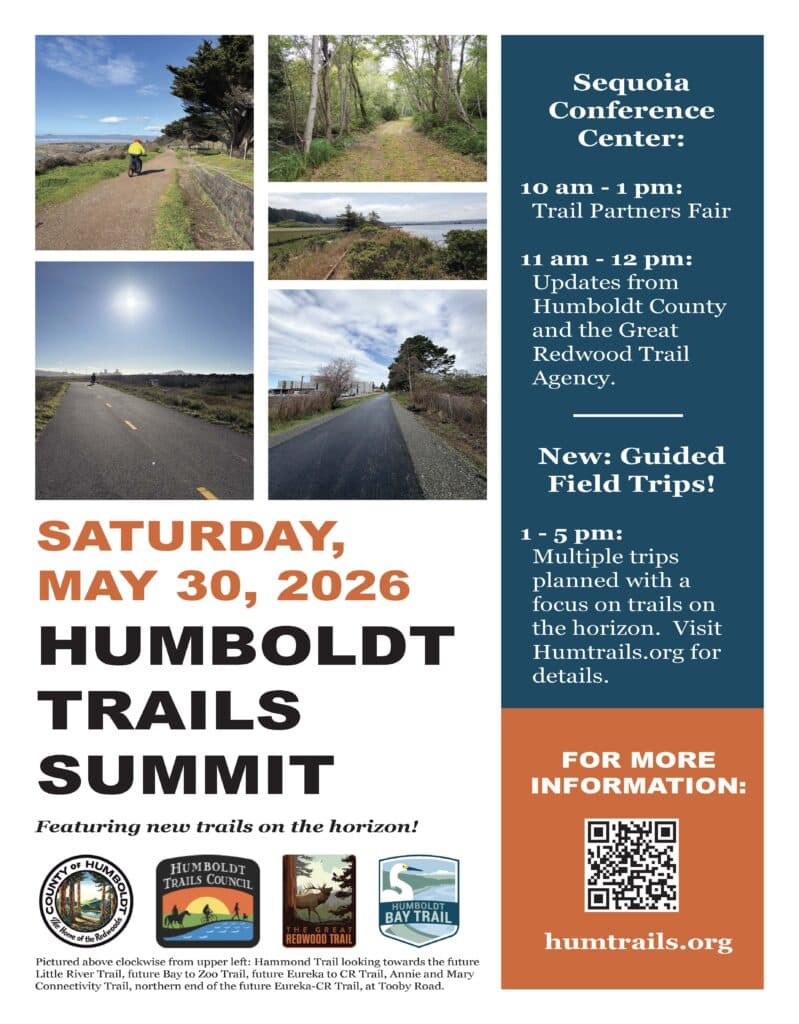
The Great Redwood Trail is no longer just a line on a planning map. With the master plan complete and the annual Humboldt Trails Summit offering a walkable preview of future segments, the project is becoming something people in Humboldt County can see, discuss and eventually use in daily life.
That matters because this is not a small local path. The California State Coastal Conservancy describes the Great Redwood Trail as a 320-mile multi-use rail-to-trail project linking San Francisco Bay and Humboldt Bay, and other official documents use a 316-mile figure. One current CEQA filing narrows the immediate corridor work to a 231-mile segment from the Sonoma-Mendocino county line north to Humboldt County, showing how the project is being built in phases rather than all at once.
What the summit was really showing
The Humboldt Trails Summit is useful because it translates a long-range public works project into something tangible. Instead of asking residents to interpret a planning document, it lets them walk future trail systems years before they officially open to the public. For a county where trails are tied to recreation, tourism, transportation and environmental restoration, that is a powerful way to build support.
The local payoff is easy to understand. A finished trail segment can give Arcata and Eureka residents a safer place to bike, walk or commute without a car. In smaller communities such as Willits, Longvale, Alderpoint and Hoopa, the same corridor could strengthen access to town centers, outdoor recreation and visitor traffic as the route expands north and south.
The master plan has moved from concept to action
The Great Redwood Trail Master Plan and Community Engagement Plan began development in fall 2022. The master plan is meant to do more than define a route. It is designed to guide trail design, operations and maintenance, cultural and natural resource protection, habitat restoration, project prioritization and funding sources.
That matters because this is where many ambitious trail projects stall: not in vision, but in the details of land management, long-term upkeep and financing. The Great Redwood Trail Agency Board adopted the master plan in March 2026, giving the project a more formal road map as it moves toward implementation.
The planning team is not working alone. The project includes Alta Planning + Design, Redwood Community Action Agency, North Coast Opportunities and Jen Rice, a mix of technical, community and local partners that suggests the trail is being shaped both as infrastructure and as a public asset.
The money trail shows real momentum
The clearest sign that the project is shifting from idea to buildout is the funding timeline. In February 2024, the California State Coastal Conservancy authorized nearly $3 million for additional planning and environmental work. In February 2025, it authorized up to $5 million more for engineering, environmental services, planning and design, public outreach, railbanking, technical support, staffing and related costs.
Then, in April 2026, the Conservancy authorized up to $6 million for Great Redwood Trail Agency operations and trail-restoration planning, design, construction and implementation in Mendocino, Trinity and Humboldt counties. Taken together, those actions show a steady increase in the scale and seriousness of public investment.
For Humboldt County, that funding matters beyond the trail itself. Planning dollars support local jobs, environmental review and community outreach. Construction and restoration dollars can spill into nearby businesses, from restaurants and lodging to hardware, equipment and services used by crews and consultants working along the corridor.
Where people may see the first visible change
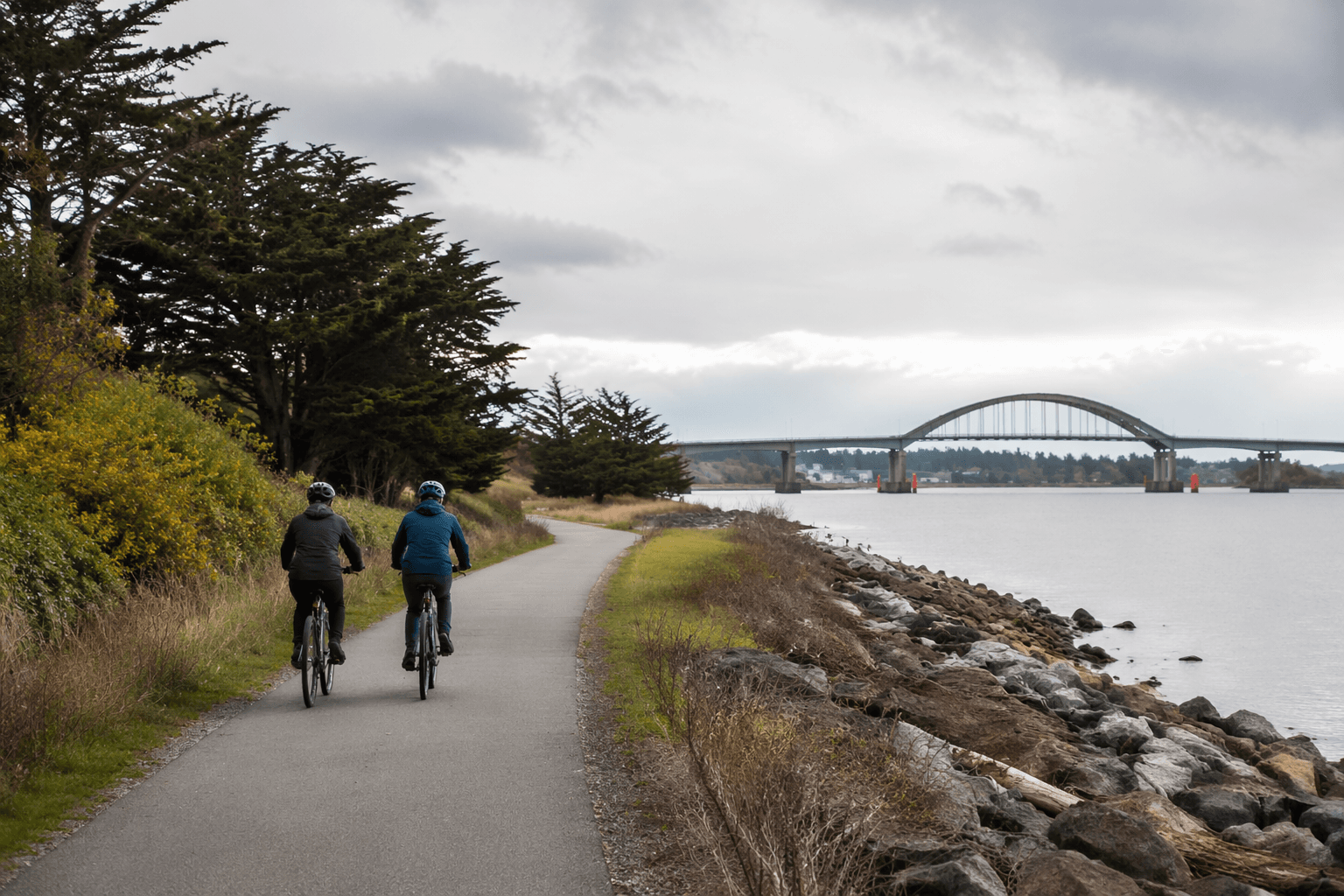
One of the best local examples of what the Great Redwood Trail could become is already on the ground: Humboldt Bay Trail South. It opened in 2025 after construction began in July 2023, giving Eureka and Arcata residents a concrete example of how a former rail corridor can turn into a daily-use transportation and recreation asset.
That project shows why the Great Redwood Trail matters so much to nearby towns. When a trail segment opens, it does not just create a place for exercise. It can connect neighborhoods, encourage bike trips, draw visitors and support small businesses near the route. It also gives the public a visible return on years of planning, which is especially important for a corridor that will take time to complete.
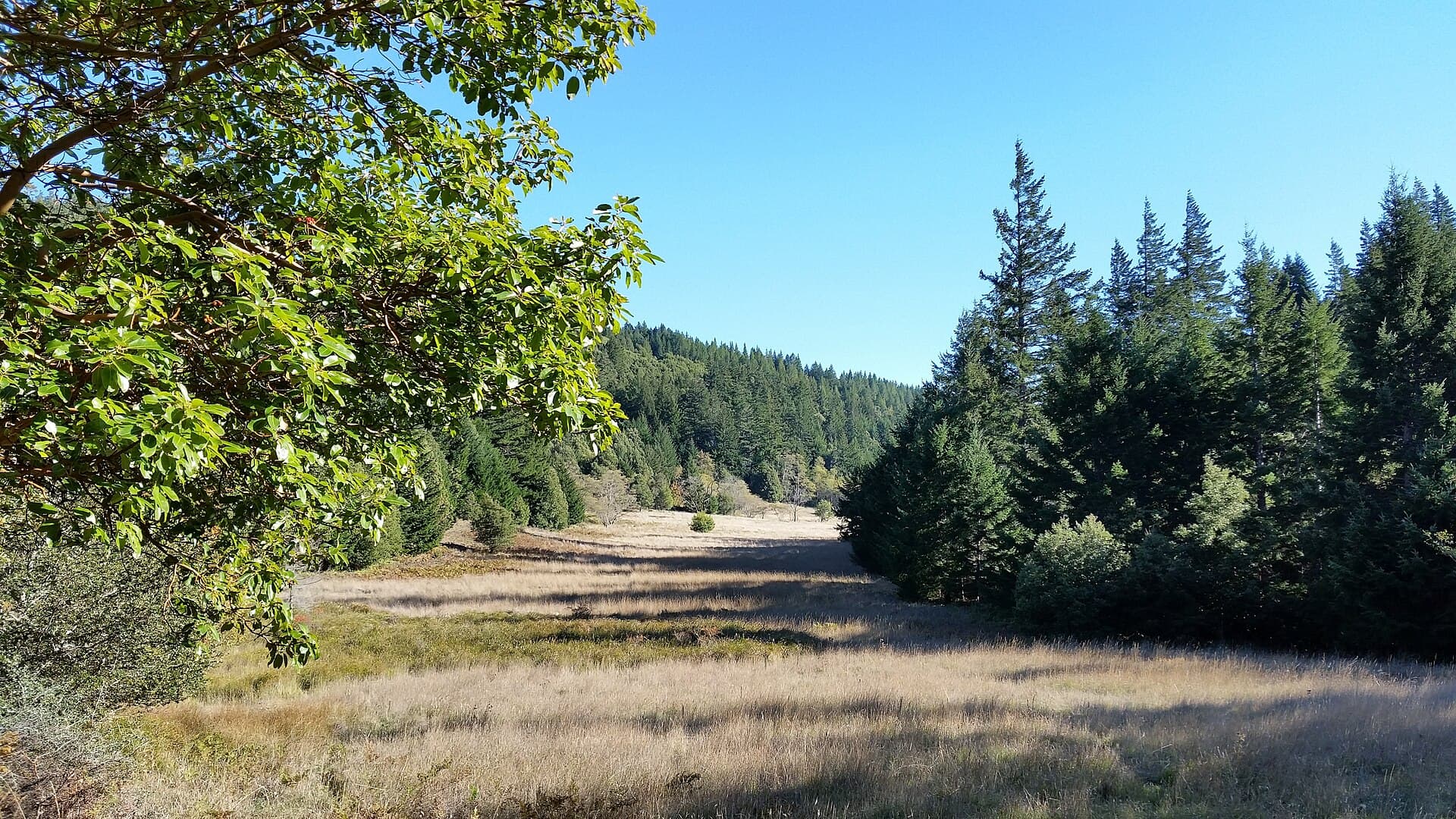
The next segments are still in the pipeline, but planning materials already identify a few places to watch. One priority segment runs 11.2 miles from the north side of the Island Mountain tunnel in Trinity County to the Cain Rock Railroad Bridge in Humboldt County. Another priority area covers 4.5 miles between Alderpoint and the Emerald Waters Reserve. Those names matter because they show the trail is advancing in specific places people can locate on a map and, eventually, on the ground.
Why railbanking and corridor control still matter
The Great Redwood Trail Agency is also mandated to undertake railbanking of the corridor with the Surface Transportation Board. That is a technical step, but it is one of the most important behind the scenes. Railbanking helps preserve the corridor for future trail use instead of losing it to piecemeal abandonment or incompatible development.
For Humboldt County residents, that process has practical consequences. Keeping the corridor intact is what makes a continuous regional trail possible. Without it, the trail could fragment into disconnected pieces that are harder to maintain, harder to navigate and less useful for everyday travel or tourism.
What the project could mean for Humboldt’s economy and identity
The Great Redwood Trail is being sold not just as recreation, but as a county-shaping public investment. If the corridor is completed in the way planners envision, it could strengthen overnight tourism, create steady demand for local services and give towns along the route a new asset for downtown revitalization and outdoor access.
The broader significance is cultural as well as economic. Humboldt has long treated trails as part of its identity, not just as amenities. This project fits into the county’s larger conversation about access, environmental stewardship and safer alternatives for people on foot or bike. If the summit preview did its job, it showed residents that the Great Redwood Trail is moving toward something more than a future promise. It is becoming a visible civic change, segment by segment, with Humboldt Bay already offering a glimpse of what comes next.
This article was produced by Prism’s automated news system from verified source data, official records, and press releases, then run through automated quality and moderation checks before publishing. The system is built and supervised by the people who set the standards it runs under. Read our full AI policy.
Know something we missed? Have a correction or additional information?
Submit a Tip