Rare longnose lancetfish washes up at Mad River Beach
A rare longnose lancetfish landed at Mad River Beach, giving Humboldt residents a look at a deep-sea predator with dagger-like teeth and a strange biology.
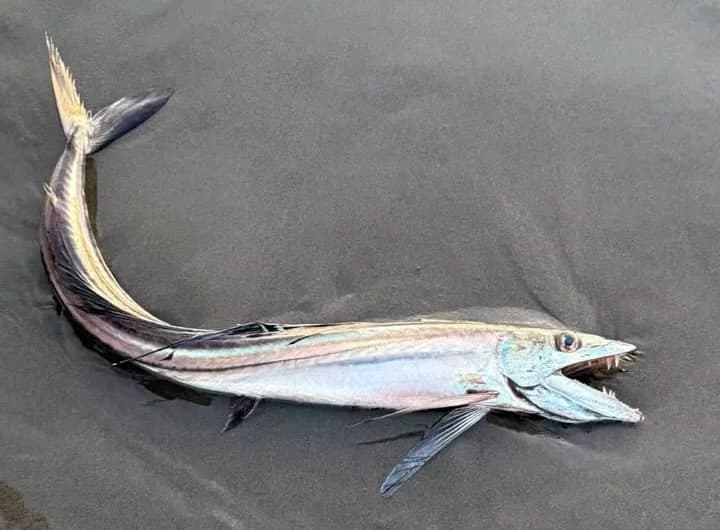
A longnose lancetfish washed up Thursday evening at Mad River Beach, turning an ordinary stretch of the North Coast into a brief marine science lesson. Lilykoi Leilani spotted the strange fish, ran a Google image search, and matched it to a species most people will never see intact on the sand.
Dr. Cynthia M. Le Doux-Bloom, a fisheries biologist at Cal Poly Humboldt, confirmed the identification and called it a cool find. The fish measured roughly three to four feet long, a striking size for an animal that normally lives far below the waves in the mesopelagic, or twilight zone, about 200 to 1,000 meters beneath the surface.
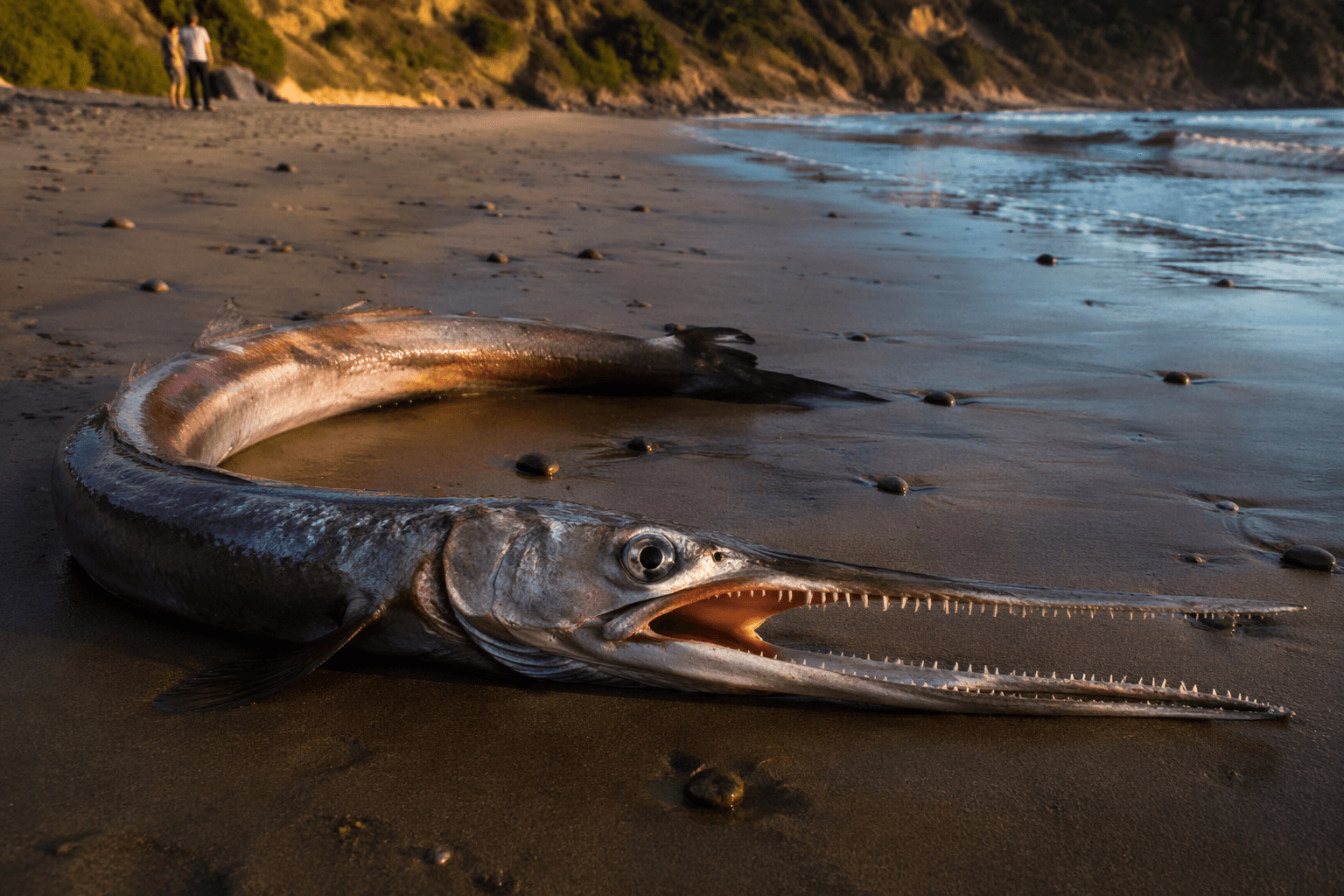
The longnose lancetfish is built for that world. NOAA Fisheries says it can swim to depths of more than 1 mile below the sea surface, is usually found in tropical and subtropical waters, and can migrate far north to Alaska’s Bering Sea. Since 1982, groundfish surveys have recorded just 2 in the Gulf of Alaska, 4 near the Aleutian Islands and 10 in the Eastern Bering Sea, showing how uncommon it is in northern waters.
Its biology is as unusual as its range. Lancetfish are hermaphrodites, with both male and female sex organs at the same time. They are scaleless, with smooth skin and dagger-like teeth, and NOAA describes their flesh as watery and gelatinous and generally not appetizing to people. The species also has a reputation for cannibalism because it can eat other lancetfish.
Scientists pay close attention to that appetite. NOAA researchers have used stomach contents from longnose lancetfish to study deep-sea food webs and the prey species hidden in those waters. In other words, a fish that looks like a curiosity on the beach can also help explain what is happening far below the surface.
Mad River Beach sits beside the Mad River estuary system, and the watershed draining into it covers about 500 square miles and runs roughly 100 miles inland. That local geography makes the find feel especially Humboldt: a rare deep-ocean visitor ending up in a place residents know well, and a reminder that the coast here often brings odd, vivid pieces of the Pacific right to shore.
This article was produced by Prism’s automated news system from verified source data, official records, and press releases, then run through automated quality and moderation checks before publishing. The system is built and supervised by the people who set the standards it runs under. Read our full AI policy.
Know something we missed? Have a correction or additional information?
Submit a Tip