Yurok say first wild condor egg likely failed to hatch
The first wild condor egg in the Pacific Northwest likely failed, a setback at a redwood nest in Redwood Creek that puts Yurok recovery work to the test.
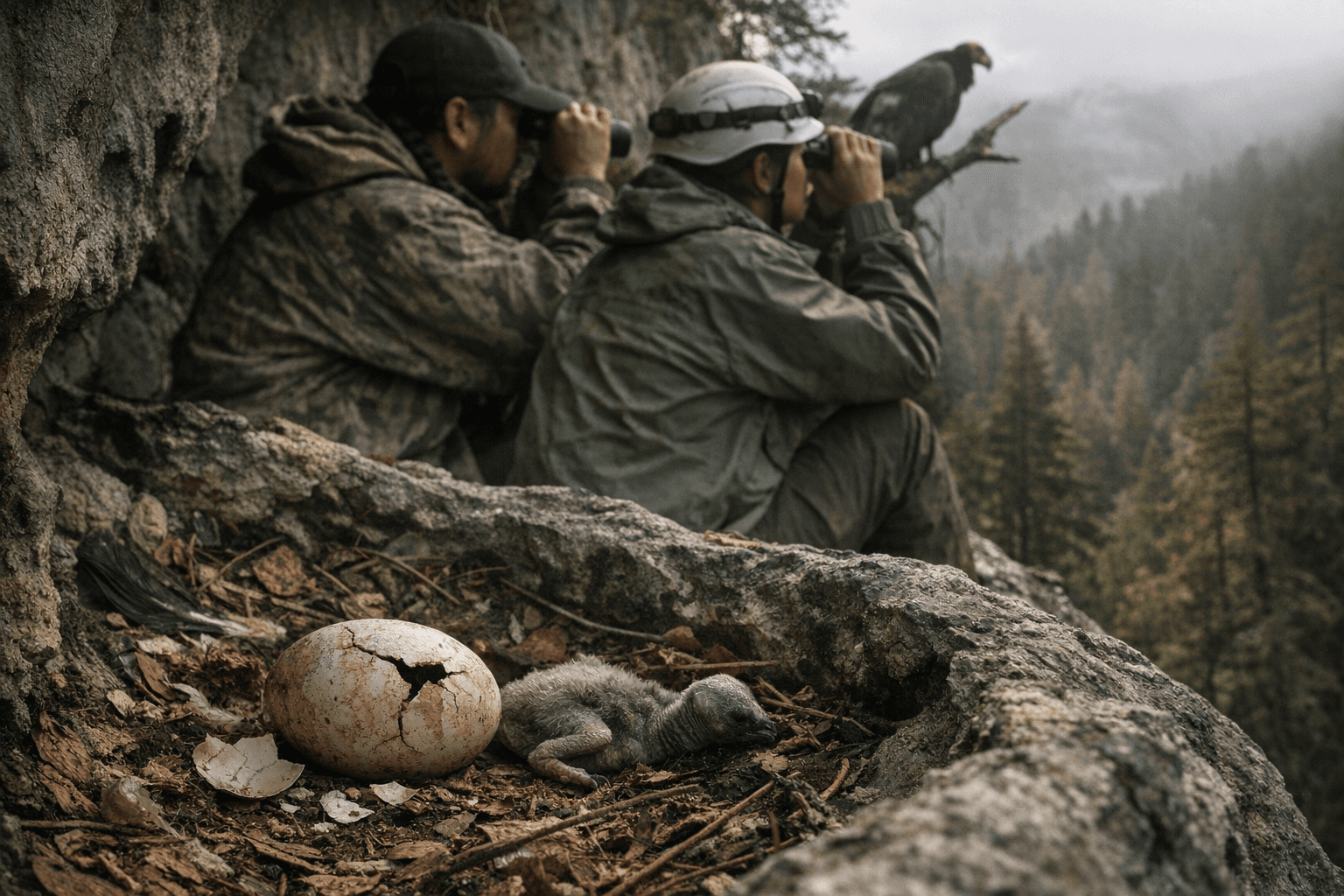
A condor egg tucked inside an old-growth redwood in the Redwood Creek drainage appears unlikely to hatch, dimming hopes for the first wild chick in the Pacific Northwest condor population.
Biologists with the Northern California Condor Restoration Program said the pair, A0, known as Ney-gem' 'Ne-chween-kah, and A1, known as Hlow Hoo-let, have spent an extended period away from the nest site, a pattern that does not fit the intensive care a hatchling would need to survive. The data are not conclusive, and the nest is inaccessible, so the team will keep watching the birds’ behavior for weeks before the outcome is fully clear.
The egg was laid after months of searching for a suitable nesting cavity in Redwood National and State Parks. Nesting behavior was first noticed in early February, and the pair’s nest became the first in the Pacific Northwest region in more than a century. If a chick had hatched and later fledged, it would have been the first California condor born and raised in the wild in Northern California in roughly 130 years.
Tiana Williams-Claussen, the Yurok Wildlife Department director, said the tribe remains hopeful for future attempts and wants its first wild-fledged chick to fly free in Yurok homeland. Chris West, manager of the condor restoration program and a senior biologist with the Yurok Wildlife Department, said condor parents usually get better at raising chicks over time because they learn from mistakes.
The failed hatch would not mean the restoration effort has stalled. A0 and A1 are both seven years old, an age when first breeding attempts are common, and they have only been free-flying since 2022. If this egg did not produce a chick, the pair could try again this spring, a process biologists call recycling, or more likely next year.
The setback carries unusual weight because the Yurok Tribe, the National Park Service and the U.S. Fish and Wildlife Service have tied condor recovery to cultural restoration as well as species recovery in Yurok Ancestral Territory and the Pacific Northwest. The tribe created its wildlife program in 2008 to determine whether the region could support reintroduced condors, and the effort has become one of the Yurok Tribe’s flagship conservation projects.
California condors are North America’s largest land bird, with a wingspan of about 9.5 feet and an average weight of about 22 pounds. They typically lay eggs from late January through April, incubate for about two months, and wild chicks usually hatch between April and June. The broader population has rebounded to 607 birds worldwide and 392 in the wild as of the end of 2025, but the species remains precarious. From 1992 through 2025, federal biologists recorded 161 confirmed wild deaths from lead poisoning, which accounted for half of known-cause wild deaths and 28% of all known wild deaths.
This article was produced by Prism’s automated news system from verified source data, official records, and press releases, then run through automated quality and moderation checks before publishing. The system is built and supervised by the people who set the standards it runs under. Read our full AI policy.
Did this article answer your question?