DNR updates burn permit rules as spring cleanup begins in Iron County
Iron County residents need to check the DNR’s new county dropdown before lighting any brush pile. Debris burning starts 27% of Michigan wildfires, and spring cleanup can turn fast.
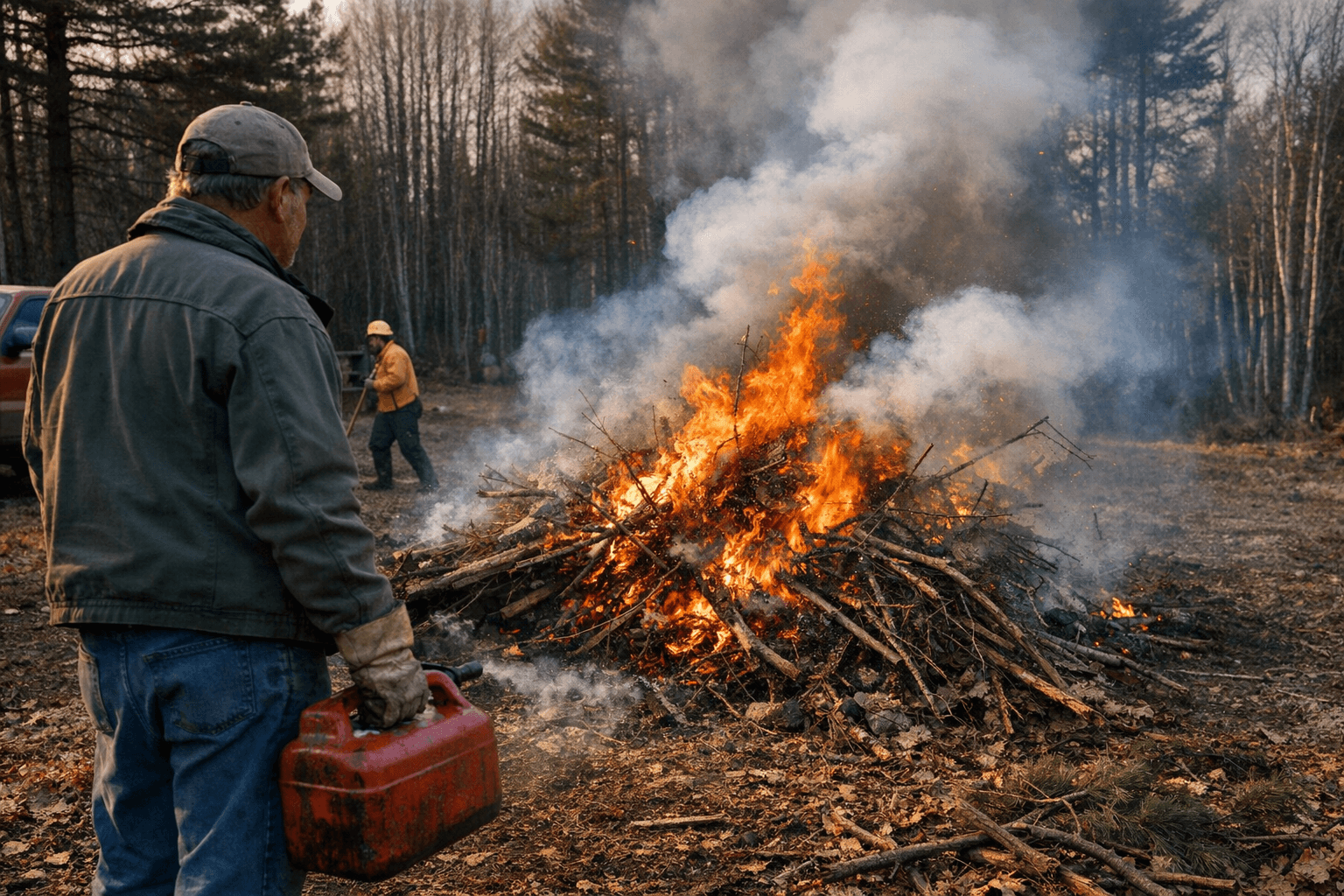
Iron County residents can burn spring cleanup debris only if the current rules allow it, and the Michigan Department of Natural Resources says the safe move is to check first, not guess. The agency has updated its burn permit page this season, switching from clickable county maps to a county dropdown, and residents can also call 866-922-BURN, or 866-922-2876, to confirm whether burning is being allowed in their area.
For Iron County, that matters now, as yards in Iron River, Crystal Falls and nearby townships start to emerge from winter. The DNR says burn piles should stay small, no larger than 3 feet in diameter, and they should never be left unattended. Before walking away, the ashes need to be drenched with water, stirred, and drenched again until they are cool to the touch. A pile that seems harmless in a patch of melting snow can still spread quickly when dry grass, leaves and windrows catch.
The permit rules are not the same everywhere in Michigan. DNR permits are available only in the Upper Peninsula and the northern Lower Peninsula, which includes Muskegon, Newaygo, Mecosta, Isabella, Midland and Bay counties and all counties north of them. Residents in the southern Lower Peninsula must contact their local fire department or local governing body for burn permits. State law also allows burning grass and leaves only in municipalities under 7,500 people unless a local ordinance forbids it, and EGLE rules prohibit burning yard debris within 1,400 feet of an incorporated city or village limit.
Officials say the risk is not theoretical. The DNR says 27% of Michigan wildfires are caused by debris burning, and in a separate spring message the agency said nine out of 10 wildfires in the state are caused by people. That includes debris burning, campfires and hot equipment. In northern Michigan, the danger is higher where dry brush, forest edges and scattered homes put more property in the path of one escaped fire.
The warning also carries over from last year’s ice storm recovery. The DNR said fallen wood from the March 2025 ice storm in northern Michigan had dried out and could create more intense fires if ignited. The agency has urged residents dealing with storm damage to look at its storm guidance and forestry resources before lighting any pile, especially when winds pick up or the ground is only partly thawed.
The message for Iron County is plain: check the permit status, burn small, keep water close, and stop before conditions turn. One wrong assumption can send embers into dry grass and pull local fire crews into a preventable call.
This article was produced by Prism’s automated news system from verified source data, official records, and press releases, then run through automated quality and moderation checks before publishing. The system is built and supervised by the people who set the standards it runs under. Read our full AI policy.
Did this article answer your question?