Iron County Emergency Contacts Guide Helps Residents Reach the Right Agency
A wrong call in Iron County's 1,186 square miles can delay help by critical minutes. Here's exactly which number to dial, what to say, and who will show up.
A U.S. 2 crash, a township break-in, and a medical emergency at a remote camp all require different phone numbers in Iron County, and dialing the wrong one adds minutes to an already-stretched rural response.
Three agencies divide primary law enforcement responsibility across this 1,186-square-mile corner of Michigan's Upper Peninsula, home to 13,138 residents. Understanding which one covers your location, and when to bypass them all and call 911, is the most practical public-safety knowledge any Iron County resident can carry.
Iron County Sheriff's Office: The Countywide Backbone
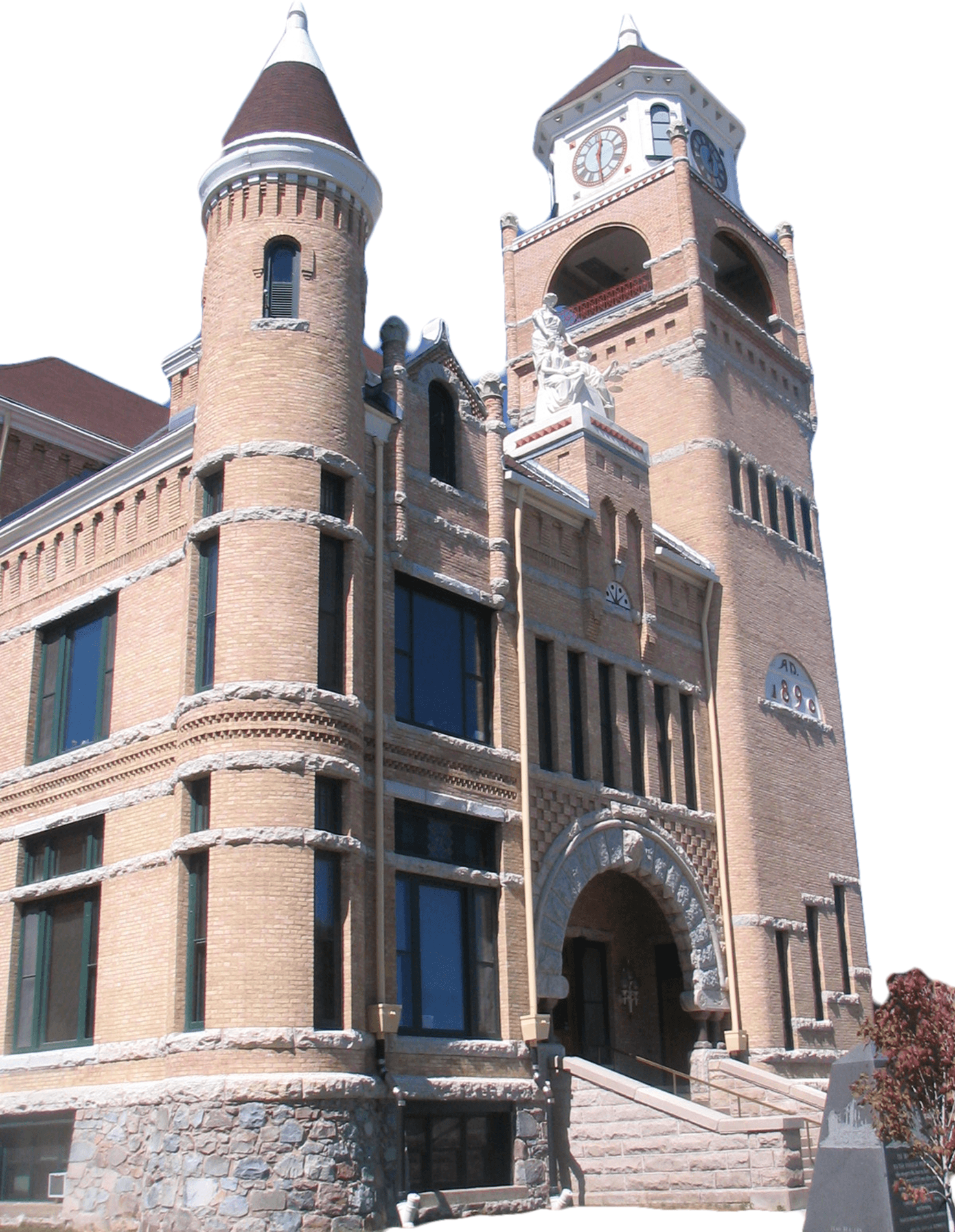
For anyone outside the Iron River city limits, the Iron County Sheriff's Office is the primary law enforcement contact. Headquartered at the Iron County Courthouse Complex at 2 S. Sixth St. in Crystal Falls, the office is open 24 hours, seven days a week. Deputies patrol unincorporated townships, handle criminal investigations that fall outside municipal jurisdiction, provide court security, serve civil process, and operate the Iron County Correctional Facility. Sheriff Boehmke, a lifelong Iron County resident who joined the department in 2003, leads an office that routinely coordinates with Michigan State Police and federal partners on multi-jurisdictional cases.
For non-emergency matters, reach the county switchboard directly at (906) 875-0650. County roads, township properties, rural camps, and any incident outside city limits routes to this office first.
Iron River Police Department: Inside City Limits
Chief Curt T. Harrington's department handles the full range of municipal law enforcement inside Iron River, located at 106 West Genesee Street. That includes traffic crashes on city streets, thefts, assaults, and ordinance enforcement. Officers Caleb Greenough, Roy D'Antonio, and Jason Wicklund make up the patrol roster.
The non-emergency front-desk line is (906) 265-4321. City boundaries matter in ways that aren't always obvious: a crash just outside the Iron River city line, even on a familiar street, falls to sheriff's deputies rather than city officers. When in doubt about jurisdiction, call the number for the area you believe applies; dispatch will sort the routing.
Michigan State Police - Iron Mountain Post: State Highways and Specialized Cases
Post No. 85 sits at 1916 N. Stephenson in Iron Mountain and puts troopers on U.S. 2, M-73, and other state trunklines running through Iron County. Any incident on a state highway, from a serious injury crash to a felony stop, typically brings MSP to the lead or in a joint-lead role alongside local agencies. The post covers Iron, Dickinson, and Menominee counties, meaning troopers carry a broad patrol footprint across a large geographic area.
The post's non-emergency line is (906) 774-2122. For tip submissions on narcotics or violent crime tied to state-level investigations, MSP and regional task forces maintain separate anonymous tip channels available through Michigan.gov.
911 vs. Non-Emergency: The Line That Matters
The rule is simple, though the stakes of getting it wrong are high:
- Call 911 for any life-threatening emergency, ongoing violent crime, severe injury crash, fire requiring immediate response, or any situation where immediate police, fire, or EMS is needed. Location in the county doesn't change this: 911 reaches Iron County Central Dispatch at (906) 875-6669, which routes the call to the correct first responder.
- Call the non-emergency line for property crimes already completed (a vehicle stolen overnight, a theft discovered hours after the fact, a suspicious parked car with no immediate threat). Use (906) 875-0650 for the sheriff's territory, (906) 265-4321 for Iron River, and (906) 774-2122 for MSP on state highways.
Flooding 911 with non-emergency calls delays response for actual crises. Routing an active emergency to a non-emergency desk has the same effect in reverse.
What Dispatch Needs From You
In a county spanning 1,186 square miles, vague location descriptions are functionally useless. Rural Iron County has limited street-address signage in many townships, which means callers need to lead with the most specific locating information available:
1. The nearest named road intersection or junction, even if it's a two-track off a county road
2. Mile markers along U.S. 2 or state trunklines when no address is visible
3. Named landmarks: DNR access points, named lakes, mine sites, named camp roads, or subdivision names with visible markers
4. Direction of travel if you are reporting a moving vehicle
5. Number of people involved and whether injuries are visible
6. Suspect or vehicle descriptions: color, make, model, plate number when safely observable
Give your location before any other detail. Dispatch can route help to a place even without a full description; they cannot route help to an unknown location regardless of how much other information you provide.
Caller Checklist: What to Say, What Not to Do, When to Stay On
- Stay on the line until dispatch instructs you to disconnect; rural cell coverage can drop a call if you move, and the open line helps responders update routing
- If you have administered naloxone (Narcan) for a suspected overdose, say so immediately and request EMS regardless of apparent recovery; fentanyl exposures can escalate after initial stabilization
- Do not move or handle items at a crime scene unless safety or rendering aid requires it
- Do not speculate about causes or identify suspects by name over the dispatch line; provide observable physical descriptions and let investigators draw conclusions
- For crashes with injuries on U.S. 2 or state highways, expect MSP as first or co-first responder; for township roads, expect sheriff's deputies
After a report is taken, request the incident number and the name or badge number of the assigned officer or detective. Victim-assistance resources and protective order information are available through the Iron County Prosecutor's Office and local courts.
How the Three Agencies Work Together
Major incidents pull all three agencies into the same response. A serious crash on U.S. 2 near Iron River may bring MSP troopers for traffic investigation, sheriff's deputies for county road coordination, and Iron River PD if the scene extends near city limits or involves city residents. Multi-day missing person searches, multi-agency narcotics operations, and severe weather emergencies activate mutual-aid agreements placing all responders under a unified incident command, with Iron County Central Dispatch coordinating resource allocation throughout.
In those situations, verified information flows through official channels only: the Iron County Sheriff's Office, MSP public affairs, and local media with confirmed agency contacts. Shelter and evacuation instructions from unofficial sources carry no authority and may reflect incomplete or inaccurate information.
Response Realities
Thirteen thousand people across 1,186 square miles means a deputy or trooper covering a remote patrol zone can be 20 minutes or more away when a call comes in. That is not a gap in service; it is the geometry of rural law enforcement. Every minute saved by calling the right agency, giving a clear location on the first try, and staying on the line is a minute that cannot be recovered any other way.
This article was produced by Prism’s automated news system from verified source data, official records, and press releases, then run through automated quality and moderation checks before publishing. The system is built and supervised by the people who set the standards it runs under. Read our full AI policy.
Did this article answer your question?