Iron County Historical Museum Preserves Region's Rich Mining and Logging Legacy
A 539-foot flooded mine shaft sits sealed beneath the museum's grounds in Caspian, and it's just the start of what Iron County's sprawling 26-building complex holds.

The 1921 mine headframe in Caspian doesn't just stand as a landmark. It towers directly over a flooded shaft that plunges 539 feet into the earth, sealed and silent beneath the museum's grounds. That single structure, the oldest mine headframe still standing in Michigan and listed on the National Register of Historic Places, sets the tone for what the Iron County Historical Museum delivers across nearly 10 acres and 26 buildings on the former Caspian Mine complex: not nostalgia, but physical proof of what built this county.
Three exhibits that connect directly to Iron County families
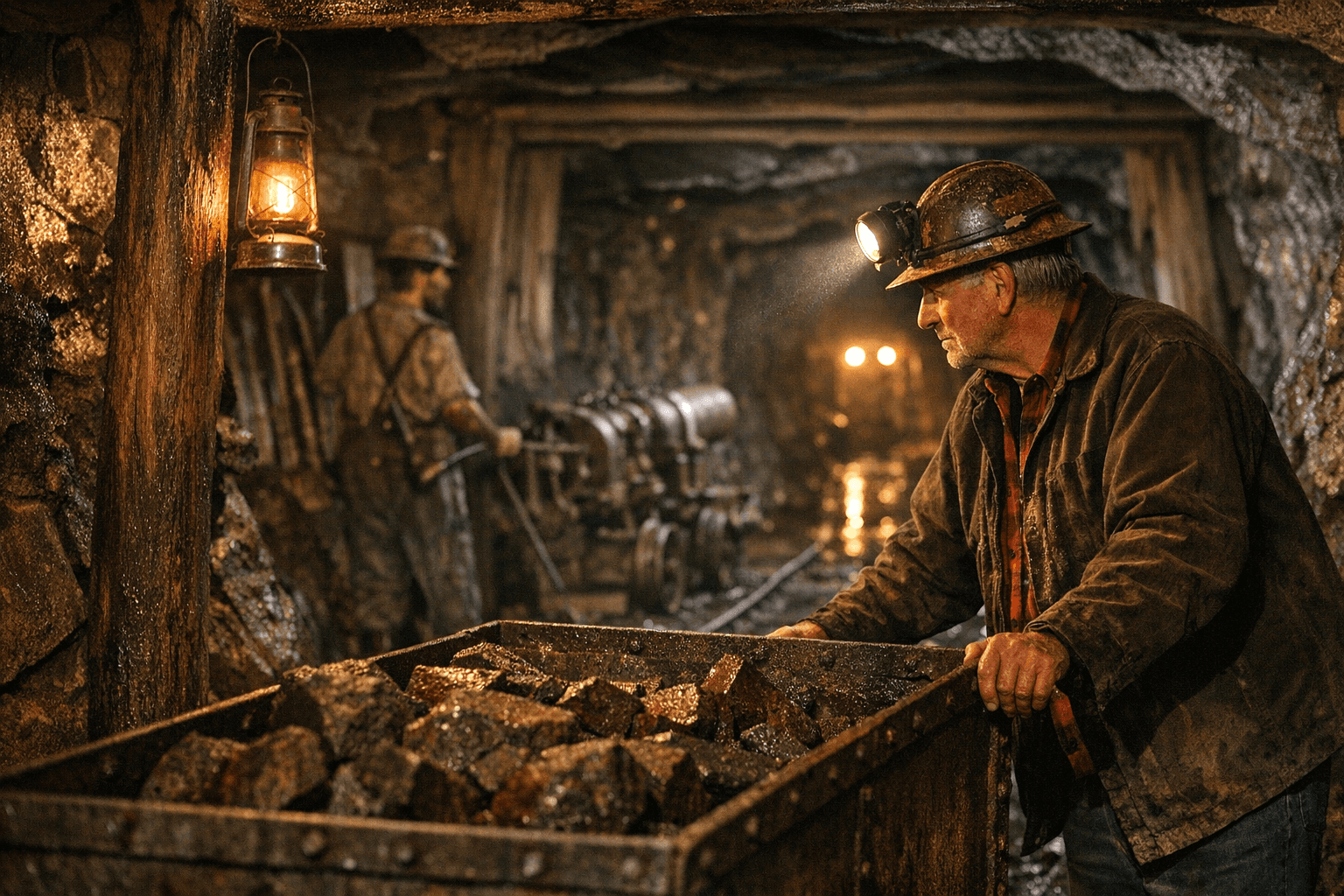
The Mining Memorial Hall is the most personal stop on the grounds. Dedicated to every worker who died in the county's mines, as well as all employees of Iron County's mining companies, it sits inside the former Caspian Mine Engine House, the original industrial core of the complex. If a grandparent or great-grandparent worked underground on the Menominee Iron Range, this is the room where that story becomes concrete: names, faces, and the dangerous realities of underground ore extraction all documented in one place.
Heritage Hall carries the museum's original collection from when it opened in 1968 and reflects the multi-ethnic character of Iron County's immigrant workforce in precise, family-level detail. Surnames like Soderquist (whose barns from Bates Township were reassembled on the museum grounds in 1976), Johnson (whose homestead cabin dates to 1906), and Toti (whose Iron River tavern was moved here in 2003 after being donated by Don Toti of Marquette) appear throughout as anchors to specific families who built this county. Scandinavian, Italian, and Finnish settlement traditions are all represented, reflected today in events like Scandinavian Day and Italian Day that the museum hosts each summer.
The 1890 Stager Depot, relocated to the museum grounds in 1972, is the third essential stop. Many of the immigrants who arrived to work the Menominee Iron Range stepped off a train at a station just like this one, entering a county they had never seen. The depot is that tangible monument to the moment of first arrival, the kind of exhibit that rewards a few quiet minutes of standing still.
Visitor primer: hours, fees, accessibility, and what to expect
The museum is open from mid-May through October. Summer hours run Monday through Friday from 9 a.m. to 3 p.m., with Saturday hours from 10 a.m. to 2 p.m. during June, July, and August. Special group tours are available by advance arrangement; contact the museum at (906) 265-2617. The address is 100 Brady Avenue, Caspian, off M-189 about two miles from U.S. 2 at Iron River.
- Adults: $10
- Youth ages 5 to 18: $5
- Children under 5: Free
- Families (parents and minor children): $25
- Groups of 10 or more: $5 per person, with advance contact required
Admission:
Most families spend two to three hours on the grounds, though the full 26-building complex easily fills four hours for anyone who wants to go deep. If bad weather cuts a visit short, the museum offers rain checks valid for the rest of the calendar year. For guests with limited mobility, the museum provides a complimentary golf cart to tour the grounds; call ahead to reserve it. Some historic structures are not wheelchair-navigable due to their age and original construction, so a quick phone call before arrival helps map the most accessible route.
What kids will actually do here
The 85-foot-long miniature logging camp diorama, built from more than 2,000 hand-carved pieces and believed to be the largest display of its kind in the world, is the exhibit that stops children cold. Every figure, tool, and timber is carved to scale, capturing a full logging camp in operation with the kind of detail that rewards close inspection. Glass dioramas of underground mine work show what the inside of a working shaft actually looked like, and a coin-operated model iron mine and railroad lets younger visitors run the operation themselves. Beyond the exhibits, the sheer physical scale of the grounds gives children room to move and explore: 10 acres of log cabins, a pioneer schoolhouse, a relocated tavern, a church, and open outdoor space instead of rows of display cases.
The surprising fact that changes how you see Iron County's landscape
Here is what most visitors miss: Iron County's roughly 70 to 80 operating mines during the iron boom didn't disappear when they closed. They went underground and stayed there. The 539-foot flooded shaft beneath the Caspian Mine headframe is still present, directly under the museum grounds. Dozens of similar sealed shafts exist across the county, explaining the subtle depressions visible in fields near former mine sites, the irregular terrain around Caspian and neighboring Mineral Hills, and the reason certain parcels throughout Iron County have never been developed or built upon.
The roads and rail lines connecting Crystal Falls, Iron River, and Caspian were not laid for scenic effect. They trace the ore-shipping corridors that linked underground mines to Great Lakes ports, and the town grids of Crystal Falls and Iron River grew up as service and transport centers precisely because the mining operations required them. The county's physical shape, its roads, its downtowns, its low-lying parcels, is as much a product of iron extraction as anything displayed in the museum's engine house. A visit here turns into a key for reading the landscape you already drive through every day.
Planning a multi-site day
The museum at 100 Brady Ave. is the natural anchor for a historical circuit through Iron County, but the county rewards a longer route. The historic downtowns of Crystal Falls and Iron River carry mining-era architecture and markers referencing specific mine operations and company-town infrastructure. The Dunn Mine site in the Crystal Falls area is among several locations accessible via historical markers on rural roads. Allow time and bring a physical map, as many sites are spread across rural roadways where cell coverage can be inconsistent.
For researchers, the museum's on-site research center and volunteer staff can assist with genealogical inquiries, local property records, and deeper archival questions. The Iron County Economic Chamber Alliance maintains visitor maps and historic-tour resources for anyone planning a full county sweep. The museum's gift shop, housed in the main building alongside items from local artists, is a practical final stop before heading back out onto M-189.
This article was produced by Prism’s automated news system from verified source data, official records, and press releases, then run through automated quality and moderation checks before publishing. The system is built and supervised by the people who set the standards it runs under. Read our full AI policy.
Did this article answer your question?