Iron County Residents Urged to Help Storm-Damaged Trees Recover This Spring
Northern Iron County absorbed up to 30 inches of snow and 45 mph gusts in March's blizzard — now the race is on to save damaged trees before spring freeze-thaw cycles turn bent limbs into falling hazards.
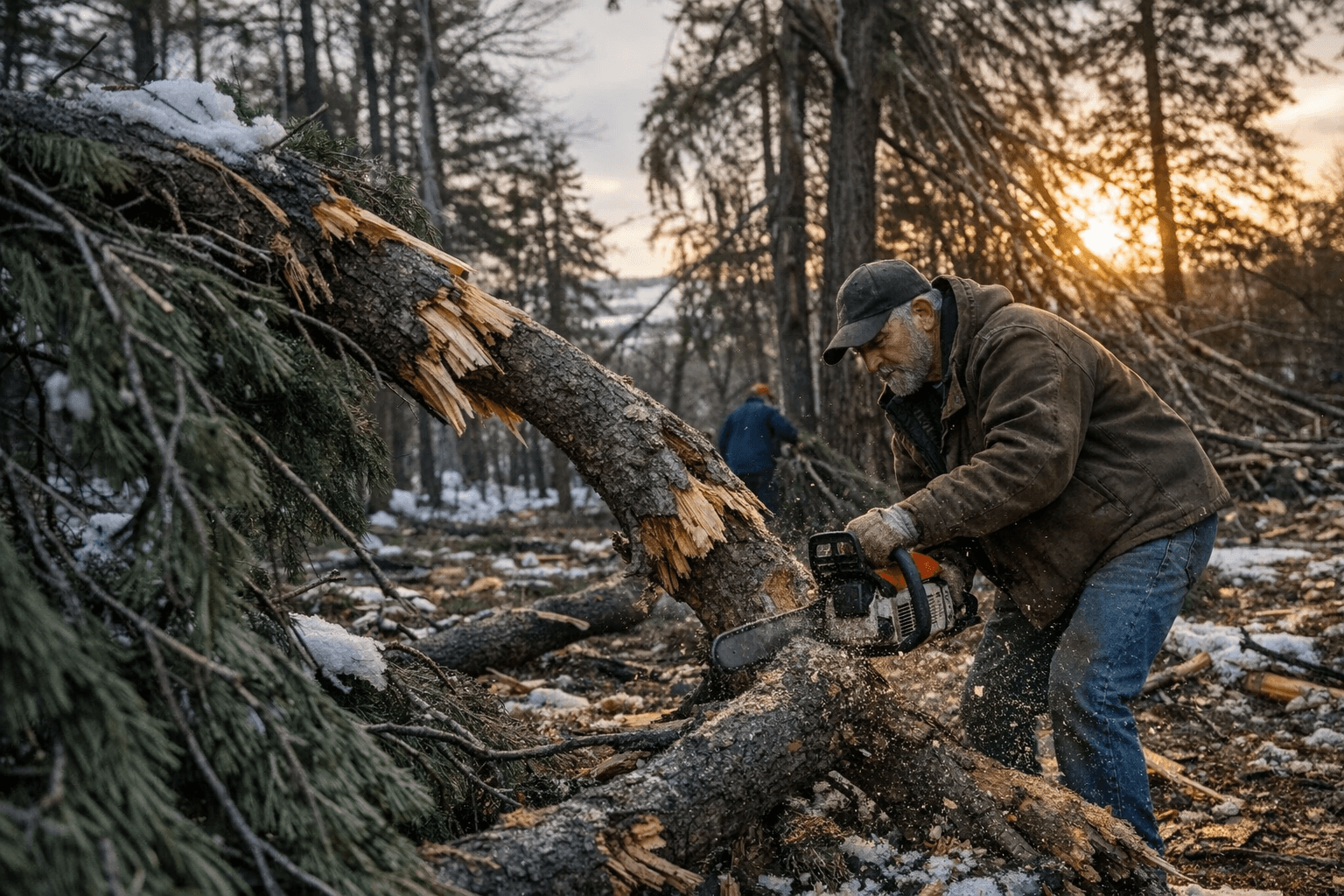
Assess Hazards Before You Touch a Chainsaw
The blizzard that tore through Iron County on March 14-16 was no ordinary late-winter storm. Northern Iron County faced snowfall forecasts of 18 to 30 inches alongside wind gusts reaching 45 mph, and Hurley recorded 10 inches in a single overnight period. The weight of that wet, dense snow was enough to split canopies, crack structural crotches, and pin limbs against power lines across the county. Two weeks later, much of that damage is still suspended overhead, waiting for the wrong gust or the next freeze-thaw cycle to bring it down.
The first step is a ground-level safety walk of every tree on your property. Before reaching for a saw or a ladder, look up: the most dangerous situation after a blizzard is not the branch already on the ground but the one still lodged in the canopy. Tree workers call these "hangers," and they are notoriously difficult to see from below. A limb that looks like it settled harmlessly into a crotch may be balanced on a single point of contact, ready to drop without warning. Walk the perimeter of each tree and look for branches angled downward, bark still attached at one end, or debris caught mid-canopy.
If any limb is within striking distance of a power line, do not attempt to remove it yourself. Contact your utility company directly and report the hazard; lineworkers are trained and equipped to work near energized lines in ways that homeowners are not. The same rule applies to any tree leaning toward a structure or road: call the appropriate emergency service first, and keep family and vehicles clear of the zone until a professional assesses the risk.
What You Can Safely Handle Now
Small, accessible branches that have already fallen and pose no entanglement hazard with utilities are generally safe to clear yourself. Brush under six inches in diameter can be moved, stacked, or chipped. The Wisconsin DNR classifies material in this size range as yard waste, and many townships set up temporary debris collection sites after major storm events. Check with your local town clerk or the Iron County Emergency Government office to find out whether a drop-off location has been established near you, and confirm whether any burn restrictions are in effect before you light a pile. Debris burning is the leading cause of wildfires in Wisconsin, and open burning of brush requires a written permit in most jurisdictions; that permit also requires calling ahead on the day of the burn to check daily restrictions.
For larger limbs still attached to the tree, patience is a better tool than urgency. Improper pruning cuts made while wood is still saturated, or made in the wrong location on the branch, can leave a tree more vulnerable to fungal disease and insect colonization than the storm damage itself did. A broken branch creates an open wound; cutting that wound back cleanly to the branch collar allows the tree to form callus tissue and seal out decay. A ragged cut or a flush cut against the trunk removes the collar and leaves the wound unable to close.
Signs That a Tree Needs Professional Removal
Not every storm-damaged tree can or should be saved. During your property walk, watch for three structural red flags that indicate a tree may need to come down entirely:
- Split crotches: A V-shaped union between two major stems that has cracked open under snow load is a sign the tree has lost its structural integrity at the point where it needs it most. These rarely heal on their own.
- Trunk or major limb cracks: Horizontal or spiral cracks in the main stem, especially those that extend through the bark into the wood, suggest internal failure. Probe any visible crack with a screwdriver; soft, discolored wood beneath the bark is a sign of decay that predates the storm.
- Root heaving: Soil mounded or cracked at the base of a tree, particularly on the upwind side, means the root system has shifted. A tree that has rocked in the storm may look upright now but is structurally compromised and could topple under far less stress than it took to move it in the first place.
Any of these signs warrants a call to an ISA-Certified Arborist, not a general handyman or an unlicensed tree service advertising cheap post-storm rates. Demand for tree removal services spikes sharply in the weeks following a major storm event, and that surge attracts out-of-area contractors who may lack the training, insurance, or equipment to work safely. Ask for proof of liability insurance and worker's compensation coverage before signing anything, and get at least two written estimates.
Document Everything for Insurance
Before any removal or cleanup work begins on trees that damaged structures or vehicles, photograph and video the scene from multiple angles. Document the position of the fallen limb relative to the structure, any visible damage to roofs, fences, or siding, and the full extent of the tree's condition. Your homeowner's insurance policy may cover the cost of removal when a tree has fallen on a covered structure, but most policies require documentation taken before cleanup begins. Check your policy's specific language around "fallen tree" versus "hazard tree removal," as coverage differs significantly between the two.
Keep receipts for all professional services, and note dates, contractor names, and the scope of work performed. If you plan to plant replacement trees later in the season, that expense is generally not covered, but logging it creates a useful record for future claims.
Planning for a Multi-Season Recovery
The work that begins this spring is only the first chapter. Spring freeze-thaw cycles, which are common through April in northern Wisconsin, put renewed stress on cracks and splits that the blizzard started. Trees that survive the initial damage assessment may still drop limbs weeks later as temperatures swing. Monitor your most heavily damaged trees through May, and schedule any professional pruning for a period when the wood has dried and the tree is not under additional cold stress.
For the county's mature forest canopy, including the hardwoods and conifers that define so much of Iron County's character along Highway 2 and through the Northwoods townships, the decisions individual landowners make this spring will shape how those stands look for the next generation. Removing structurally sound trees out of excessive caution wastes resources and canopy; leaving genuinely hazardous ones standing creates risks that compound with each subsequent storm season. The goal is an informed middle path, one that starts with a careful look up before a single branch is touched.
This article was produced by Prism’s automated news system from verified source data, official records, and press releases, then run through automated quality and moderation checks before publishing. The system is built and supervised by the people who set the standards it runs under. Read our full AI policy.
Did this article answer your question?