Iron County tax certification required before land divisions, combinations
A land split or combination in Iron County can stall fast if tax certification is missing. The treasurer’s office in Crystal Falls checks five years of taxes before the paperwork moves.
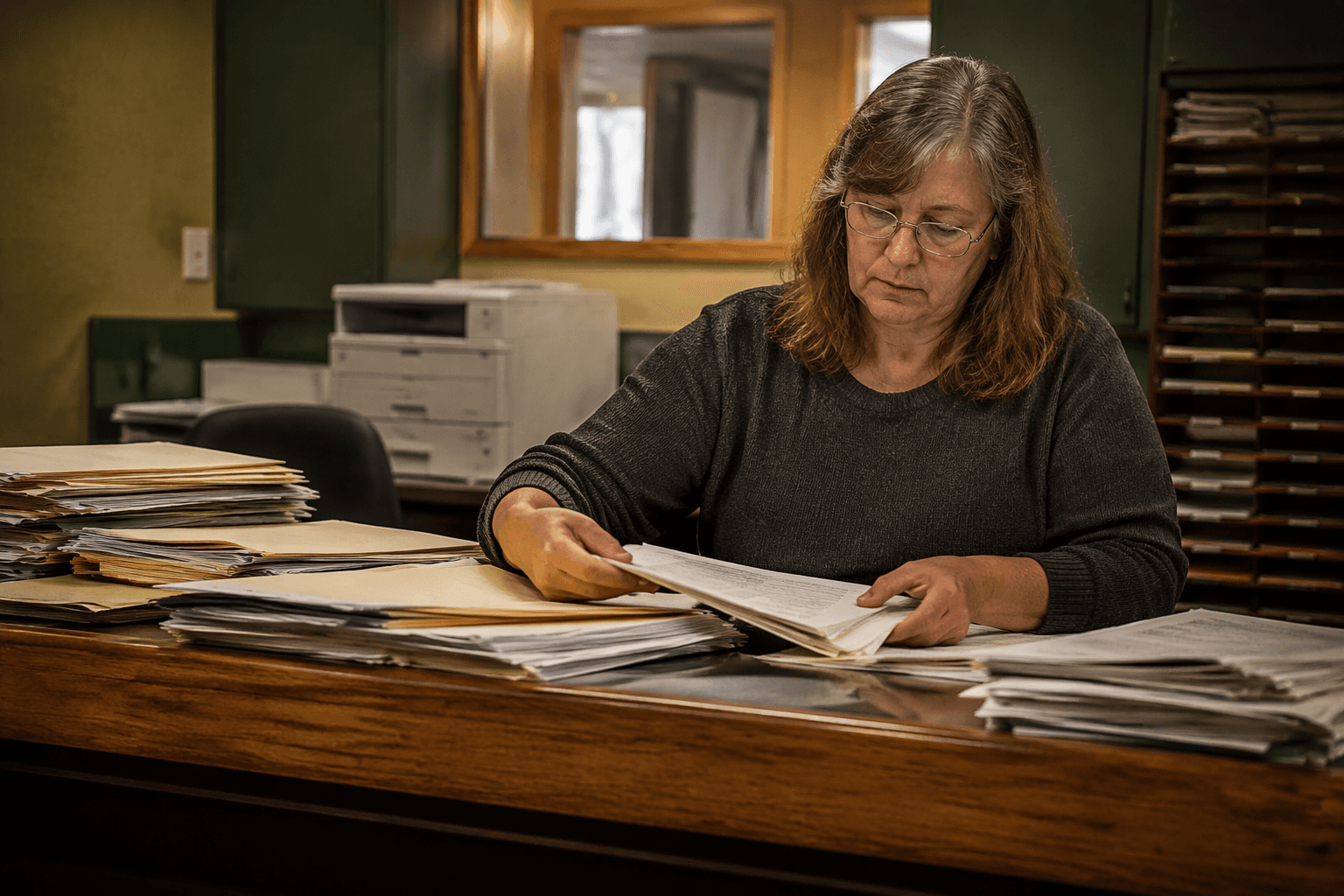
In Iron County, a parcel split or combination cannot move ahead until the five preceding years of taxes are paid. Before land moves from one legal shape to another, the county checks whether the taxes tied to that parcel are current, and that step can determine whether a sale, building plan, or deed change keeps moving.
What the certification checks
Iron County’s land division or combination tax certification cites the Land Division Act, Act 288 of 1967, and specifically MCL 560.109(1)(i). The state law is built to promote public health, safety, and general welfare, support orderly land use, require suitable building sites and public improvements, provide adequate drainage, and make sure ingress and egress and legal descriptions are accurate before plats and other land divisions are recorded.
The county certification form makes that tax requirement plain for the parcel involved. It is the key checkpoint for owners who are splitting off a lot, combining parcels, or preparing land for transfer. The Land Division Act is the governing framework for dividing a single parcel into multiple smaller parcels, and the law also distinguishes between metes-and-bounds splits and platted subdivisions.
When the step is required
The certification comes into play before the land division or combination can move ahead. The tax status has to be cleared before paperwork can advance cleanly to the next stage of a split, a combination, or a transaction built around a new parcel layout.
Unpaid taxes and unresolved delinquencies can delay a sale or a development plan just as easily as they can slow a family land transfer. The certification is part of the county’s land-record and tax-compliance process, and it connects the treasurer’s office to the property record that surveyors, title companies, and buyers depend on.
For landowners, the distinction between a tax-certified parcel and an approved building site is important. A split can satisfy the Land Division Act and still leave other local questions open, including zoning, sewer or septic, and building-related rules. The Michigan Department of Environment, Great Lakes, and Energy treats land division as one part of a larger set of local roles and responsibilities, which is why one approval does not substitute for every other one.
Where Iron County handles it
Iron County residents start with the Treasurer’s Office. The office is in the Courthouse Annex, first floor, 2 S. Sixth Street, Suite 12, Crystal Falls, MI 49920. Office hours are Monday through Friday from 8:00 a.m. to 4:00 p.m., and the phone number is 906-875-3362.
People often look for land paperwork at the courthouse without realizing the tax certification step is handled through the treasurer. The broader courthouse address is 2 South Sixth Street in Crystal Falls, but this certification process belongs with the Treasurer’s Office in the annex. Anyone working on a parcel split, a lot combination, or a real estate closing should check the office early instead of waiting until the deed package is ready.
Iron County also uses online payment options for some county services. Residents can pay online for fines, plat books, and certified copies through AllPaid, and by phone at 1-888-604-7888. That does not replace the land division certification step itself, but it shows how the county’s records and payment systems are tied together.
What usually trips people up
The most common mistake is assuming the tax check will pass even when older taxes are still outstanding. Any gap in the five preceding years can slow the process immediately.
Another frequent problem is incomplete paperwork. In Michigan county split packets, land division tax payment certification forms can be returned if required information or attachments are missing. That means a missing legal description, an omitted parcel detail, or an absent attachment can send the application back before it ever reaches the next desk.
A third mistake is treating the certification as the final word on the land itself. It is not. Property owners, buyers, and surveyors still need to think about the legal description, the parcel layout, and how the land is actually being used. The Land Division Act exists partly to make sure descriptions are accurate and land use is orderly, so a clean tax status does not erase the need for a correct survey or a properly drafted deed.
Other missteps are just as costly:
- Confusing a metes-and-bounds split with a platted subdivision, even though the Land Division Act treats them differently.
- Waiting until the last minute to check whether five years of taxes are paid, only to find a delinquency at the end of the process.
- Assuming a split that clears the treasurer’s office also clears zoning, septic, or building requirements.
- Using a parcel description that does not match the land record, which can create problems for buyers and surveyors later.
Comparable county certification pages elsewhere in Michigan commonly list a $5.00 fee for tax certifications on documents that require certification. Iron County’s office should be contacted directly for the current charge before anyone files, pays, or picks up paperwork.
Why the paper trail matters
Iron County’s posted 2026 Land Atlas & Plat Book announcement shows how closely parcel mapping, legal descriptions, and tax records are tied together in a county where land ownership can change shape from one generation to the next. Rural property, seasonal parcels, and mixed-use land all depend on clean records, and tax certification helps keep those records aligned with what is on the ground.
The county’s role is to confirm the tax status, keep the parcel record straight, and document a split or combination before it moves ahead.
This article was produced by Prism’s automated news system from verified source data, official records, and press releases, then run through automated quality and moderation checks before publishing. The system is built and supervised by the people who set the standards it runs under. Read our full AI policy.
Did this article answer your question?