West Iron library workshop offers practical forest management guidance
Iron County landowners got practical advice on when to cut, how to log, and how to qualify for forestry help from Crystal Falls forester Brock VanOss.
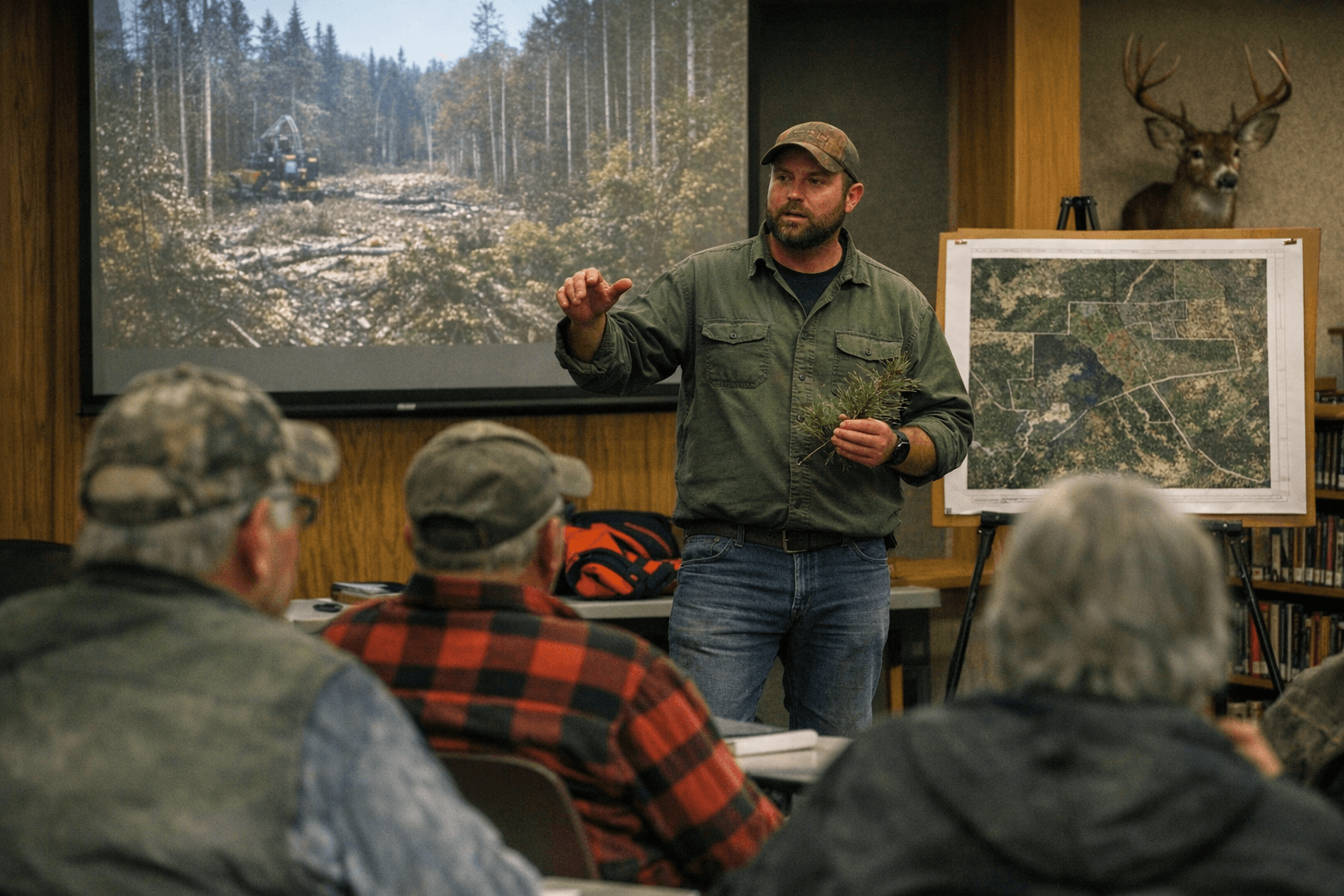
Iron County landowners left the West Iron District Library with a clearer answer to a question that affects timber value, wildfire risk and long-term forest health: when cutting helps a woodlot, and when it hurts. Brock VanOss of VanOss Forestry Services, LLC led the Best Management Workshop for Landowners at 3 p.m. Thursday, April 9, at 116 W. Genesee Street in Iron River, with RSVPs handled by phone at (906) 265-2831.
The workshop centered on the everyday decisions that come with owning woods, from the right time to cut trees to how logging can improve a forest instead of damaging it. VanOss also addressed whether clear-cutting can ever serve an ecological purpose, tying the discussion to fire safety, resilience and ecosystem health. The session was aimed at small property owners and people managing larger tracts, including families with hunting camps and anyone responsible for wooded land in Iron County.
VanOss brought more than two decades of field experience to the library program. VanOss Forestry Services said the company has served Michigan’s Upper Peninsula and northeastern Wisconsin since 2002. The Michigan Department of Natural Resources named VanOss Michigan’s 2023 Stewardship Forester of the Year, saying he has written forest management plans for several hundred landowners covering thousands of acres in Michigan and Wisconsin. The DNR also said he has run his consulting forestry business in Crystal Falls for about 20 years and employs two other foresters and an office manager.
State forestry guidance reinforces why that kind of advice matters. Michigan forestry guidance says management decisions affect timber, water, recreation, wildlife, visual quality and energy. It also says no single rule fits every forest property because local conditions and landowner goals vary. The Michigan Department of Natural Resources and the Michigan Department of Environment, Great Lakes and Energy also publish best management practices focused on soil and water quality.
For landowners looking beyond one workshop, the Iron Baraga Conservation District’s Forestry Assistance Program offers free initial professional contact, on-site property evaluations, presentations and workshops, and help with management goals, habitat improvement, insect and disease identification, stewardship plans and cost-share opportunities. Its Qualified Forest Program guidance generally requires at least 20 contiguous acres with 80 percent productive forest, or 50 percent productive forest on parcels over 40 acres. For Iron County, the library forum served as a practical entry point into decisions that can shape both property value and the health of the land for years.
This article was produced by Prism’s automated news system from verified source data, official records, and press releases, then run through automated quality and moderation checks before publishing. The system is built and supervised by the people who set the standards it runs under. Read our full AI policy.
Did this article answer your question?