Bayview Corner blends century-old history with dining, shops and gardens
Bayview Corner is part village, part marketplace, with a 1924 cash store, gardens, dining and free street dances that keep South Whidbey’s crossroads alive.
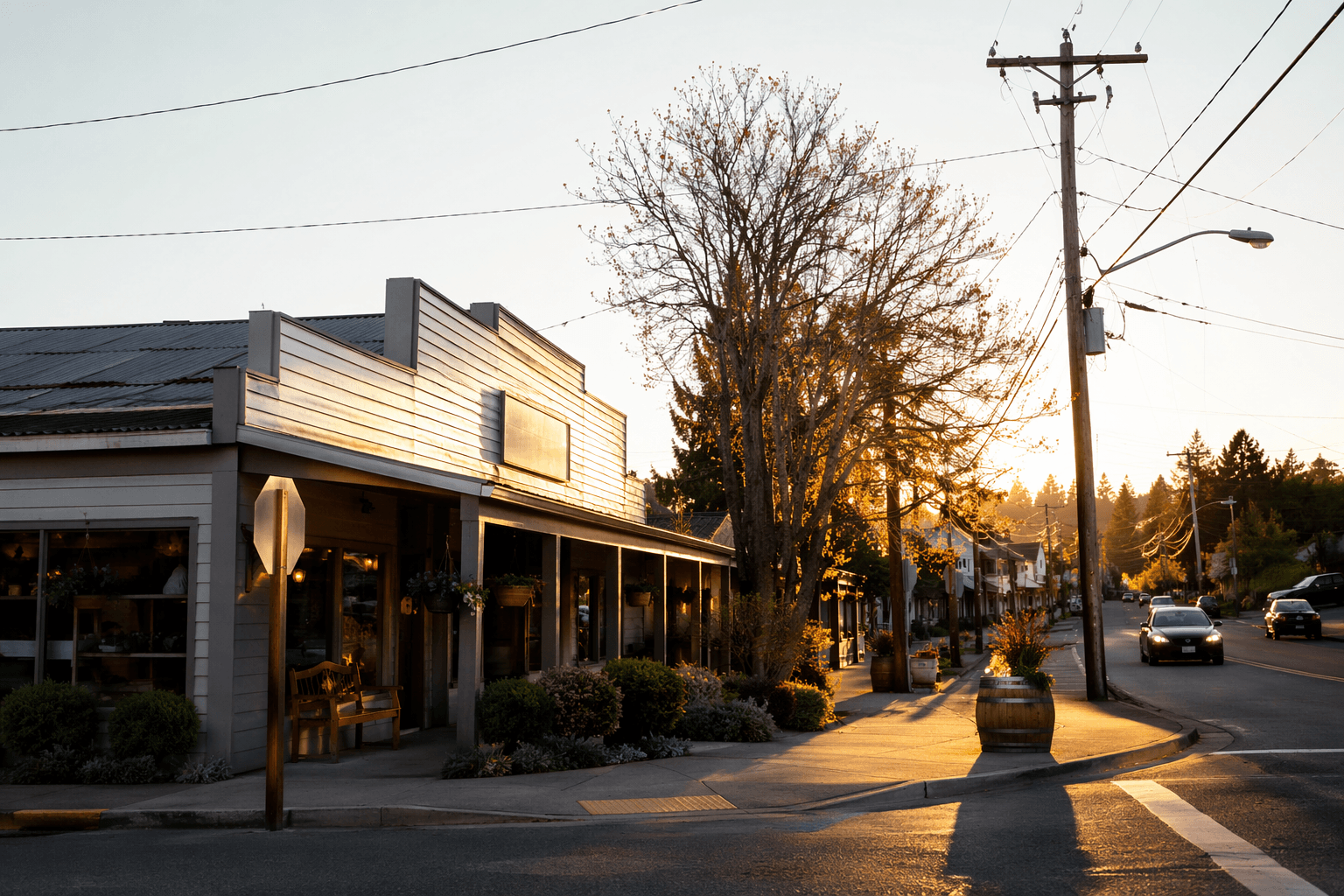
Bayview Corner still feels like more than a stop on Highway 525. At the crossroads between Langley and Freeland, it works as a compact civic center where South Whidbey’s history, commerce and social life overlap in a way that is increasingly rare. The appeal is not just that it is convenient, but that it has kept a distinct identity while serving the everyday needs of island residents and visitors.
A crossroads with a memory
The heart of Bayview Corner is the Bayview Cash Store, a wooden two-story building that dates to 1924 and sits where William Burk deliberately placed it so travelers from Clinton or Langley would pass by. That decision turned a simple store into the social and geographic center of Bayview and much of South Whidbey. The site had already endured a major setback: the earlier store burned in 1916, and the area went eight years without a general store before the 1924 rebuild restored a commercial anchor.
The building’s long run tells part of the island’s economic history. Harold Johnston bought the Cash Store in 1930, and Goosefoot later bought the 100-year-old property in 1999, restoring it while preserving its historic character. That continuity matters in a place where development pressure can easily flatten local distinctiveness. Bayview Corner survives because it was not rebuilt as a generic strip; it was maintained as a working landmark.
More than a historic facade
What makes Bayview Corner relevant now is that it still does real work. The restored Cash Store houses the Taproom and Japonica restaurants, a hair salon and the offices of the Whidbey Environmental Action Network. That mix of uses gives the site a daily rhythm that is both practical and social: people come to eat, to meet, to work and to linger.
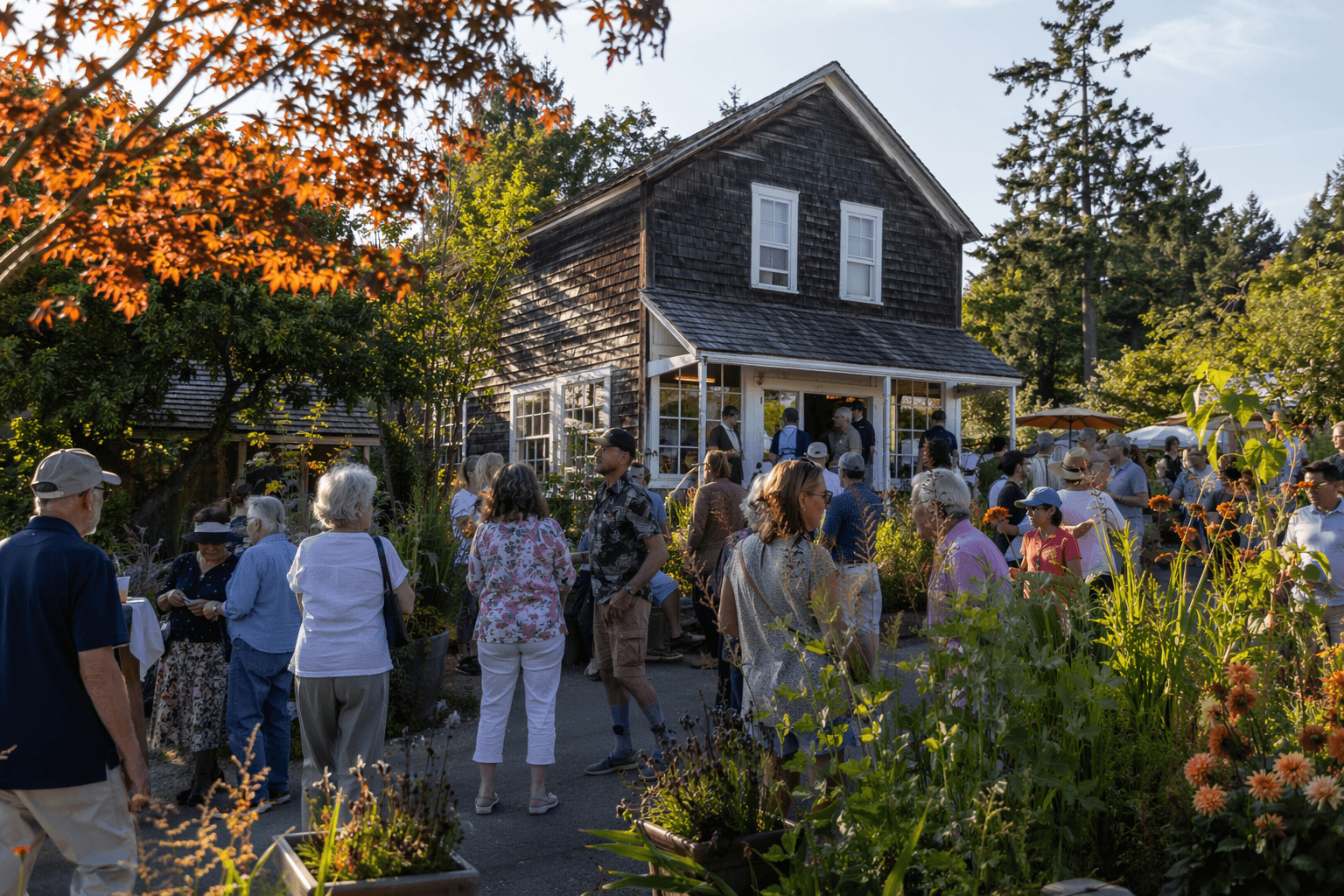
The surrounding grounds reinforce that sense of place. Picnic tables, mosaic-lined walkways, sculptures, a life-size chess set and lush gardens make the property feel like a public commons as much as a retail center. Where farmers once stocked up on feed, visitors now find sushi, sake, broiled unagi, craft beer, crepes and croissants. The shift says a lot about South Whidbey itself. Bayview Corner has kept its old crossroads role, but the goods and services have evolved with the island’s economy and tastes.
That is why the area lands as both curious and commercial. It can satisfy a practical errand, offer a meal, or simply give someone a place to sit down for a while. In a county that often measures itself by what is being lost, Bayview Corner shows what can still be preserved when preservation is tied to active use rather than display.
A place that functions like a village
Bayview Corner matters because it is not just decorative heritage. It is one of those South Whidbey places where people cross paths for reasons that are economic, cultural and personal all at once. Residents rely on it for everyday services, while visitors are drawn by the chance to step into a setting that feels rooted and self-contained rather than assembled for pass-through traffic.
That balance between charm and function is exactly what gives the crossroads its value. If Bayview Corner were reduced to a strip of interchangeable retail stops, Island County would lose more than a picturesque stopover. It would lose a recognizable meeting place, one that still connects the community to its own past while serving present-day needs. In a landscape of faster and more anonymous commerce, Bayview remains legible as a place with memory.
The historical significance is not new. By 2001, community efforts were already researching and celebrating Bayview’s roots, with help from the South Whidbey Historical Society. That long interest in the site suggests that local identity has been attached to this intersection for generations, not just since the latest wave of placemaking or small-business revival.
Summer street dances turn commerce into community
The best example of Bayview Corner’s dual role may be the summer street dances. Goosefoot describes the series as seven free, family-friendly events, and in 2025 they were scheduled every other Wednesday from June 11 through September 3, from 6 to 8 p.m. at the Bayview Cash Store, 5603 Bayview Road, rain or shine. A 2026 event listing places the dances from June 10 to September 2, confirming that the tradition is continuing.
These are not just entertainment dates. They transform the parking lot and surrounding space into a community gathering place, with live bands and hundreds of dancers turning a commercial site into something closer to a civic commons. That is a meaningful use of land in a small island economy, where public gathering spaces are limited and every flexible square foot carries more weight than it might in a larger city.
The dances also show how Bayview Corner works as infrastructure for social life. They bring different ages and routines into the same place, drawing people who might otherwise have no reason to linger at a crossroads. For South Whidbey, that matters as much as the shops and meals do. A place that can host dinner, errands and a dance floor in the same footprint has a different kind of resilience than a place built only to sell things quickly and move traffic along.
Why Bayview Corner still matters
Bayview Corner endures because it holds together several things at once: a 1924 building with a deeper prehistory, a cluster of businesses with real daily use, a gardened public space and an event calendar that turns commerce into community. It is a small commercial hub, but it carries outsized weight in how South Whidbey sees itself.
That is the larger lesson of the crossroads. Its value is not nostalgia alone, and it is not merely convenience. It is the way the old Bayview Cash Store still organizes a place where history is visible, food is close at hand and neighbors can still gather without leaving the center of their own community.
This article was produced by Prism’s automated news system from verified source data, official records, and press releases, then run through automated quality and moderation checks before publishing. The system is built and supervised by the people who set the standards it runs under. Read our full AI policy.
Know something we missed? Have a correction or additional information?
Submit a Tip