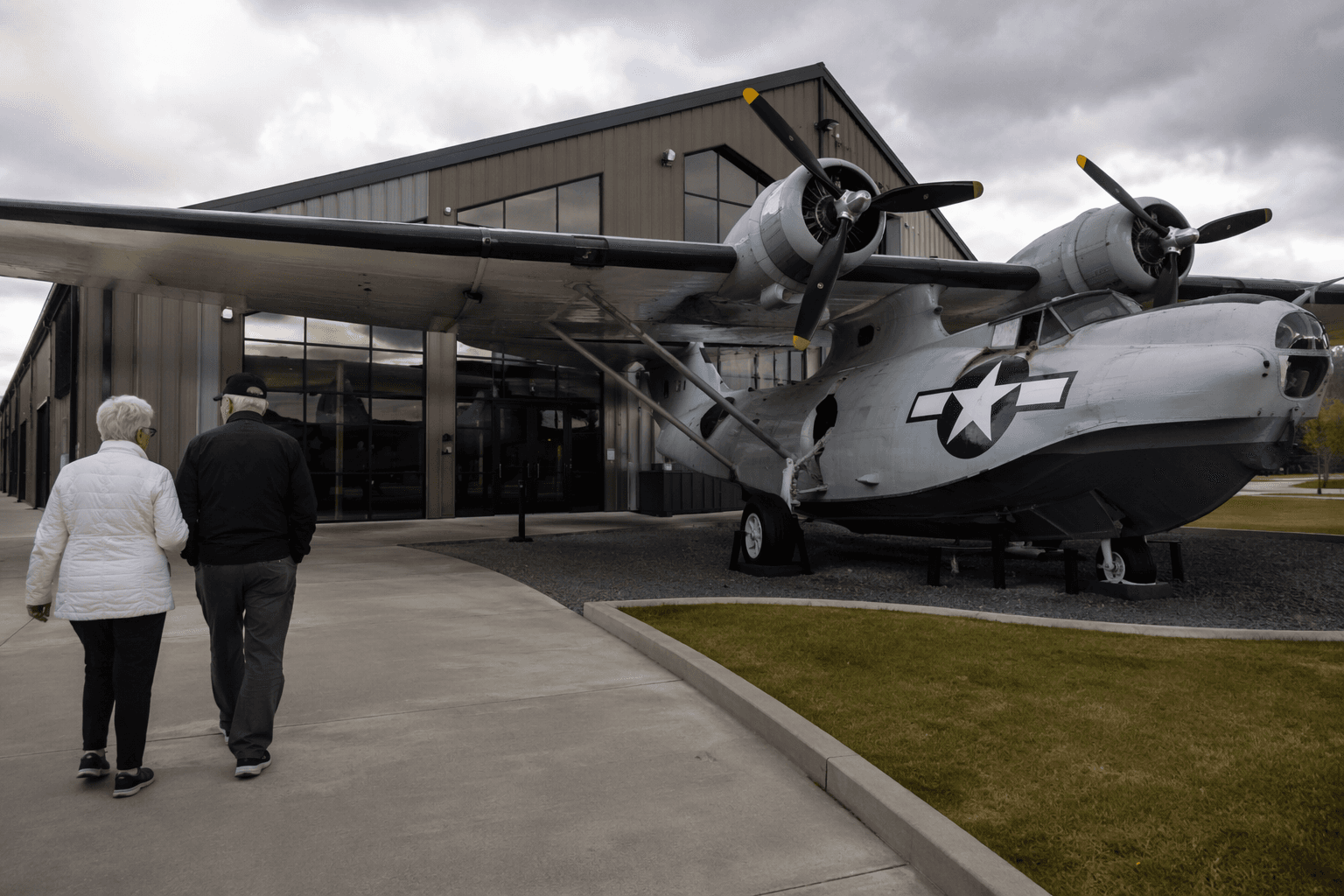
Explore Ebey's Landing, Whidbey Island's Historic National Reserve
Established in 1978 as the nation's first historical reserve, Ebey's Landing spans 17,572 acres of working farms, state parks, and one of Washington's oldest towns.

Few places in the Pacific Northwest hold together as many layers of living history as Ebey's Landing National Historical Reserve on central Whidbey Island. Established in 1978 as the nation's first historical reserve, it stretches across the western prairie around Coupeville, taking in Penn Cove's shoreline, forested hillsides, and farmland that has been continuously worked since the earliest days of European settlement. Within its 17,572 acres sit more than 400 historic buildings, 14 working farms, three state parks, and one of the oldest towns in Washington State. Eighty-five percent of the land remains privately held, which means visiting here feels less like entering a museum and more like stepping into a community that never stopped.
A Landscape Preserved by Partnership
The Reserve's survival as a functioning agricultural and historic landscape is the direct result of an unusual governance structure. The Trust Board of Ebey's Landing National Historical Reserve is charged with its management and brings together local, state, and federal governments: the National Park Service, Island County, the Town of Coupeville, and Washington State Parks. Their shared mission is straightforward but demanding: ensure the historic and natural resources of the reserve are protected for future generations while the community inside it continues to live and farm. The result is a patchwork of public parks, working farmland, and a historic townscape unlike anything else in the region.
Deep Roots: The History Behind the Reserve
The landscape preserved here carries an extraordinarily long human story. Long before European contact, permanent Skagit villages occupied the shores of Penn Cove. Captain George Vancouver's exploration of Whidbey Island brought European awareness to the area, followed by the settlement of the Ebey family near present-day Coupeville. Later came the military installations at Fort Casey and Fort Ebey, built to guard Admiralty Inlet during an era when the Puget Sound was considered a strategic maritime corridor. The reserve was created in 1978 specifically to protect and preserve that accumulated historical legacy, from Indigenous village sites through frontier homesteading to twentieth-century coastal defense.
Historic Coupeville: The Heart of the Reserve
The Island County seat of Coupeville sits entirely within the Reserve's boundaries and anchors the visitor experience. It is one of the oldest towns in Washington State, and its compact downtown along Front Street rewards a slow afternoon. Strolling the historic Coupeville Wharf, a red building extending out over Penn Cove on wooden pilings, is one of the most immediately recognizable images associated with the island. Self-guided historic walking tours let you move at your own pace through blocks of preserved architecture, while the weekly Farmer's Market brings together locally grown produce from the same farmland visible from the bluffs above town.
For practical orientation, two visitor information stops sit within a half-block of each other on NW Alexander Street. The Coupeville Chamber of Commerce visitor center occupies the old fire house at 905 NW Alexander Street. One door down, the Island County Museum at 908 NW Alexander Street is open Monday through Saturday from 10 a.m. to 4 p.m. and on Sundays from 11 a.m. to 4 p.m. Both locations stock trail maps, walking tour guides, visitor guides, Junior Ranger books, and National Parks passport stamps. Coupeville also provides free public parking throughout town, making it straightforward to leave the car and explore on foot.
Three State Parks Within the Reserve
Fort Casey State Park, Fort Ebey State Park, and Ebey's Landing State Park all fall within the Reserve's boundaries, each offering distinct terrain and a different window into the area's character. Fort Casey is the most historically detailed of the three: its surviving battlements and lighthouse at 1280 Engle Road stand as direct evidence of the coast artillery installations built to defend Admiralty Inlet. The park office and lighthouse are open daily from 11 a.m. to 3 p.m. and carry trail maps, visitor guides, and passport stamps. Fort Ebey State Park occupies bluff-top land with sweeping views toward the Olympic Peninsula, while Ebey's Landing State Park provides beach and bluff access at the Reserve's namesake landing, connecting the landscape's dramatic coastal edge to its agricultural interior.
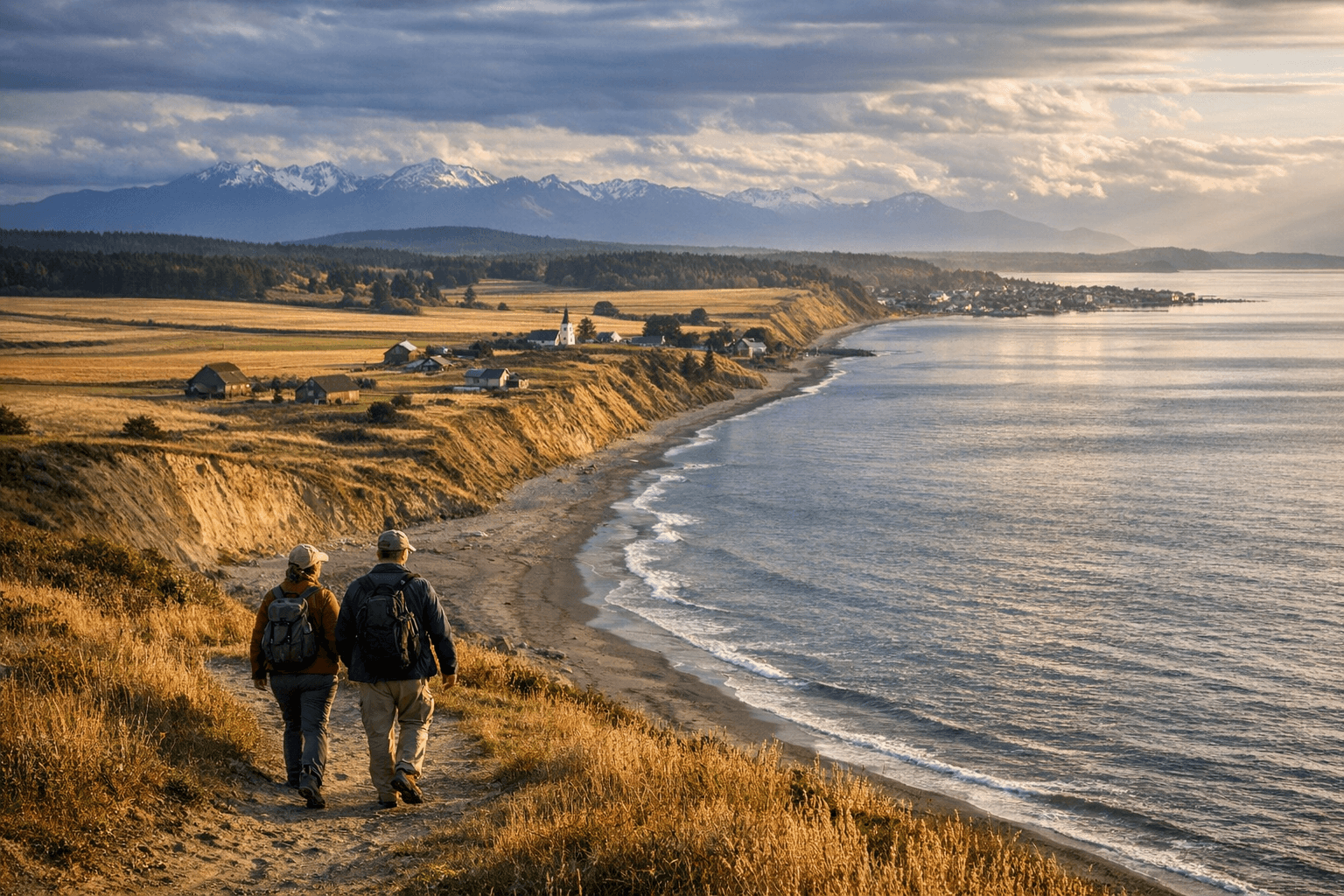
Trails and Outdoor Activities
The Reserve's trail network ranges from beach walks and bluff-top paths to dedicated mountain biking terrain. The Kettles Trails, carved through the island's kettle-and-kame topography, are specifically called out by the National Park Service as offering some of the best riding in the Reserve. For hikers and bikers alike, the system connects the Reserve's varied landscapes, from historic Coupeville out through the western prairie. The Patmore Off-Leash area provides an option for visitors traveling with dogs. Trail maps are available at both the Island County Museum and the Fort Casey park office, and a self-guided walking tour of Coupeville itself functions as a trail in its own right, moving through more than a century of architecture and civic history.
Getting to Ebey's Landing
Visitors coming from the Olympic Peninsula have one of the more scenic ferry commutes in the state. The Port Townsend to Coupeville ferry crosses Admiralty Inlet directly into the heart of the Reserve; reservations are strongly recommended, particularly during busier seasons. After landing, proceed north on SR 20 to Coupeville and turn right into town: you have arrived at the center of the Reserve. Visitors coming from the south via Interstate 5 reach Whidbey Island through the Mukilteo-Clinton ferry or across Deception Pass Bridge from the north.
Once on the island, Island Transit bus service runs the full length of Whidbey for free, connecting Clinton on the south end to Deception Pass State Park on the north end, with stops serving Coupeville along the way. This makes it genuinely possible to visit without a car, particularly if the ferry drops you directly in Coupeville. The Reserve office itself is located at 162 Cemetery Road, Coupeville, WA 98239, reachable by phone at (360) 678-6084.
If You Own Property Within the Reserve
Property owners inside the Reserve's boundaries should know that most construction and renovation projects require a Certificate of Appropriateness before proceeding. Island County Code 17.04A.090 outlines which projects qualify for an exemption, but the County's own guidance notes that most projects are not exempt. For those that do require review, three levels apply. A Level A Certificate of Appropriateness is a ministerial decision processed quickly, usually within 7 to 14 days. A Level B requires a 14-day public comment period and review by the Historic Reserve Committee. A Level C adds a public hearing to that process. Island County Planning can be reached by email at planningdept@islandcountywa.gov to help determine which level applies; planners are also available in person by appointment on Wednesdays at the Whidbey office at 1 NE 7th Street in Coupeville.
Planning Your Visit
The Reserve rewards visitors who slow down. A single day can realistically cover Coupeville's wharf and Front Street, a stop at the Island County Museum, a drive out to Fort Casey's battlements, and a walk along the bluffs above Ebey's Landing State Park. A longer stay opens up the Kettles Trails, the full Fort Ebey experience, and the kind of unhurried farm-stand and Farmer's Market exploration that captures what the Reserve was actually created to protect: a rural working community, still vibrant, still producing food from the same prairie that drew the Ebey family here more than 170 years ago.
This article was produced by Prism’s automated news system from verified source data, official records, and press releases, then run through automated quality and moderation checks before publishing. The system is built and supervised by the people who set the standards it runs under. Read our full AI policy.
Did this article answer your question?