Island County surface water quality declines, Whidbey waters fail most tests
Maxwelton Creek stayed poor for a fourth straight year as Island County found 14 of 25 tested waters failed both standards. The worst results were concentrated on Whidbey, where recreation and shellfish risks are showing up first.

Maxwelton Creek stayed poor for a fourth straight year, and Island County’s newest surface-water results showed the problem spreading across more of Whidbey’s creeks, ditches and nearshore waters. County specialists Renee Zavas-Silva and Carlie Miller told commissioners that 14 of the 25 bodies of water tested countywide failed both state water-quality standards, eight met only one standard and just three met both. Seventeen of the sampled waters were on Whidbey Island, and 15 of those failed at least one standard.
The county is measuring more than a spreadsheet of bacteria counts. Its Surface Water Quality Monitoring Program has operated since 2006 to track freshwater flowing over land and into marine waters, using the data to spot trends, emerging problems and where pollution-control work is most needed. The program focuses on the kind of water people touch first, the streams, drainage corridors and shoreline-fed waters used for swimming, fishing and other outdoor work. Waters outside county jurisdiction, including NAS Whidbey and the cities of Oak Harbor, Coupeville and Langley, are not part of the monitoring area.
E. coli and fecal coliform remain the clearest warning signs. Island County says pollution sources can include failing septic systems, domestic animals and other natural sources, but county officials have repeatedly pointed to development pressure, shrinking streamside vegetation, drought, higher temperatures and population growth as forces that can push water quality lower. The county’s pollution identification work says Island County has about 29,000 on-site sewage systems, many of them aging, and that three areas are already closed to recreation and shellfishing because bacteria levels are too high. In Holmes Harbor and Maxwelton, staff have been trying to reopen 10 acres of shellfish beds that were closed because of pollution.
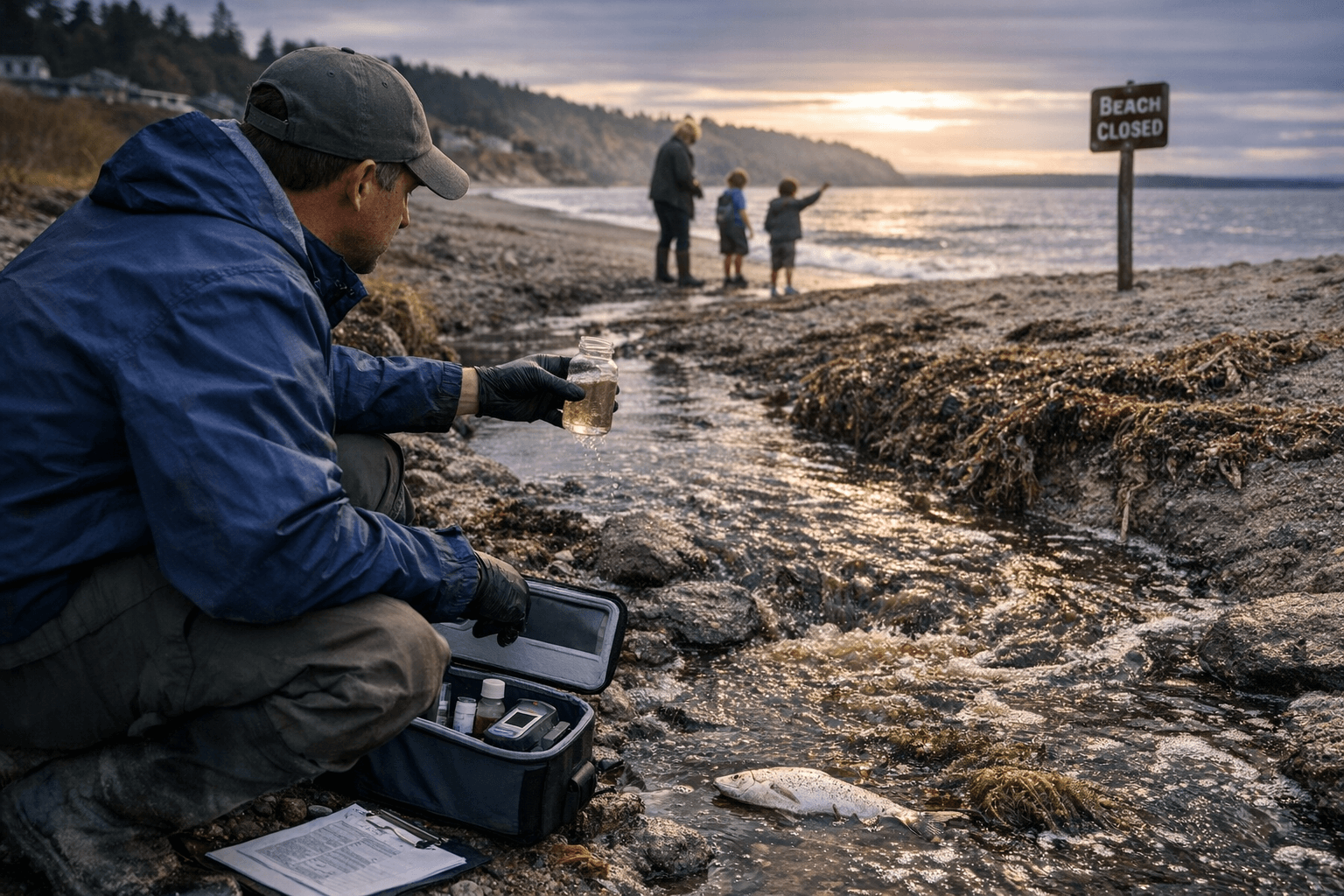
The trouble is visible in the places people know. Maxwelton Creek had one in four samples above the E. coli threshold, and the stream has now been poor for four straight years. Earlier county updates had already flagged half of Whidbey’s surveyed streams as polluted or otherwise in poor health, so the latest results look less like a one-year stumble than a worsening trend. County outreach letters have gone to homes on Camano and Whidbey after investigators found possible onsite septic failures.
That decline also carries a maintenance bill. Island County says it owns and maintains more than 4,000 culverts and nearly 2,000 catch basins, a reminder that stormwater infrastructure is part of the water-quality fight. For island households, the risks are no longer abstract. They are in the drains, the shellfish beds, the creek behind the house and the shoreline where families swim and fish.
This article was produced by Prism’s automated news system from verified source data, official records, and press releases, then run through automated quality and moderation checks before publishing. The system is built and supervised by the people who set the standards it runs under. Read our full AI policy.
Did this article answer your question?